 University of North Texas

Materials Science and Engineering - Spring
Designing Ta/HfC-SiC Laminated Composites for Enhanced Toughness and Strength

Team Members
Lucia Ruiz
Mesonma Anwasi
Noah Lill
External Sponsor/Mentor
DEVCOM Army Research Laboratory
Internal Sponsors/Mentors
Dr. Samir Aouadi
Dr. Dwight Burford
Abstract
HfC-SiC is a ceramic material that can withstand very high temperatures (up to almost 3000C), which makes it useful in environments with extreme conditions such as the upper atmosphere where most hypersonic vehicles/applications are utilized. However, there are difficulties with sintering it and having it display high-strength properties. Because of this, finding a way that it can be strengthened would be beneficial because it would allow them to be more useful in extreme temperature environments without severe risks. This group has decided to aid in research aimed at solving this issue by creating laminated structures of HfC-SiC powder alternating with HfC-SiC-Ta layers.
Acknowledgments
We would also like to thank Dr. Samir Aouadi's and Dr. Marcus Young's lab groups for their equipment and advice.
Designing Chameleon Coatings for Aerospace Applications Using in-situ Characterization
Methods

Team Members
David Burk
Julien Decker
Luisa Ruiz
External Sponsors/Mentors
Paul Jarosz - IBC Materials & Technologies
Eric Rohrbach - IBC Coatings Technologies
Internal Sponsors/Mentors
Dr. Diana Berman
Dr. Andrey Voevodin
Dr. Samir Aouadi
Dr. Dwight Burford
Ali Macknojia
Abstract
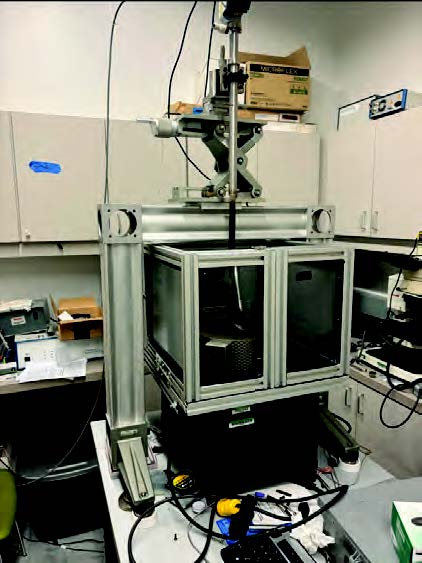
A missing piece left in evaluating the adaptive behavior of lubricating materials is understanding their tribological performance in a changing environment, which is especially important for aerospace applications. With these extreme conditions, there is a growing need for enhanced wear and corrosion resistance as well. Using adaptive lubricants such as chameleon coatings can ensure multi-environmental protection. In this work, we aimed to optimize the dry lubricant performance of chameleon coatings on the moving parts of a satellite. To do so, an in-situ Raman tribometer was assembled to replicate the environment in which satellite arms will function from testing on earth to orbital deployment. Chameleon coatings using a combination of MoS2, graphite, and h-BN were deposited on Ti-6Al-4V substrates and tested using this in-situ setup followed by post-characterization including SEM/EDS and profilometry. In comparison to our starting compositions, our findings show that we were able to minimize the coefficient of friction and wear rate in subsequent iterations and varying conditions. Ultimately, developing better coatings will extend the part’s service life but also garner a better understanding of the tribological mechanisms behind these lubricating materials.
Acknowledgments
We would like to extend our gratitude to our advisors from the Surface Modification Laboratory for their guidance throughout this project, IBC for their input, and the EMF for sample preparation.
Porous Anodes for Zinc-Air Batteries
Team Members
Evann Bustamantes
Sarah McDearis
Benson Wheeler
External Sponsor/Mentor
Center for Advanced Battery Technology
Internal Sponsors/Mentors
Dr. Wonbong Choi
Dr. Anil Pathak
Abstract
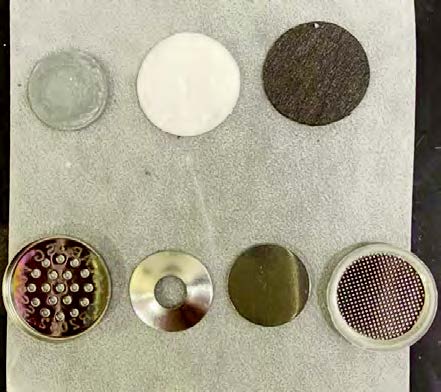
Current battery technologies that dominate the market, specifically lithium-ion, pose several safety and environmental hazards. The need for durable, reliable and environmentally friendly energy storage solutions is crucial. Zinc-air batteries (ZABs) have a higher theoretical energy density that surpasses lithium-ion and provides a safer, more sustainable alternative. Our project focuses on creating a novel porous structure through cold sintering, a process that utilizes high pressures to fuse zinc particles together. By increasing the surface area, it allows our zinc particles and our electrolyte (KOH) to interact with each other more efficiently while decreasing overall weight. Anodes were pressed at 1500 lbf for 2 minutes at room temperature followed by annealing in argon to partially fuse particles and to remove any impurities. Based on existing literature, we aim to have a minimum porosity of 30% to further decrease the density of our anodes.
Acknowledgments
We would like to thank our advisors Dr. Wonbong Choi, and Dr. Anil Pathak for their support in organizing and this project.
Radially Graded Stainless Steel Lattices for Bone Scaffolding Applications
Team Members
Magdalena Cruz
Wesley Miller
Jacob Spencer
External Sponsor/Mentor
Center for Agile and Adaptive Additive Manufacturing (CAAAM)
Internal Sponsor/Mentor
Dr. Sameehan Joshi
Abstract
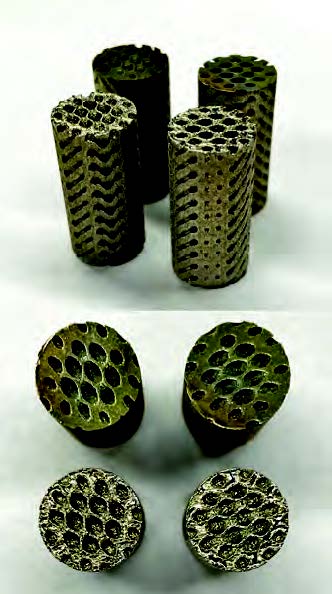
Metal implants are often used to support damaged bone during the healing process, however the high elastic modulus of most metals compared to bone can result in stress shielding effects in metallic bone implants, leading to failure of the bone. In order to combat this effect, there has been substantial research in using porous metal structures in place of bulk metal. Human bone exists in two distinct structures with distinct elastic moduli: stiff, exterior cortical bone and spongy, interior cancellous bone. Our team designed and manufactured stainless steel lattices with wall thickness varying across the radial direction in order to match the graded stiffness of human bone and reduce stress shielding effects. An ideal lattice geometry, the diamond triply periodic minimal surface, was selected based on finite element analysis of various lattice geometries. From this, lattices of varying relative densities were designed and additively manufactured from 316L stainless steel via laser powder bed fusion. Finally, lattice structures with a radial gradient in porosity and stiffness were designed and manufactured via laser powder bed fusion.
Acknowledgments
We would like to gratefully acknowledge the use of facilities at the Center for Agile and Adaptive Additive Manufacturing (CAAAM) and the support of its technical staff, especially Shelden Dowden, Zane Hughes, and Carlos Hernandez.
Using Modified Biomass-Based Activated Carbon to Filtrate PFAS During Water Treatment
Team Members
Chloe Dominique Segovia Jabel
Tommi Juhani Lehti
Thomas George Moore
Naomy Lee Serrano
External Sponsors/Mentors
Dr. Lee M. Smith - NSU OK
Mr. Daniel Parish - Ray Roberts Water Treatment Plant
Internal Sponsors/Mentors
Dr. Richard Reidy
Dr. Sheldon Shi
Dr. Jiyao Hu
Dr. Xuan Wang
Abstract
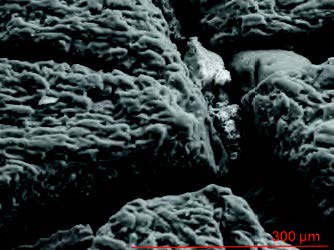
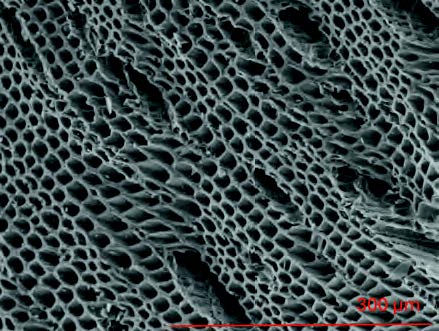
Per- and Poly-fluoroalkyl Substances (PFASs) are a group of synthetic chemical compounds that consist of multiple fluorine atoms attached to an alkyl chain. PFAS contamination is a growing issue, with the chemical being present in non-stick pans, makeup, and firefighting equipment. Dubbed “forever chemicals”, PFASs have a long degradation cycle, high mobility (being found in rain, drinking water, and wastewater), as well as a carcinogenic classification. Many studies and research have been done to filter the chemicals out of water. Methods using different activated carbons are an ever-growing approach of handling this; with a common source being Coal based Granular Activated Carbon (GAC). Current issues using Coal based GAC have environmental costs as it is a nonrenewable resource and has a large carbon footprint. Alternatively, biomass-based GAC is a resource that is readily abundant, inexpensive, and carbon neutral. This design project aims to find more favorable activated carbon sources, using hemp, southern yellow pine, and coconut shell-based GAC. This design focuses on the in-situ modification of biomass-based GAC by sonicating the media in acidic (HCl) and basic (NaOH) solutions. Important factors affect adsorption of PFASs such as surface area, pore size distribution, and surface interactions between the PFAS and filtering media. Characterization of pore sizing, pore distribution, and surface area were done using Brunauer-Emmett-Teller (BET) theory in gas adsorption and desorption testing. Surface characterization was investigated using Scanning Electron Microscopy (SEM) and Fourier Transform Infrared Spectroscopy (FT-IR). Ultraviolet-Visibility (UV-Vis) was used to indirectly measure the % of PFAS absorbed by different medias. This design should increase the efficiency of PFAS removal from water using acidic and basic in-situ modification of different biomass-based media.
Acknowledgments
Special thanks to Dr. Rick Reidy, our advisor, for his support in providing technical guidance, simplifying design, and challenging us to meet deadlines, Dr. Lee Smith from Northeastern State University in Tahlequah, OK, Dr. Shi from the Mechanical Department, Daniel Parish for helping with the experimental design, testing, and sourcing material for our project, and Dr. Aouadi's Lab for access to equipment.