 University of North Texas

Mechanical Engineering Technology - Spring
The Composters - Design and Build of a Compost Testing Device
Team Members
Jonas Ahonen
Khaled Aljuhani
Katelyn Mejia-Balbuena
Gicele Norman
Naela Raygoza
Exterior Sponsors/Mentors
Z&S Tech
Dr. Sheldon Shi
Internal Sponsors/Mentors
Dr. Rattaya Yalamanchili
Dr. Xuan Wang
Abstract
This project aimed to design and build a composting device to measure the biodegradability of polymer-based materials. The system was developed in accordance with the ASTM standard for determining the aerobic biodegradation of plastics under controlled composting conditions. Using a range of sensors to monitor carbon dioxide production, oxygen consumption, temperature, and humidity, the system automates data recording through an internal computing module. The rate of biodegradation is evaluated by analyzing the extent of carbon-to-carbon dioxide conversion in the material. In addition, the aim was to have the design follow a steady-state condition, creating predictable measurements that allow for better analysis and diagnostic measures. Unlike other biodegradability testing devices, our system integrates all components into a single containment unit, fully complying with ASTM standards. With the increased use of different polymer-based materials, the importance of testing and understanding decomposition becomes more critical than ever. This innovative design provides a more streamlined and automated approach to measuring biodegradation, offering potential benefits for environmental testing and material research.
Mean Green Chargers

Team Members
Yannick Wappler
Miguel Ordaz
Cole Gunnells
Martin Cannon
Rohan Srinivasan
Exterior Sponsors/Mentors
Milan Patel - Charger Supply
FSAE - Project Provider
UNT Surplus - Component Supply
Internal Sponsors/Mentors
R. C. “Chow” Yalamanchili, PhD, PE
Bobby Grimes
Abstract
The objective of this senior design project is to develop a custom charging cart for the SAE (EV FSAE) vehicle designed by our collegiate racing team. The cart serves a dual purpose: safely transporting the high-voltage accumulator and enabling efficient, controlled charging while complying with stringent SAE and electrical safety standards.
Key design considerations included structural analysis using 1" Chromoly steel tubing with 1/8" wall thickness to ensure frame integrity under load, ergonomic handling for pit crew operation, and the inclusion of ventilation and thermal protection systems to prevent overheating during charging. The team employed a comprehensive systems engineering approach, including detailed CAD modeling, static analysis of individual beam members, and iterative validation. Project management was executed using Primavera P6, which helped allocate resources efficiently across milestones such as the Conceptual Design Review
Cost Effective Automated Parking Management System
Team Members
Upendra Shahi
Quoc Dao
Khang Truong
Nathaniel Arlington
Kumar Tamang
Exterior Sponsors/Mentors
UNT Parking and Transportation
Christopher Hawke
Internal Sponsors/Mentors
Dr. Rattaya Yalamanchili
Robin Pottathuparambil
UNT EMF
Austin Killam
Parker Throneberry
Abstract
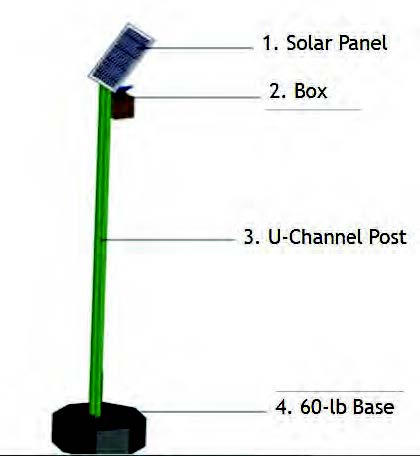
Parking inefficiency has been a problem at the University of North Texas (UNT) that causes traffic congestion, long searching time, and frustration. Commercial solutions are too expensive, complex, or dependent on infrastructure, making them unsuitable for campus use. The Cost Effective Automated Parking Management System solves these challenges with a smart, scalable, and affordable solution to improve parking at UNT. The design employs Infrared Sensors to automatically count vehicles as they enter and exit and displays real-time parking availability with over 90% accuracy and under 5 seconds data latency. Our system promises long-term sustainability and dependability as components are powered by solar energy and protected by weather-resistant 3D printed ASA box casings. Developed prototype shows great efficacy in both detection and data transfer using Arduino-based microcontrollers and confirmed by technical simulations. By aligning with safety and environmental standards, our design offers a cost-effective solution to enhance parking operations and experience at UNT.
SafeFry Solutions - Garri Producer
Team Members
Ayamae Walker
Maryam Yinusa
Lennox London
Leroy Ohohe
Steven Ohakwe
Exterior Sponsors/Mentors
Helena Ranch LLC. - Project Sponsor
Dr. Yalamanchili - Sponsor Contact
Internal Sponsors/Mentors
Dr. Rattaya Yalamanchili, Professor
Dr. Seifoullah Nazrasdani, Faculty Advisor
UNT EMF, Assistance and Materials
Abstract
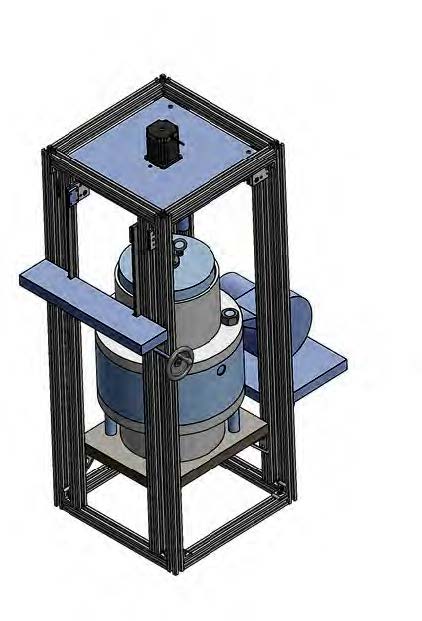
Our project focuses on the design and fabrication of a semi-automated processing machine for a popular food in west Africa called 'garri', which is made from cassava roots, to improve on the safety and ergonomics of how it is being processed currently. The scope of our design required from our sponsor includes the processes after the fermentation of the crushed cassava: de-watering, sieveing and drying, as well as making it conform to a typical household device as our target customer is for household or small-scale production. Our machine integrates a pressing mechanism to de-water the cassava mash after fermentation, an automated stirring and sieving process and drying the mash by convection using a hot-air blower. Through detailed manufacturing planning, material analysis, and cost estimation, this project demonstrates an effective balance of engineering design, ethical decision-making, and practical application for agricultural processing in resource-limited settings.
Shadeotech Unishades Machine
Team Members
Bailey Butler
Hanh Dinh
Matthew Franks
Rebecca Rodriguez
Braden Wampler
Exterior Sponsors/Mentors
Shadeotech Window Fashions, Project Sponsor
Moe Nilli, Sponsor Contact
Internal Sponsors/Mentors
Dr. Rattaya Yalamanchili, Professor
Dr. Hector Siller, Faculty Advisor
UNT EMF Lab, Assistance and Materials
Austin Killam, Shop Mentor
Abstract
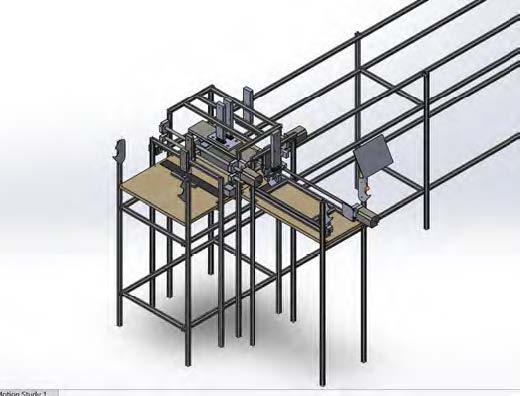
This project focuses on optimizing the manufacturing process for one of the products from Shadeotech Window Fashions. This product, the Unishades, is produced in three separate steps: measuring and cutting the fabric panels, heat-pressing a nylon header, and attaching carriers. This project streamlines production by combining the measuring, cutting, and header cutting and application into a single automated machine. The machine features an interactive tablet interface, allowing operators to select curtain lengths and quantity along with being able to adjust different operation settings. Once this is completed, the machine automatically produces the curtains with headers attached, depositing the finished panels into a basin for final assembly. By reducing manual effort and production time by 50%, automation enhances efficiency, minimizes labor intensity, and improves overall manufacturing consistency.