 University of North Texas

Mechanical Engineering Technology - Spring
Locking Anti-Temper Hand Wheel for Valves
Team Members
Mohammed Alkhamis
Majed Alabbadi
Waleed Alamri
Rashed Almarri
External Sponsors/Mentors
Master Flo Valve (USA) Inc.
Jason Wipf
Bobby Bobeck
Internal Sponsors/Mentors
Ali Nouri
Harish Kumar
Abstract
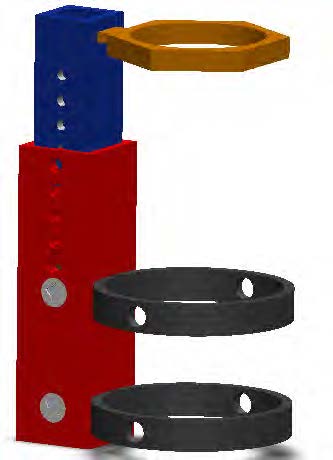
The goal of our project is to secure the valves from getting stolen in the remote areas where most valves being stolen since many of these locations have no security guard or security cameras. The Team’s technical solution is to make an external design where it will cost less money for the company. The team focused on creating a design that is very easy for local technicians to install and uninstall it in a short amount of time in case of high pressure or any other emergency situations. Our main focus is the top part of the valve which is the hand wheel. Therefore, most of the valve's part will remain untouched and unchanged.
Acknowledgments
The team would like to thank Rick Pierson of UNT EMF, and Jason Wipf of Master Flo Valve.
Erosion Resistant Choke Valve

Team Members
Zahir Sanchez
Binh Vuong
Alonzo Lopez
Ashton Hinsey
Jonathan Villeda Ramirez
External Sponsors/Mentors
Master Flo Valve (USA) Inc.
Mr. Jason Wipf
Mr. Bobby Bobeck
Internal Sponsor/Mentor
Dr. Seifollah Nasrazadani
Abstract
The objective of this project is to design an erosion resistant Plug & Cage choke valve trim. Our goal is to design a trim that would be able to withstand a differential pressure of 10,000 psi while also holding the trim characteristics of equal percentage to allow for superior flow control. We aim to improve the erosion resistance of the trim by performing extensive research on the severity of erosion in choke valves due to its design and material.
The greatest factor is erosion due to the high-pressure conditions and the product being controlled. Furthermore, as the choke valve regulates the oil going through, it also becomes subjected to sand particles that when pressurized, erodes at the choke valve trim to the point where the valve breaks down until it is no longer usable. A greater understanding of the right materials to use and the correct model of choke valve will have a significant impact on its life cycle and improvement will benefit industries that rely on the product.
The approach of this project is to first, define what characteristics of the choke valve the customer looks for such as type of fluid, pressurized fluid, and life expectancy of the trim. There are also other factors to be considered such as flow rate, usage, and environmental conditions. We plan to use logical calculations and model our draft design through SolidWorks based off our calculations and research. Then run FEA and CFD simulations to showcase the performance of our design.
Acknowledgments
We would like to give special thanks to Professor Seifollah Nasrazadani, Mr. Jason Wipf, and Mr. Bobby Bobeck for their guidance and support throughout this project.
CVT Gear Drive for Electronic Valve Actuators
Team Members
Mohammed Islam (Team Lead)
Zain Azam
Torin Armstrong
Ahmed Patel
External Sponsors/Mentors
Master Flo Valve (USA) Inc.
Mr. Jason Wipf
Internal Sponsor/Mentor
Dr. Maurizio Manzo
Abstract
Oil and gas companies are struggling due to the economic hardships happening around the world. Companies are looking to save money by using Electronic Actuators. Such actuators need less manpower, but the problem is multiple models are needed on a valve over its life. Electronic actuators are expensive and multiple models can cost companies greatly. The goal of this project is to adapt a CVT (Continued Variable Transmission) to fit inside an electronic actuator to produce multiple torques from one actuator. A toroidal CVT reaches a wide range of torques while allowing for the compact space of the actuator. These actuators can be adapted to multiple valves over the lifespan of the projects. This will allow significant savings to companies.
Subsea Electronic Actuator
Team Members
Shelby Thomas
Connor Reinauer
Zachary Russell
Miller Ekas
Garrett Burchett
External Sponsors/Mentors
Master Flo Valve (USA) Inc.
Mr. Jason Wipf
Internal Sponsor/Mentor
Dr. Hector R. Siller
Abstract
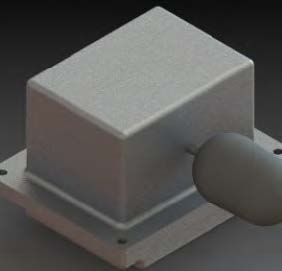
This project aims to modernize the actuation methods employed in deep sea applications. By modifying the existing housing of a Bettis actuator, we are trying to create a more affordable and reliable solution for the employment of electronic based actuators at extreme depths.
The creation of this housing seeks to employ a method of pressure equalization rather than complete external re-design. By filling the actuator shell with mineral oil (a dielectric fluid) and having an external bladder mounted filled with the same substance, we will achieve equalized pressure within the housing. As the actuator descends, pressure is applied to the bladder forcing more oil into the actuator shell, causing compression of the oil. This should generate an equal internal force to counteract external pressure.
This not only is an economically viable solution, but also allows the use of electronic components within the mineral oil, opening the door to electronic replacements to current hydraulic systems.
Design and Manufacturing Concepts of UAS Morphing Structural Elements
Team Members
Cali Hood
Alex Williams
Nick Galen
DeQon Hardister
German De Hoyos
External Sponsor/Mentor
Army Research Lab
Internal Sponsors/Mentors
Dr. Siller - Team Sponsor
Mr. Morteza Heydari - Senior Design TA
Mr. Cesar Chavez - PhD Student
Abstract
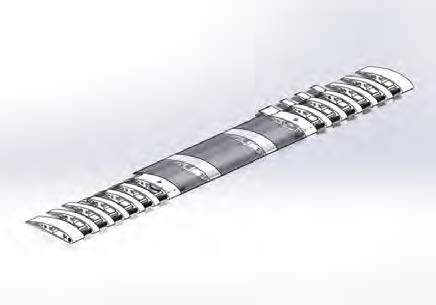
This year's project for the Army Research Lab picked up right where last year's team left off. In the world of Unmanned Aircraft Systems (UAS), there is a need for a morphing wing structure that will significantly diversify a single drone's flight characteristics. With the size of modern multirotor aircraft, there are limitations such as battery power that needed to be attended to. Designing a morphing airfoil that can extend and retract greatly increases the capabilities of the aircraft. The extension of the wing can provide increased flight time and distance while putting less strain on the battery. The availability of alternating wing lengths also allows the aircraft to adapt to any situation at hand. Ease of maneuverability and more precision in flight controls is also sought after, which the new airfoil would provide.
The previous team made significant progress last year and left this team with experience and designs to build and improve upon. This year's team is focused on improving the design and manufacturing of the airfoil while also developing a quick-fix method that can be utilized in the field. To accomplish this, all the parts of the airfoil are 3D printed and able to be quickly assembled. This aids to the aircraft's efficiency and longevity as it allows for ease of access to assess and fix any internal damage as well as reducing repair cost and downtime of the aircraft. With successful development and testing, this structure will enhance the capabilities of Unmanned Aircraft Systems while also being cheap and easy to mass produce.
Demonstration Lab for UAV Testing
Team Members
Aykut Tatli (Team Lead)
John Abuhamad
Mohammed Aljohani
Abdulraman Indijani
Alex Garcia
External Sponsors/Mentors
Jim McNatt Institute of Logistics
Center for Integrated Intelligent Mobility Systems (CIIMS)
Internal Sponsor/Mentor
Hector R. Siller, PhD
Abstract
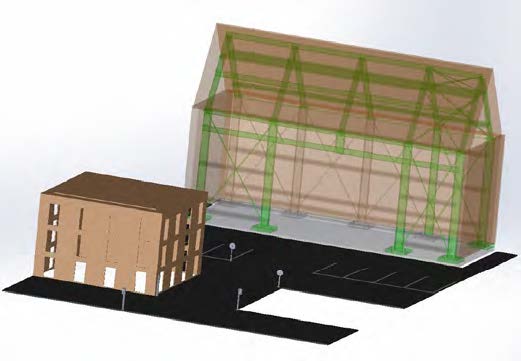
CIIMS is a multi-disciplinary collaborative center encompassing research efforts from leaders in business, to public health, to supply chain, and to engineering technology. Sharing the same goal of improving the quality of life, these studies are geared towards unmanned autonomous vehicles (UAVs) and creating a cohesive network of connected drones all able to communicate independent of human interaction. Located at UNT’s Discovery Park in Denton, the demonstration lab is set up as a one-tenth scale of a typical warehouse setting. This testing facility includes roads, stop signs, parked cars, traffic lights, and buildings by incorporating fabrication methods such as 3D printing and laser cutting. Collaborating with the work from students in the electrical engineering department, three drones will be operating synchronously as part of the demonstration.
Acknowledgments
Our team would like to give a special acknowledgment to Sami El Masri, Bobby Grimes, Dr. Hector Siller, and Dr. Huseyin Bostanci.
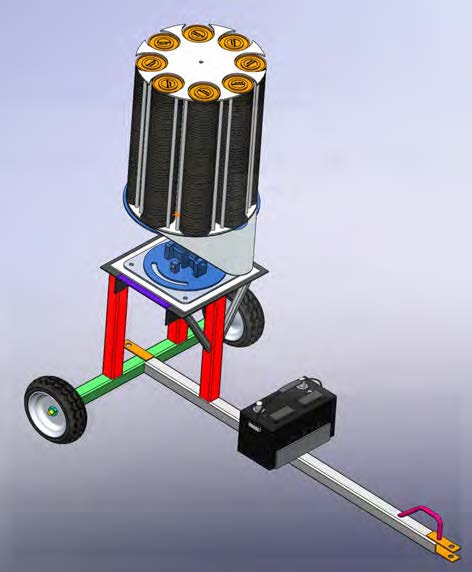
Mobile Stand for Clay Target Thrower
Team Members
Nadia Rodriguez
Candace Madison
Jared Crumpler
Jesus Zavala
External Sponsors/Mentors
Dr. Mitty Plummer
Dallas Gun Club
Internal Sponsors/Mentors
Dr. Huseyin Bostanci
Morteza Heydari
Abstract
A high-end gun club endeavors to stay on the cutting edge by possessing the most advanced equipment. Executive focus is placed on keeping automated machines running while being easily repositioned to create a new experience. The biggest obstacle facing these goals is the fact that these automated machines, or traps, are cumbersome and regularly exposed to environmental conditions. The club’s location provides a unique set of hazards to smooth operation and relocation of the traps. Early designs lack the complexity to withstand the environment. Experimental designs solve some problems but cause others. As a result, research is commissioned with senior engineering students at the University of North Texas to re-engineer the existing design. Objectives include making the design simple and light, but also sturdy and easy to maintain.
Acknowledgments
Special thanks to Rick Pierson, Bobby Grimes, Carlos Hernandez, and all of the UNT Engineering Manufacturing Facility staff!
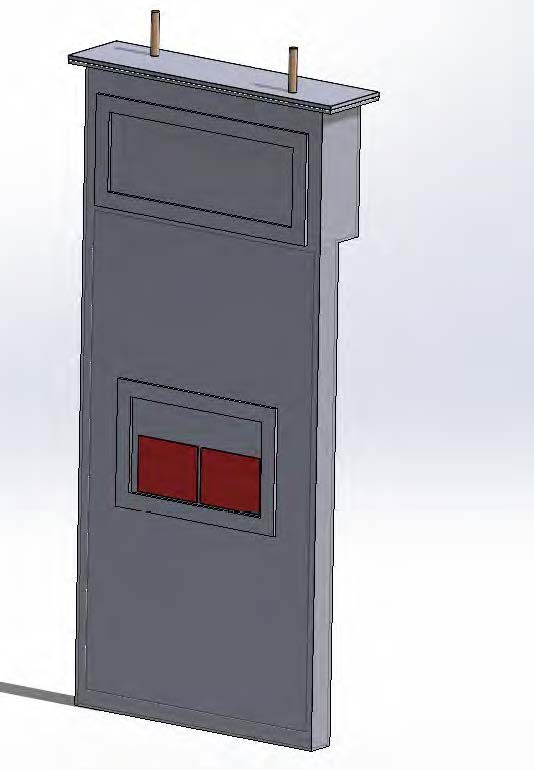
Laboratory Equipment for an Emerging Data Center Thermal Management Technology: Two-Phase
Immersion Cooling
Team Members
Dalton Dodson
Kameron Little
Rakan Alsaawi
Han Lai
Garrett Spurgeon
External Sponsor/Mentor
ASHRAE
Internal Sponsors/Mentors
Dr. Huseyin Bostanci
Morteza Heydari
Abstract
Servers in a data center create a lot of heat while they’re running. The cooling cost for any given center accounts for a very large chunk of its operating cost. Not to mention the space required to accommodate forced air cooling. Using two-phase immersion cooling vastly increases heat dissipation efficiency while rapidly decreasing operating cost and space required.
Thermal Radiator for CO2 Deposition in Deep Space Transit
Team Members
Travis Seaver
Eric Lira
Anthony Pezzulli
Jesus De La Torre
External Sponsors/Mentors
Ms. Grace Belancik, NASA Sponsor
Dr. Cable Kurwitz, TAMU Faculty Advisor
Internal Sponsors/Mentors
Dr. Huseyin Bostanci, UNT Faculty Advisor
Balmore Giron, UNT Grad Research Asst.
Abstract
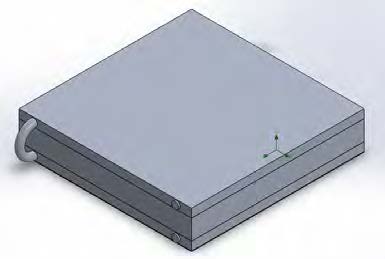
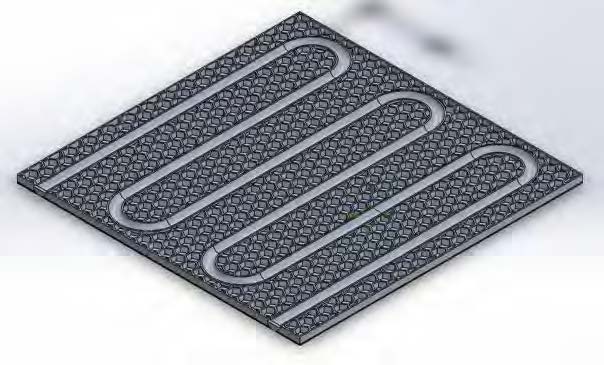
This UNT Senior design team was tasked by NASA to develop a variable conductance thermal radiator for CO2 deposition for deep space transit. NASA selects universities every year to partake in the X-HAB Academic Innovation Challenge, with this year’s number of teams being only six. Air Revitalization is a crucial system for any space travel, be it for Low Earth Orbit, such as the International Space Station, or for deep space transit. Current systems, such as the Carbon Dioxide Removal Assembly aboard the ISS, require upkeep and maintenance, which cannot be done on long distance space missions. For the past several years, NASA has done research on Cryogenic systems for Carbon Dioxide removal. These systems operate on the fact that Carbon Dioxide freezes at a higher temperature than Oxygen and Nitrogen, so Carbon Dioxide can be frozen out of the cabin atmosphere without the use of filters, which degrade over time. To cool the cabin air down to a temperature where Carbon Dioxide freezes, Stirlingcryocoolershave been used, which have shown promise in the hope of Carbon Dioxide deposition for Cabin Air Revitalization. Cryogenic systems are much more reliable but require significant energy input to operate. Physical systems, such as radiators, have generally not been used for this task, as there is a need to be able to “turn off” the rejection of heat to allow the frozen carbon dioxide to be collected. However, with working fluids pumped through a physical radiator, that aspect of operation can be achieved. The goal of this project is to determine the effectiveness of a variable conductance thermal radiator that can reject heat to deep space, without the use of a dedicated heat pump to remove energy from the cabin air. The proposed design uses piping, hot and cold working fluids, and non-condensable gas to pull heat from the cabin air on one side of the radiator and reject the heat to deep space by means of thermal radiation. As well, the system will allow for the recovery of deposited Carbon Dioxide. The UNT X-HAB 2021 team will create a model radiator and test its performance with simulated heat sources and sinks and extrapolate those data points to analyze for real world conditions.
Fire Hose Auto-Roller
Team Members
Reece Callihan
Travis Harper
Moises Hernandez
Shawn Lawrence
Matthew Rutherford
External Sponsors/Mentors
Denton Fire Department
David Boots - Fire Dept. Mentor
Internal Sponsors/Mentors
Ali Nouri
Mechanical Engineering Department
Abstract
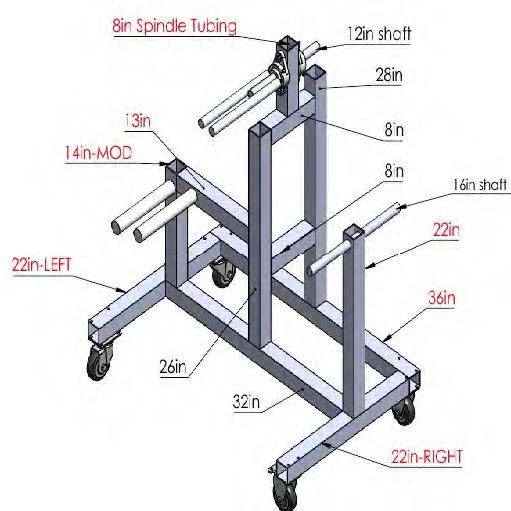
Our project is to design and fabricate a fire hose auto-roller to solve the problem of draining and rolling up hoses of 5” or larger diameter. The size of these hoses make the traditional method of hand squeezing and rolling inefficient. This design of the auto-roller helps the fire department by reducing the manpower needed to roll up the large diameter hoses. This will lower both time allocated and injuries thus improving the efficiency of the department. This particular design in unique in the fact that our design will squeeze/empty the large diameter hose and roll it up simultaneously. The biggest difference between our design and the current market design is the ability to easily slide the rolled hose off the roller allowing for easy storage.
UAV Structural Monitoring through Fiber Optics
Team Members
Sabrina Lomeli Ruiz (Team Lead)
Haley Thompson
JJ Murray
Trung Dang
Hector Barrios
External Sponsor/Mentor
Jim McNatt Institute for Logistics Research
Internal Sponsor/Mentor
Dr. Maurizio Manzo
Abstract
As the implementation of autonomous vehicles grows in several industries, the need for new methods to monitor such vehicles grow with it. It is essential to keep these new devices efficient and reliable. Many drones in the market still need to be operated manually and other autonomous drones can lack true self dependency. This project aims to present a method in which a UAV can be structurally monitored and visually assisted while operating through vast and discrete areas. Through the implementation of fiber Bragg grating sensors, we can monitor the structural health of a drone by constantly analyzing its strain and temperature levels. The implementation of a multispectral camera will assist the vehicle in detecting its surroundings. The combination of these technologies will allow the drone to adapt to its conditions and proceed accordingly. Our overall goal is to prove that a drone can be steadily monitored by way of fiber optics and a multispectral camera in order improve self-sufficiency.
Gas Seepage Detection System
Team Members
Brendan Paxton
Kwasi Frempong
Won Il Lee
Christian Cooper
External Sponsors/Mentors
Texas Engineering Experiment Station
Dr. Fawad Rauf
Internal Sponsor/Mentor
Dr. Maurizio Manzo
Abstract
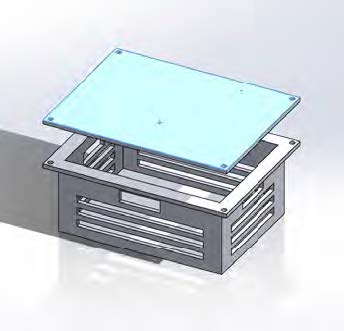
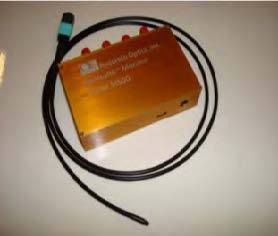
Our objective is to develop a portable and economical detection system that can be placed on a drone to detect methane gas leakage using fluorescence technology.
Methane is a flammable gas and is a significant contributor to greenhouse gases worldwide. A large contributor to methane emissions are methane distribution pipelines that leak after a long period of time. By being able to detect these leakages, we can help lower the amount of methane that is released into the atmosphere. Reducing methane linkages in pipelines can also increase the efficiency of these pipelines and can lower the costs of maintaining and running these pipelines as well.
Many current forms of natural gas detection use infrared beams but are not very portable and are unable to reach certain areas. By designing a detection system that can fit on a drone, we can provide an aerial and remote method of detection that can reach places that are harder to reach using current methods. This will be achieved by using a fluorimeter since it is weighs less and is more sensitive than other forms of methane detection.
We will be working alongside Texas A&M University Texarkana to procure a drone that will be used for this project.
Acknowledgments
We would like to thank Dr. Manzo, Dr. Rauf, and Omar Cavazos for their support and guidance, as well as TEES for sponsoring this project.