 University of North Texas

Biomedical Engineering - Spring
Active Prosthetic Hand
Team Name
S.E.C.K.
Team Members
Saarah Rahman
Eddy Remezo
Chandler Cook
Kahlan Edwards
Internal Sponsor/Mentor
Biomedical Engineering Department
Abstract
The loss of any limb can be quite devastating for anyone, no matter who they are or where they are in life. Our body parts are at the core of who we are, each one playing an important role. It is with our legs we are able to walk through life reassured and stride towards our goals. It is with our hands that we reach out and touch our world, and they give us the ability to create and bring beauty into the world. It is with our eyes that we see our world and our own paths to success, to our dreams, our goals. Without any of these crucial parts, life becomes more difficult. In other words, quality of life is what breeds substance in our being. With the absence of control sources, sensitizing nerves, and instinctive reflexes available in the human hand, there can be great drawbacks with developing a prostheses that mirrors in form, fit, and function to outer composition of its existing counterpart. Exact duplication of such a complex and agile body part as a hand, for feasibility reasons, is an impracticality. For years, prostheses have been the go-to solution for amputation. However, as demand and technology advance, so does the cost and complexity in its use. Moreover, the attributes of prosthetics become distinctive factors when analyzing comparative functionality between adult and adolescent prosthetics. These distinctions could be the root cause for the decrease in the acceptance rate amongst the adolescent community. This research proposal is expected to provide more viable options for parents and children regarding prosthetics. Ideally, we will create an adolescent prosthetic for children between the ages of twelve and fourteen that is lightweight, cost efficient, and effortless to use. The proposed implements several important attributes: gyroscope accelerometer, Arduino platform, stereolithography apparatus (SLA) glove for skin-like texture, individual motors for each phalange (finger) movement, multiple grips, and a belt-like mechanism to secure the connection between the SLA sleeve and prosthetic hand. We hypothesize that these attributes will address the need for a less cumbersome, effortless, more cost-efficient prosthetic, and heighten the acceptance rate for the adolescent community who desires prosthetic options and a better quality of life.
BioShield
Team Name
BioGear
Team Members
Bushra Alharbi
Tyler Guy
Kourosh Houshidari
Kailey Murphy
Internal Sponsors/Mentors
Sponsor: Dr. Vijay Vaidyanathan
Mentor: Edward Gates
Abstract
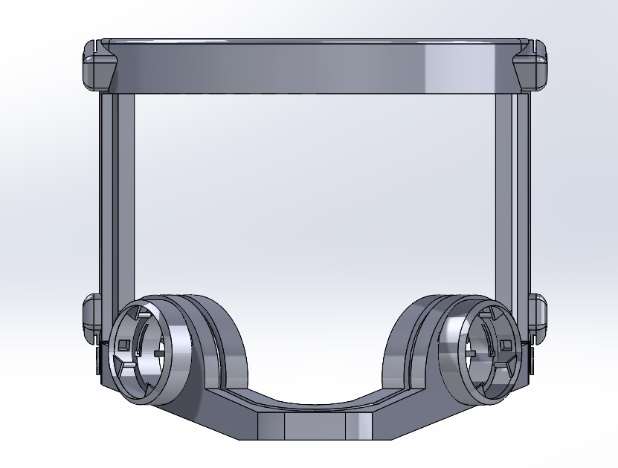
Due to the Covid-19 pandemic, the demand for an effective filtering face mask has skyrocketed. Even before 2019, inhabitants of polluted cities were required to wear face masks in order to avoid breathing in toxins from the air. The common individual needs to be able to obtain a cost friendly, worry free and effective breathing method in order to thrive in the world we live in today. BioGear’s goal is to create a safe, pollutant free, and virus free environment for individuals to travel in. Whether one is walking to the store or flying in an airplane overseas, the BioShield will keep them protected for the entire duration of their trip. The BioShield passively filters out contaminants with its unique filters and fans that allow for continuous airflow. An entire year’s worth of dedication and planning has enabled BioGear to research and gather information in order to create a successful product. This environmentally friendly class II device will reduce pollution due its reusable facemask portion and the prolonged lifespan of its disposable filters. The BioShield has a completely sealed design including a battery power source, two fans for intake and outtake, and a moving jawline to reduce irritation between the mask and skin. Particle filtration efficiency and airflow rate was calculated and is proof that the BioShield invention is mathematically plausible. Through various designs, prototypes and tests, the BioGear company has created BioShield. This product is more durable, effective, and long lasting, than N95 respirators currently available on the market.
Wearable Voice Modulating Enhancer
Team Name
CCAP Engineering
Team Members
Aima Ovai
Celeste Aucoin
Chapel West
Phoebe Eromosele
External Sponsors/Mentors
DUALAMS INC – John Houston (Sponsor)
Cooper Wood (Co-Sponsor)
Internal Sponsor/Mentor
Dr. Lin Li
Abstract
John Houston presented CCAP Engineering with a proposal of a wearable voice modulating system that will analyze a patient’s damaged voice signal. CCAP Engineering has designed a device that can analyze and compare healthy and damaged voices while also working as a personal microphone and speaker to amplify the voice. The major components, the microphone itself, a preamplifier, amplifier, two speakers, and the modulating software using MATLAB, are designed in such a way that will easily clip onto the user’s attire to achieve discreteness.
Acknowledgments
John Houston, Cooper Wood, Dr. Lin Li, Dr. Vijay Vaidyanathan, Edward Gates, Dr. Yang Yong, and Dr. Rick Reidy
Innostem
Team Name
NuBurst
Team Members
Sunny Lee
Gavin Loera
Tammy Phan
Ryan Sterzenbach
External Sponsor/Mentor
Dr. Peter Edenhoffer
Internal Sponsors/Mentors
Edward Gates
Dr. Yong Yang
Dr. Lin Li
Sydney Wilkins
Abstract
Chronic obstructive pulmonary disease (COPD) is projected to be the leading cause of death in America yet treatment options are limited and only produce short-term results. New studies have shown that there are possibilities to develop a stem cells therapeutic method to treat COPD to produce long term results. Due to the fragility and the high cost of stem cell therapy, there is not a device on the market that can accommodate this type of treatment. Our team is developing an innovative device that efficiently delivers stem cell solution by atomization technology to the targeted site through inhalation of patients. Stem cells are effectively dispersed by our automated injection control system. Atomization is targeted to only occur during a patient's inspiration for efficiency. The device incorporates a small syringe that contains stem cell/drug solution controlled by mechanical components to deliver droplets at the site of atomization through an air compressor to produce 50um-70um particles to be inhaled through the mouth. Our goal is to offer a better and efficient alternative way to treat COPD patients using non-invasive stem cell therapy. We are incorporating interdisciplinary fields to initiate the potential the future of stem cell treatment from our device.
Infant Espial
Team Name
Metis Tech
Team Members
Abraham Ventura
Michael Aldape
Victoria Rodriguez
Internal Sponsors/Mentors
Dr. Vijay Vaidyanathan
Dr. Xiaodan Shi
Edward Gates
Abstract
The purpose of the Infant Espial is to alert anyone nearby when an infant is no longer breathing. Children under the age of 1 are at an increased risk of sudden infant death syndrome(SIDS). The Infant Espial is used in the case that if an infant’s vitals were to cease, an attached forehead reflectance photoplethysmography (PPG) monitor, will signal the device to alert nearby adults through app notification or audible sound. The design will be comfortable, breathable, and have a non-rigid headband around the baby's head while also being light enough for the baby’ to develop without issues. The Infant Espial is a device aimed to decrease baby mortality rates by focusing on SIDS prevention. Using a PPG, the device will alert all neighboring caretakers to aid the infant once breathing has stopped.
Acknowledgments
Special acknowledgment to Theodore Weller for starting this project with Metis Tech.
Laser Emission Engineering System (LEEP)
Team Name
DRG2
Team Members
Danielle Riehs
Regina Castro-Perez
Gisele Mercer
Gerardo Aviles
External Sponsors/Mentors
Dr. Adam Starr - UT Southwestern
Dr. Hallie Bradley - UT Southwestern
Dr. Timothy Harris - UT Southwestern
Internal Sponsor/Mentor
Edward Gates
Abstract
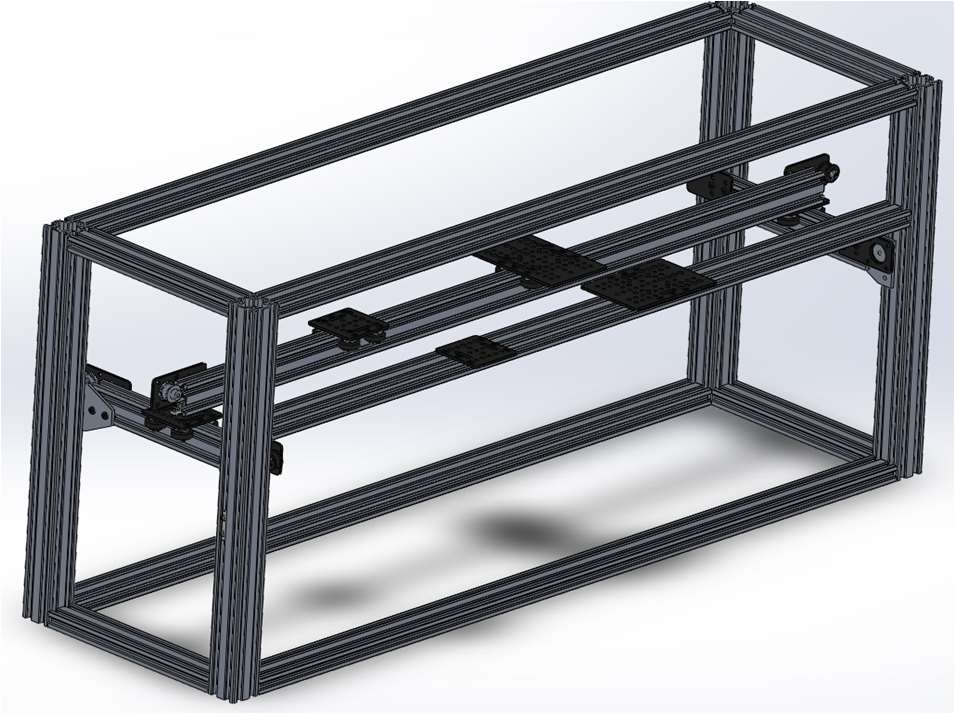
Acetabular fractures are most common in the elderly and have increased two to three times over the past three decades in the sixty and up age group. Some methods to treat acetabular fractures are referenced in the article Biomechanical Comparison of Different Fixation Techniques for Typical Acetabular Fractures in the Elderly: The Role of Special Quadrilateral Surface Buttress Plates by Kaifang Chen et al. provided by Dr. Adam Starr from UT Southwestern. Chen mentions briefly under the Materials and Methods section a procedure used to fracture the pelvis. The desired fracture is printed onto the bone using a “rapid prototyping technology using nylon material” then cut using a “thin wire saw” to create an “identical osteotomy” along the template. This unstandardized method to replicate fractures on a bone construct used by Chen et al. introduces human error when cutting through the bone model with the thin wire saw. The human error variable can be resolved by standardizing a procedure or method that allows the user to create consistent cuts on the given bone models, which then provides a method that other researchers can use to either validate the author’s work or test their own constructs for further research. Therefore, the creation of the LEEP, a CO2 laser cutter programmed to visualize the bone model and cut the fracture, minimizes human error and maximizes fracture consistency.
Pathogen Killing Mask
Team Name
Bioneers
Team Members
Jessica Baas
Trevor Lulkovich
Davon Reed
Araseli Roderguiz
Internal Sponsor/Mentor
Dr. Vijay Vaidyanathan
Abstract
In today’s world microorganisms like viruses are having an astronomical impact on the safety and comfortability of people’s lives. Our project is a facial covering that kills most bacteria, viruses, and microorganisms on contact using a metallic copper chamber. The chamber of the pathogen killing mask is designed so that all air has to come in contact with the copper before the air enters the wearers system, thus cleansing the air of unwanted bacteria. The mask will also consist of multiple fans to aid people that have poor pressure differentials due to respiratory problems. There is a high efficiency particulate air (HEPA) filter between the fans and the wearer’s mouth that is attached to copper mesh that will protect user’s from microorganisms. The hope of this project is that it will target individuals who are older in age, have respiratory/ventilation issues, and the general population that uses public transportation.
Orthopedic Bone ALGE-Screw
Team Name
ALGE Solutions
Team Members
Evelyn Espinosa
Mary Gamboa
Jessica Leonides
Tre’on Alvin
External Sponsors/Mentors
UT Southwestern Medical Center
Dr. Adam Starr
Dr. Peter Cannamela
Internal Sponsors/Mentors
Biomedical Engineering Department
Dr. Vijay Vaidyanathan
Dr. Xiaodan Shi
Abstract
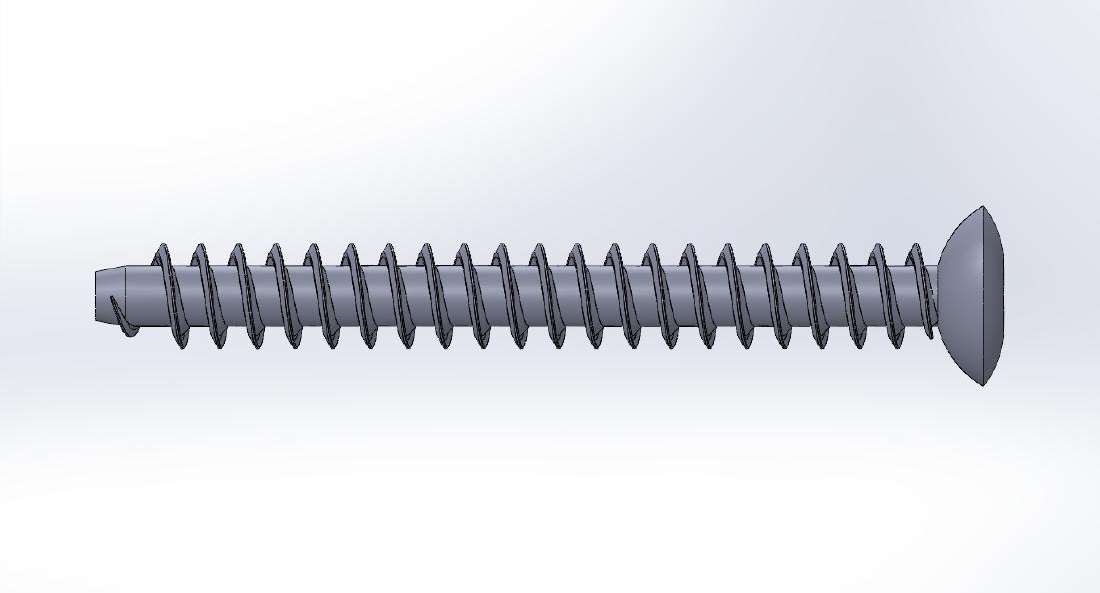
Orthopedic hardware in total hip arthroplasty (THA) has not seen much progress since the invention of conventional buttress screws. However, buttress screws often suffer from fixation failure, causing patients to need replacements every few years. Recently, OsteoCentric Technologies and ALGE Solutions have individually developed two screw designs by the names of Bone-Screw-Fastener (BSF) and ALGE-Screw, respectively. The goal of this project is to validate that the BSF and the ALGE-Screw will address the limitations of the current existing buttress screw in the orthopedic market. The three types of screws will undergo a series of tests to obtain and compare their mechanical properties. The data will verify which screw will provide maximum stabilization of the acetabular shells used in THA procedures.
Acknowledgments
We would like to thank both the UNT Mechanical Engineering Department and the UNT Materials Science and Engineering Department for their guidance and resources.
Synthomusocal Gel
Team Name
Bio-TRAK
Team Members
Reagan Stewart
Katelyn Pipes
Taylor Pipes
Alexandra Teoh
External Sponsors/Mentors
DUALAMS Inc.
John Houston
Cooper Wood
Internal Sponsors/Mentors
Dr. Xiaodan Shi
Dr. Melanie Ecker
Abstract
There is currently no standardized method for testing lidocaine absorption in mucous membranes, and current testing methods involve the use of animal tissue which can be difficult to acquire. This poses a challenge for companies that want to test the efficacy of their nebulizing methods. We propose a synthetic mucosa-mimetic hydrogel that mimics the absorbance properties of laryngeal tissue, more specifically the true and false vocal cords, to allow for aerosolized drug testing. A hydrogel was determined to be the most viable synthetic material because of its great potential for mimicking biological systems and organs. This hydrogel will be used in research and would potentially eliminate the current use of animal testing. The creation of the synthetic hydrogel will also increase the reproducibility of testing. Because there is no currently standardized way for testing aerosolized drug absorption across mucous membranes, the creation of the proposed hydrogel will fill a previously need. While future research and development will be necessary, this a promising foundation for the development of synthetic mucosal hydrogels for drug delivery testing.
Acknowledgments
We would like to thank the Biomedical Department’s faculty and graduate students for providing us with the resources, guidance, and support throughout this project. We would also like to extend a special thank you to the donors of the Center for Anatomical Sciences’ Willed Body Program at the University of North Texas Health Science Center because without their generosity our research would not have been possible.
Smart Head Airbag
Team Name
Titranea
Team Members
Amit Karki
Ee Sheng Hum
Isbi Malla
Internal Sponsors/Mentors
Biomedical Engineering Department
Mr. Edward Gates
Dr. Vijay Vaidyanathan
Dr. Xiaodan Shi
Abstract
Fall-related traumatic brain injury (TBI) is one of the leading causes of death and disability. According to Centers for Disease Control and Prevention (CDC), it is the second leading cause of TBI-related death, with the highest incidence among the elderly population. However, there is no approach that provides a complete preventive mechanism for TBI in the elderly population.
Smart Head Airbag marks the first portable airbag with an alert system designed to mitigate fall-related TBIs among the elderly population. The device is a lightweight accessory that sits comfortably around the user's neck. The device comes equipped with a 3-axis accelerometer and gyroscope sensors that measures the user's motion. The motion parameters are then analyzed by the threshold-defined processing unit (microcontroller) that detects any significant changes in body momentum, orientation, and velocity, and deploys the airbag. The system work in tandem to significantly reduce the force of impact and the risk of TBIs. Additionally, the device houses a GPS and a 4G GSM modules that records the user’s position and sends alert to the emergency contact instantly - notifying the fall and the user’s recent location. The system provides prompt attention and a faster response time to assist the injured user. In comparison to current competitors, the reusability of the airbag and the alert system provides a significant advantage to the Smart Head Airbag.
After the Smart Head Airbag becomes readily available on the market, it aims to mitigate the risk of TBIs and significantly reduce the cases of fall-related TBIs in elderly population.
ODH Active
Team Name
Thoth Company
Team Members
Mahamoud Husawi
Jefferson Malone
Adrian Rodriguez
Internal Sponsors/Mentors
Edward Gates
Dr. Xiaodan Shi
Dr. Vijay Vaidyanathan
Carlos Hernandez
Abstract
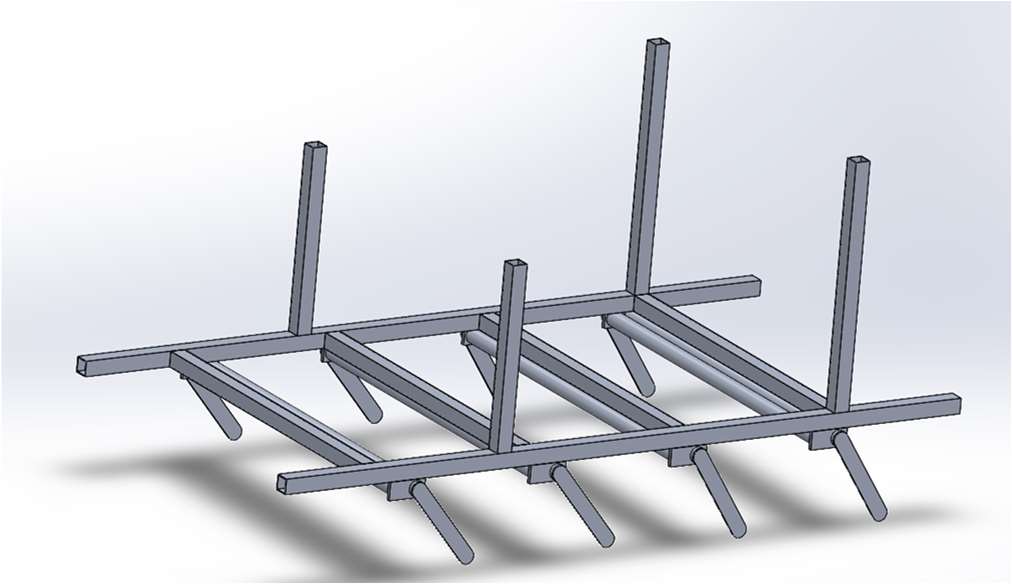
Many disabled people acquire active wheelchairs to remain active and for greater user freedom. Conversely, active wheelchairs are incapable of climbing staircases and are not adequate for rough terrain. Currently there are electric wheelchairs which can climb stairs, but no active wheelchairs. Consequently, developing an active, stair climbing wheelchair would open a new market for disabled individuals who want to remain active and conquer the limitations of their disability. The team’s methodology was first to find what sort of machine is effective at traversing steep and rough terrain. Once we found an archetypical machine to base our wheelchair on, over thirty-four hours was spent in SolidWorks designing the first prototype wheelchair. Group 12 decided to base our wheelchair on tanks which have been used for the last century to traverse trenches, rough terrain, and climb at steep angles . Therefore Group 12’s design, the ODH Active, featured torsion bar suspension, a lowered seating position, a bicycle cassette drivetrain, and tracks. The ODH Active will be able to climb at least four steps, entryways and go off-road.
OmniFlex Stroke Rehabilitation Device
Team Members
Jesus T. Patino III
Enrique Perez-Franco
Abdulaziz Alandijani
Laila Alsuhayw
External Sponsors/Mentors
Phillip J. Parker - OmniRehab
Taylor Mcintosh - OmniRehab
Abstract
Strokes have stolen independence from thousands each and every year. Many devices and therapies exist for stroke rehabilitation but not many incorporate a multifaceted recovery program. Modular has developed a number of the medical devices commonly used by occupational therapists. Omniflex aims to utilize these devices for rehabilitation and in tangent to the virtual reality portion that another group has focused on.
These devices include:
- 32 functional electromyograph (EMG) unites
- 4-10 functional neuromuscular electrical stimulation (NMES) units
- 2 prototypes of electrode arrays that wach contain 20 eletrodes for the forearm (15 on top of arm/ 15 on bottom)
- 5 ppiezoelectric band sensors for the dorsal phalanges
- a mesh glove with functional electrical stimulation to the frontal phalanges
And to hold the electronics, an aesthetic and practical casing to keep everything in one place.
OmniFlex Rehabilitation
Team Members
Andres Orozco
Blake Brown
Kent Sommer
Mark Hudacek
External Sponsor/Mentor
Philip Parker - OmniRehab
Internal Sponsors/Mentors
Dr. Vijay Vaidyanathan
Dr. Xiaodan Shi
Edward Gates
Abstract
Physical stroke rehabilitation is a highly demanded and developing field in both the aging and young population with strokes or brain injuries. The primary aim of this project is to use modern technology, such as hand tracking and virtual reality, to create an enriched environment that will better engage the patient in rehabilitation. By stimulating the patient’s neuroplasticity, the success and efficiency of therapy will improve in comparison to current traditional methods. The secondary aim is to allow for analysis of diagnostic information regarding the patient’s therapy by medical professionals, so that treatments can be tailored to the individual patient. The product will achieve these aims by combining the technologies of neuromuscular electrical stimulation (NMES), the hand tracking utility from Oculus/UltraLeap, and the virtual reality enriched environment created from Unity. This environment along with data analytics and user interfaces in MATLAB, will then provide a unified product for the clinician. This synthesis of technologies is currently not available on the market, and therefore this product represents an improvement on state-of-the-art virtual reality physical rehabilitation tools.