 University of North Texas

Materials Science and Engineering - Spring
Designing Ceramic Materials for 5G Antenna Applications
Team Members
Jonathan Maldonado
Vanessa Montoya
Tyler Smith
External Sponsor/Mentor
Office of Naval Research
Internal Sponsor/Mentor
Dr. Nigel Shepherd
Abstract
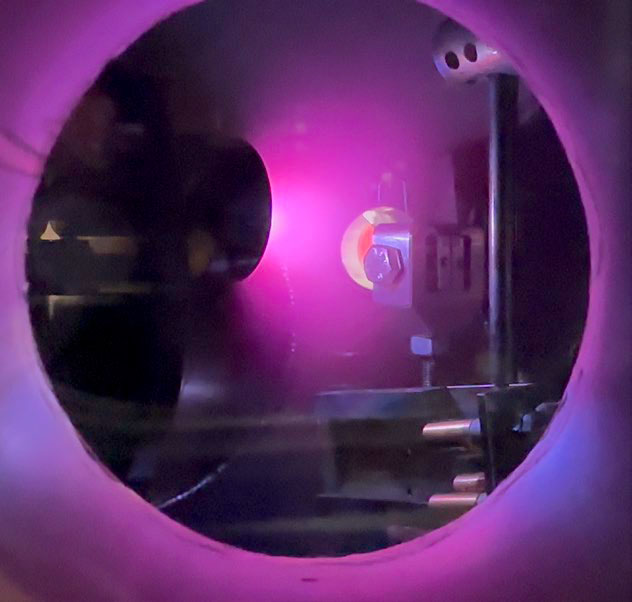
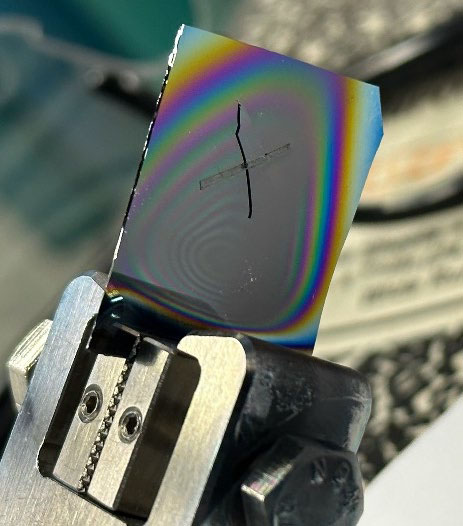
The higher frequencies that 5G utilizes will enable faster data rates, lower latencies, and increased signal capacity. They will underpin next-gen wireless technologies, such as autonomous automobiles, radar, medicine, education, defense, and Internet of Things for everyday Americans. However, RF signals attenuate faster at higher frequencies and therefore travel shorter distances. The solution is to use higher-power RF signals to compensate for shorter penetration depths. However, metallic materials are inadequate because of their rapid signal losses at high frequencies. The solution lies in using low-loss ceramic materials such as lithium titanate doped with zinc oxide that can handle high power and exhibit low dielectric loss. This material has a good dielectric response which is vital for creating 5G frequencies in antennas with functionality over a wide range of temperatures at high power. Additive manufacturing (AM) is envisioned as an inexpensive method for making components required for RF networks. This project will design a process for creating a thin-film standard for benchmarking AM ceramic RF materials. The goal for our team is to use pulsed laser deposition to create a thin film standard with specific stoichiometry and limited surface roughness. The microstructure and chemistry will be quantified by using X-ray diffraction (XRD), scanning electron microscopy (SEM), x-ray photoelectron spectroscopy (XPS), and optical profilometry.
Acknowledgments
We want to thank the University of North Texas and the Office of Naval Research for your support. Special thanks to Sophia Cooper, Saul Sepulveda, and Evan Ober for their assistance.
Solid Stir Extrusion (SSE) Process Design for Aluminum-Carbon Composites
Team Members
Dalia Garza
Jin Kim
Willow Knight
Internal Sponsors/Mentors
Dr. Rajiv S. Mishra
Dr. Ravi Sankar Haridas
Abstract
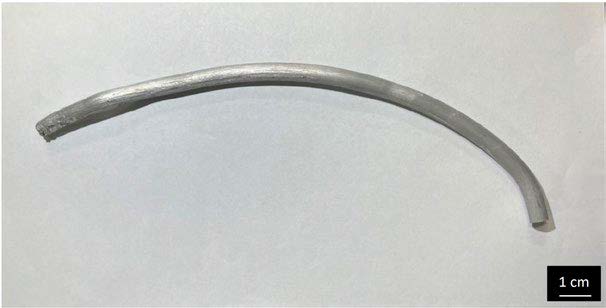
Solid stir extrusion (SSE) presents a novel, continuous, energy-efficient processing method for creating metal matrix composites (MMCs). SSE uses the principles of friction stir processing to soften a material through friction from shear plastic deformation and force it through a die to the desired shape. Coveticmaterials, a kind of MMC, are typically fabricated by melting aluminum and stirring the liquid with an electrically charged graphite rod. This process is energetically inefficient and has limitations due to its high temperature. By adding nonmetal powders into the mixing chamber in SSE, an innovative and more efficient way to create MMCs is accessible. However, because this process is novel, it is in need of process optimization. This design project aims to determine the optimal parameters for the extrusion of Al-C composites to ensure homogeneous mixing of carbon within the matrix. To characterize the extrudate, SEM imaging and mechanical and electrical characterization were performed, as well as Raman spectroscopy to see what form of carbon was left after shear processing. Grain structure analysis was also performed to see the resulting microstructure after SSE.
Acknowledgments
We would like to acknowledge the members of the Center for Friction Stir Processing for their guidance and support.
Additive Manufacturing of Scalmalloyand Scalmalloy Composites
Team Members
Justin Ohl
Tyler Ozee
Joshua Wahl
External Sponsor/Mentor
CAAAM
Internal Sponsors/Mentors
Dr. Sameehan Joshi
Dr. Narendra Dahotre
Shelden Dowden
Abstract
Scalmalloy is a novel commercial lightweight alloy consisting of aluminum, magnesium, and trace amounts of scandium, specifically developed for additive manufacturing. It is primarily fabricated by Laser Powder Bed Fusion (LBPF). In the current work, Laser Directed Energy Deposition (L-DED) was explored for additive manufacturing of Scalmalloy due to its ability to produce large scale (several tens of cm in height) components, suitability in repair applications, and possibility of engineered composite fabrication. However, L-DED of Scalmalloy is sparsely explored in the open literature. In addition, this process is known to produce components with lower relative density (less than 98%). In view of this, the current work defined its design goal to methodically carry out process optimization for producing Scalmalloy samples with a target of 98% relative density using L-DED. This was accomplished by systematically optimizing the powder flow rates, laser power, and scanning speeds. The selective samples were subjected to multiscale structural characterization and property evaluation. Lastly, to explore the possibility of engineered metal matrix composite (MMC) fabrication using L-DED, efforts were made to produce Scalmalloy-B4C MMCs with B4C content ranging from 4-12 wt.% using the optimal processing conditions from previous printing exercises. The microstructure and properties of these MMCs were compared against the Scalmalloy samples. The process design approach of the materials systems demonstrated in the current work provides a pathway for high specific strength applications such as in aerospace and high performance automotive.
Designing an Enhanced Al-Ce Alloy using Additive Friction Stir Deposition (AFSD) for
High Temperature Aerospace Applications
Team Members
Osama Al Balushi
Jacqueline Faz Sanchez
Xuan Thanh Nguyen
External Sponsors/Mentors
U.S. Department of Energy
Loukus Technologies
Internal Sponsors/Mentors
Dr. Vijay K. Vasudevan
Dr. Rajiv Mishra
Dr. Ravi Haridas
Dr. Vishal Soni
Devin Davis
Liam Menchaca
Abstract
Today many Al alloys used in aerospace industries cannot maintain mechanical properties and deform at high temperatures due to lack of thermal stability. Our goal is designing an Al-Ce alloy that can sustain its mechanical properties at high temperature then using Additive Friction Stir Deposition (AFSD) to further enhance its mechanical properties. In this project we designed two different Al-Ce alloys with the addition of other elements based on literature review and Thermo-Calc simulations. These alloys were then characterized, and their mechanical properties were tested in their industry-cast condition. The alloys were cast into rods and deposited using additive friction stir deposition (AFSD) to refine their microstructure and ensure uniform distribution to enhance their mechanical properties. Mechanical testing shows an improvement in yield strength, ultimate tensile strength, ductility, and hardness at room and increased temperatures after AFSD.
Acknowledgments
We would like to thank the CAAAM, MRF and CFSP for their help as well as everyone involved in the project for their time, knowledge and guidance.