 University of North Texas

Biomedical Engineering - Spring
A Medical Footwear Device for A Hallux Valgus
Team Name
The Outliers
Team Members
Caura Burdick
Cornelius Chinn II
Elizabeth Krolczyk
Allyson Tesky
Internal Sponsors/Mentors
Biomedical Engineering Department
Dr. Brian Meckes
Abstract
Hallux valgus, or a bunion, is prevalent in up to 23% of the American population. Bunions are characterized by folding of the hallux towards other toes and a painful, bony bump on the first metatarsophalangeal joint. While at-home pain relief treatments exist, the only permanent resolution is surgery, which involves shaving and re-alignment of the bones. As with all surgeries, having a bunion removed carries risks of infection, mobility-loss,and numbness. Therefore, a novel medical device that incorporates the pain-relieving structure of existing at-home treatments, wider shoe structure of existing bunion footwear, and additional support methods for foot shapes typical of Americans with bunions has been developed. This medical device has a silicone rubber toe ring with an adjustable Velcro® strap to allow separation and stretching of the hallux to an individual’s comfort level. Also included are several interior support structures. On the exterior is a zipper along the medial side of the shoe to allow the user to position their toe in the ring and a metal grommet at the toe box for the toe strap, allowing it to be adjusted without necessitating the unzipping of the shoe.
Acknowledgments
This group would like to acknowledge Dr. Brian Meckes, Dr. Xiaodan Shi, Dr. Sheldon Shi's lab, Mr. Edward Gates, and the UNT Biomedical Engineering Department.
Tissue Engineered ScaffoldForSkin Regeneration
Team Name
ENE
Team Members
Israel Chagolla
Shelby Moulton
Darshita Patel
Dilasha Rana
Internal Sponsors/Mentors
Dr. Neda Habibi
Dr. Taeyul Theo Choi
Abstract
Scaffolds are designed to provide structuralsupport for cell adhesion and tissue developmentduring the wound healing process. There is alarge variety of options when it comes to scaffoldsin tissue engineering. We have chosento test thepotential for biocompatibility and biodegradationusing the materials, silk fibroin and gelatin.
To compare some techniques, we have designedand developed thetissue-engineered scaffoldsusing light-based bioprinting and lithography. Thescaffolds were fabricated using a LumenXbioprinter and photomask lithography process,which were characterized using mechanicaltesting and scanning electron microscopy. In vitroobservation using human mesenchymal stem cells demonstrated the scaffold'sbiocompatibility and potential as a therapeutic toolfor skin regeneration. The fabricated scaffoldsshowpromise for accelerating the healing andregeneration of skin tissue after injuries.
Acknowledgments
Team ENE would like to thank our advisors and mentors for all the support they provided throughout our project. We would also like to extend a thank you to the UNT Biomedical Engineering Department and UNT Mechanical Engineering Department for providing us with their support and resources.
Down to the Wire
Team Members
Damien Edwards (team lead)
Joel Edwards
Robin Islam
Miguel Rios
Internal Sponsors/Mentors
Dr. Lin Li
Biomedical Engineering Department
Abstract
We set out to create a device to assist in preclinical neurological testing. There is not anything on the market to address issues of bitten or twisted wires. During PNR testing, a wire is connected to an electrode in the rat’s skull and the other end of that wire is connected to the computer storing the brain scan. Most labs jury-rig a setup to help hold the wire, but they can come with their own set of challenges. A standardized solution meant for these setups can be useful for labs throughout the country and will hopefully be a cheaper solution in the long term than just having to buy new wires. The major concerns were the rats chewing and twisting the wire that runs from their brain to the computer.
We addressed these concerns by creating a wire suspension system to hold the wire away from the rat’s face and neck, as well as a gimbal hinge and sheath component that lets the wire rotate without twisting. Our design keeps the wire away from the rat’s face and neck while still allowing full movement within its testing container.
Acknowledgments
We would like to thank Dr. Hassan Qandil, the mechanical engineering department, and Edward Gates for their help with design and testing. We would also like to thank Valentine Lechkunfor assistance with graphic design and design sketches.
Redesign of the Vaginal Speculum
Team Name
BIOFEMME
Team Members
Valentina Rodriguez
Lindsey Egger
Kenan Omar
Samip Timilsina
Internal Sponsors/Mentors
Biomedical Engineering Department
Dr. Melanie Ecker
Abstract
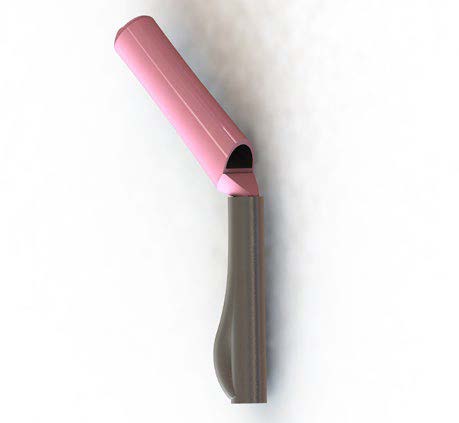
The vaginal speculum is a device used by gynecologists to view a woman’s cervix during a pelvic exam. Pelvic exams are yearly procedures that are necessary to screen for early signs of cervical cancer. The current design has not seen a major upgrade since the 1800s, when the Graves speculum was developed. The current speculum works by stretching the vaginal opening using two bills. Many women describe this as extremely uncomfortable, cold, and even painful.
The Endoscopic Speculum was developed based on women’s concerns and physicians' inputs. The design features a silicone coated tube with two compartments, one for an endoscopic camera and the other for taking specimen samples. This device eliminates the need for stretching the vaginal walls and allows physicians to capture images of the cervix in real time to use those images for further examinations. Our goal is to improve women’s experience at the gynecologist and increase the number of women that get checked for cervical cancer.
Acknowledgments
We would like to acknowledge Dr. Melanie Ecker for her support and guidance throughout this project. We would also like to thank the Biomedical Engineering Department for accepting and funding our idea.
Two-Part Self-Healing Hydrogel Promoting Hemorrhage Control
Team Name
MedForce Engineers
Team Members
Rawda Ahmed
Olanrewaju Akande
Ian Kirk
Alex Torrado
External Sponsor/Mentor
Smith & Nephew
Internal Sponsors/Mentors
Dr. Fateme Esmailie
Dr. Melanie Ecker
Biomedical Engineering Department
Abstract
This project’s goal is to design a medical device that promotes the cessation of wound hemorrhage within 1 minute of its application. Furthermore, it must be able to maintain its therapeutic benefits for at least 14 days after its application while minimizing detrimental effects to surrounding tissue. The increased emphasis on the post-application window is important because it gives potential patients ample time to be transported to safer locations and receive further treatment after first aid is initially applied. This proposed medical device will have 2 components: a hydrogel filling and a hydrogel patch attached to a gauze wrapping. The hydrogel filling will first be applied at the wound site to promote coagulation under 1 minute and control the hemorrhaging. After this, a hydrogel patch covering the wound will be secured with wrapping to seal the wound from the external environment and support tissue regeneration until patients can be transported to secure medical facilities. Various synthetization and testing procedures required to create these hydrogels, test their biocompatibilities, antimicrobial properties, and other key properties like swelling ability.
Acknowledgments
This team would like to thank Dr. Melanie Ecker and Dr. Fateme Esmailie for serving as this group’s sponsors and providing insight into many facets of this project. Furthermore, this team acknowledges the guidance and insight provided by Smith and Nephew concerning the device and its capabilities.
Variable Independent Pressure System (VIPS)
Team Members
Conner Roche
Deron Milan
Haileyesus Melkams
Mamerto Cruz
Internal Sponsor/Mentor
Dr. Melanie Ecker
Abstract
In medical device development and medical professional fields, limited methods incorporate the simulation of bodily fluid flow. The lack of such an apparatus delays the launch of medical devices and limits the abilities of medical professionals to learn, practice, and enhance their skills and experiment on hypothetical operations without the risk of life. Implementing an apparatus that could simulate the flow of bodily fluids would help solve these issues in the medical device and medical professional industries. This apparatus simulates natural body temperature and pressure conditions onany organ with the constraint of a circular inlet and outlet of the organ. The organ will be safely secured to the apparatus and be suspended in a water-filled tank on a heating table that will heat the water to match the internal body temperature. Connected to the organ is a closed-loop pressure system that will pump the fluid from a temperature-controlled reservoir through the system. The apparatus will also provide validation via visual cues, such as observing the solution leak from the organ into the clear surrounding water and by pressure readings from the inlet and outlet of the system. This Variable Independent Pressure System provides the medical industry with a tool to help advance the industry with medical products, skills, and techniques.
The Guardian: Custom Fitted Smart Tooth Guard for Single Reed Instrumentalists
Team Name
KARB
Team Members
Anne Rowland
Khailyn Agis
Brianna Chakrathouk
Ryan Wattar
Internal Sponsor/Mentor
Dr. Tsz Clement Chan, Ph.D.
Abstract
Musicians who play saxophones and similar instruments may suffer tissue damage from repeatedly generated bite forces, which can lead to an accumulation of scar tissue over time. This results in an increasing sensitivity to pain and disrupts musicians’ ability to play their instrument. To protect the inner lip from recurring tissue damage, a custom-fitted smart tooth guard, also known as The Guardian, will be designed and fabricated to disperse the bite forces exerted during performance. The tooth guard has a flat surface parallel to the lip that will significantly reduce the overall pressure. The Guardian also has an embedded Force Sensing Resistor (FSR) used to measure the bite force and collect data that will be processed and displayed on a screen in real time. This will allow musicians to visualize how different musical techniques influence their bite force when the continuous pressure results in pain.
We propose that The Guardian will be available to users around the world via mail service with dental impressions taken by users of their mandibular teeth, the lower front set, using Vinyl PolySiloxane (VPS). From the impression, a positive mold is created to structure PolyEthylene Terephthalate Glycol (PETG) into a comfortable shape with the FSR embedded beneath a layer of PolyCaproLactone (PCL) for biocompatible protection.
Overall, The Guardian is expected to serve as a preventative and correctional measure of a musical health problem that is currently unaddressed.
Acknowledgments
Special Acknowledgements to Dr. Lin Li, Dr. Fateme Esmailie, Dr. King Man Siu, Dr. Xiaohua Li, and Edward Gates for their support and time dedicated to our team for this project.
Building a Miniaturized Heart with Ccontrollable Electrical Stimulation
Team Name
Corazón in Vitro
Team Members
Vilma Arwood
Diego Alarcon
Miguel Martinez
Christopher Vasquez
Internal Sponsor/Mentor
Dr. Huaxiao Yang
Abstract
In vitro cultures of human induced pluripotent stem cell-derived cardiomyocytes (hiPSC-CMs) display an immature fetal-like structure that makes them unsatisfactory, mature hiPSC-CMs are essential tools for disease modeling, drug screening, toxicity testing, and regenerative medicine. Current methods for maturation involve electrical stimulation of hiPSC-CMs to upregulate protein production of ion channels, allowing for the diffusion of calcium, which in turn enhances synchronous contraction and maturation.
Our electrical stimulation device known as Enzo provides an electrical pulse to enhance hiPSC-CMs maturation, and the device can apply a variable frequency of 0.5 - 10 Hz and voltage of 0 - 4.5V. Our electrical stimulator contains a rechargeable 5200mAh 12V lithium-ion battery allowing the device to be mobile while continuously stimulating hiPSC-CMs. The overall goal of our device is to provide continuous stimulation to hiPSC-CMs through variable frequencies and voltage to see calcium transient and contraction.
Acknowledgments
Corazón in Vitro would like to acknowledge and express our gratitude to Dr. Huaxiao Yang and his lab member Percyval Seddoh for their continuous support and for providing us hiPSC-CMs for our device testing. We would also like to thank Percyval Seddoh, Dominic Carrillo the graduate representative of SHPE and Dr. Amir Jafari for both of their inputs.
A Microfluidic Device for Small Tissue Cryopreservation
Team Name
Integrated Cryogenics
Team Members
Zackary Bielss
Nabras Aldarwish
Alaa Elshami
Aidan McRae
Alan Trujillo
Internal Sponsor/Mentor
Dr. Moo-YealLee
Abstract
Cryopreservation is a technique for the long-term storage of mammalian cells at low temperatures. Current cryopreservation procedures are cell type-dependent and need to be optimized for each tissue type, which is time-consuming and inefficient. There is a need in both the medical field and in research to cryopreserve small tissues effectively for later use, and doing so creates the possibility of curing diseases through small tissue transplants, such as Type I Diabetes.
Integrated Cryogenics has designed an open-chamber microfluidic device that small tissues can be preserved in using the vitrification technique, allowing for minimal ice damage to cells. The device is constructed from PDMS and is lined with an array of offset, capturing wells which aid in saturating the small tissues with cryopreservant. It is placed in liquid nitrogen for a snap freeze then stored in cold storage for later use. Using this device greatly reduces the complexity in the cryopreservation process of small tissues.
Acknowledgments
We thank JiafengLiu for guidance building microfluidic devices and Mona Zolfagharfor guidance with cryopreservation techniques.
Vaughan Project: Active Soft Robotic Glove
Team Name
Advanced Robotic Manupulators (ARM)
Team Members
Emilly Hays (Team Lead)
Emily Carney
Kobe Cruz
Jack Slayton
Gary Tejeda-Godinez
Internal Sponsors/Mentors
Biomedical Engineering Department
Dr. Amir Jafari
Trevor Exley
Abstract
Stroke survivors often face challenges in restoring their biomechanical capabilities. The subject of our project experiences difficulties in fine motor skills and muscle strength in their right hand and arm. To address this issue, we present a novel solution consisting of an active soft robotic glove and a rigid passive shoulder support. The soft robotic glove is designed to support motor skills of the hand, while the shoulder support provides stability for the arm when raised. The device is user-friendly, allowing the user to choose the amount of support they need based on the desired application and with a comparatively reduced size and weight, making it suitable for stroke survivors with reduced muscle density. The device uses materials like water, compression fabric, and 3-D printing filament, making it easily manufacturable and therefore accessible to a wider population of stroke survivors. The results of this study demonstrate the potential of the soft robotic glove and rigid shoulder support as an effective tool for the rehabilitation and restoration of biomechanical capabilities in the upper extremities of stroke survivors.
Acknowledgments
The group acknowledges Dr. Xiaodan Shi, Mr. Edward Gates, and Vulcan Spring & Manufacturing Co.
Peltier-Integrated Therapeutic Wrap
Team Name
The BumbleB.E.’s
Team Members
Kaleigh Ruiz
Samantha Ryan
Sarah Stutsman
Tanya Tirumala
JaTara Williams
Internal Sponsors/Mentors
Biomedical Engineering Department
Dr. Amir Jafari
Trevor Exley, PhD Candidate
Abstract
Muscle and joint injury due to strain is a common occurrence among a variety of demographics. Muscle soreness, joint injury, and chronic joint conditions can be debilitating, affecting one's ability to perform daily activities. This is such a recognized issue that numerous devices have been designed to treat this pain, including the device presented today. Utilizing the technology behind a specific flexible thermoelectric device called a Peltier, the therapeutic wrap designed can be applied to the joints most commonly affected by injuries and chronic conditions. After wrapping the device around the affected joint, users can easily decide between which two modes -heating or cooling -they prefer through the flip of a switch. Thermal management and mechanical properties of flexible Peltiers were researched thoroughly before being implemented in the size-adjustable and joint-conforming therapeutic wrap that constantly monitors thermal conditions while in use.
Acknowledgments
We would like to express our sincere gratitude to Edward Gates, Lab Manager of the UNT Biomedical Engineering Department, for his immensely valuable guidance and recommendations during our project’s design and development stages.
Stem Cell Device
Team Name
ReGen
Team Members
Joanna Johnson (Team Lead)
Idaly Lujan
Sofi Alshaikh
Nirali Patel
Kaitlyn Nussberger
Internal Sponsor/Mentor
Dr. Yong Yang
Abstract
Stem cells are very useful in tissue engineering and cancer research. However, only up to 0.02% of stem cells required for most applicationscan be harvested from a single person. This necessitates extensive expansion in vitro. We have created a device that maximizes culture spaceand provides the proper environment for growth while minimizing differentiation.
Working off Dr. Yang’s previous research which shows that a small percentage of mechanical strain on stem cells promotes cell expansion, but minimizes differentiation, we have created a device which utilizes a motor and gear system todeliver a range of 5-15% strain at 0.5 Hzuniaxially. This device is also connected to a user interface system, to improve convenience for end user's and toallow remote accessibility from mobile devices. We hope that this device can create a more efficient way to mass produce stem cells due to its automated featuresand effectiveness in postponing senescence reducing spontaneous differentiation.
Acknowledgments
Dr. Kun Man, Jiafeng Liu, Dr. Neda Habibi, Dr. Amir Jafari, Trevor Exley, Dr. Xiaohua Li, Dr. Mark Wasikowski, and IEEE UNT
Surgical Tools Device Management
Team Name
External Thinkers
Team Members
JomiAjayi
Eunice Benga
ZakiyIslam
Carlos Nava
Anne Temomo
External Sponsor/Mentor
BlackTechIP
Internal Sponsor/Mentor
Dr. YoungwookWon
Abstract
Many hospitals struggle to maintain organized inventories of their surgical tools, which can lead to life-threatening situations for patients and make it difficult to keep track of which tools are available. To address this problem, we propose implementing RFID trackers on each surgical instrument to enable real-time tracking and identification of each instrument's location and condition after surgery. The RFID tracker will be designed to remain attached to the instrument and be able to withstand sterilization. Additionally, an antenna will capture the signal from the RFID trackers, which will be processed by a microcontroller (RFID tag reader) and sent to a laptop for storage and analysis. Our software will enable hospitals to keep track of each surgical instrument and quickly identify any missing or retained tools, reducing the risk of patient harm.
By implementing this technology, hospitals can improve the safety and efficiency of their surgical procedures.
Acknowledgments
Dr. Shi, Edward Gates, Dr. Won, Rick, Aaron and Stephen from BlackTechIP