 University of North Texas

Mechanical and Energy Engineering
BEAST Exhaust
Team Members
William Caleb Crowe
Kyle Jaeger
Ammar Jilani
Emmanuel Iroulor
External Sponsor/Mentor
Terrance Menyweather
Internal Sponsors/Mentors
Rick Pierson
Hassan Qandil
Onome Disi
Abstract
The goal of this project is to augment the sound coming from a 4-cylinder engine to the likeness of a lion's roar. We've achieved that via an easy to install glass-pack muffler configuration. The internal technology used to achieve this audible note is a fixed end sound device comprised of two blue spring steel vocal cords with identical geometries to a lion's cords. The thickness/natural frequency of the cord was calculated to match the dominant frequency of our test vehicle at the RPM of the engine at max HP. This creates a roar like reverberation effect within the chamber, and a louder wave at the specific dominant frequency of a lion's roar. In addition, a blue spring steel reed plate with slotted openings reacts to the negative and positive pressure caused by the cords within our sound device chamber.
Acknowledgments
Beast Exhaust’s social cause consist of giving assistance to organizations that help release, heal, rescue, raise, preserve, promote and nurture the well-being of exotic animals such as big cats and wild dogs.
Vibration Analysis

Team Name
FET - Vibrations
Team Members
William Caleb Crowe
Kyle Jaeger
Ammar Jilani
Emmanuel Iroulor
External Sponsors/Mentors
Forum Energy Technologies
Garrett Allison
Saul Dominguez
Internal Sponsor/Mentor
Dr. Mark Wasikowski
Abstract
Our system that we are engineering is made for the sole purpose of vibration analysis and failure prediction. Based on the vibrations the system is detecting from accelerometer sensors, we can run numerical analysis on the amplitude and frequency of these vibrations to determine which parts of the oil pump (power end and fluid end) will need maintenance, replacement and/or show critical failure before signs of wear even begin to arise.
Flight Simulator
Team Name
Wright Simulation
Team Members
Frederique K. Fonka
Matthew J. Magana
Maria Avina-Montejano
Joseph B. Perry
External Sponsors/Mentors
Donny Melara - Helicopter Pilot/Mentor
Terry Mauboules - Plane Pilot/Mentor
Internal Sponsors/Mentors
Mark Wasikowski, Advisor, Lecturer, Sponsor, Mentor
Hassan Qandil, Lecturer, Mentor
Bobby Grimes, Mentor
Robin Shull, Mentor
Omar Cavazos, Mentor
Lee Smith, Mentor
Onome Disi, Team TA, Mentor
Abstract
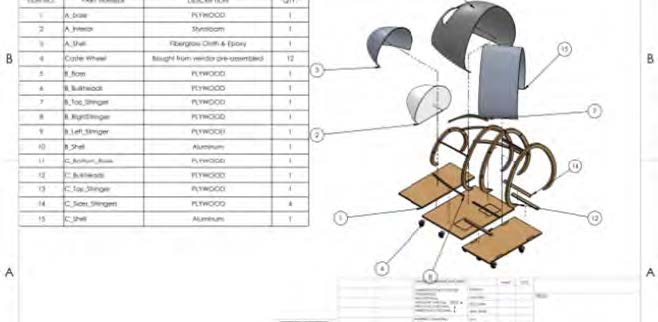
Our group was tasked with building a flight simulator to mimic the controls and feel of a Boeing 747. We are working on the 4th iteration of the project at UNT. A flight simulator is a scaled-down replica of an airplane that includes the assemblage of equipment and computer software programs necessary to represent the airplane in ground and flight operations. It is a visual system providing an out-of-the-cockpit airplane view while also providing the view and visuals of a helicopter. The flight simulator is designed in compliance with the minimum standards specified by the FAA.
It is designed for maximum reliability and ease of maintenance, and will also offer the highest level of realism and fidelity. These settings allow any person with an interest in practicing their flying skills without the worry of caution, while also allowing them to apply previous settings and knowledge to extract desired data. The goal of this project is to build a realistic environment to simulate flight for academic purposes. The system consists of three sections: the radome, the cockpit, and the storage/third chair. Each section utilizes wood carpentry, bio-composites, and lightweight composites.
Fried Rice Machine
Team Members
Luke Borel
Dalton Carlile
Blaise Sherrill
Derrion Thompson
Internal Sponsors/Mentors
Xiaohua Li
Abstract
Our sponsor requested that we design a single-task appliance to automate the cooking of fried rice in a commercial/restaurant environment, only requiring the operator to insert the ingredients and set the cook cycle. The design required a combination of convection and conduction heating, along with an automated stirrer and a filter mechanism to collect excess cooking oil. Existing machines currently on the market have some of the features desired but there are none which have every feature.
Rather than fabricate the entire machine from scratch, we selected an existing machine which was closest to the requirements we were given and heavily modified it. The machine we chose has the automated stirrer and conduction heating, but does not have convection heating or an oil filter. Our modifications add convection heating, an oil filter, and a redesign of the stirrer for better mixing.
Battery Operated Spotlight

Team Name
Make the Sky Green
Team Members
Abdulaala Alalqum
Kenan Rodriguez
Marco Sanchez
Robbie Krishnan
Zach Hatfield
External Sponsor/Mentor
John Alexander
Internal Sponsor/Mentor
Rick Pierson
Abstract
As a team, we are designing and building a spotlight battery operated instead of a diesel operated spotlight. Our accomplishment helps the sponsor with the weight of the project, cost, source of energy, and transportation. UNT has rented a diesel operated, heavy weight, and noisy spotlight for campus events for $1500 daily. We designed and built 100,000 lumens spotlight, battery operated, quiet, and portable. The uniqueness of our project is that we provided economical solution by designing a product that costs less and ecological solution that is less harmful to the environment.
Mechanical Exoskeleton
Team Name
ExoLite
Team Members
Daniel Ramirez
Lorenzo Gamboa
Cedric Kenfack Gouanet
Kojo Agyeman
External Sponsor/Mentor
Marcos L. Nevarez, MSgt - USAF
Internal Sponsors/Mentors
Dr. Amir Jafari
Rick Pierson
Abstract
Many industries strain the bodies of the workers, averaging almost $35,000 in workers compensation paid out per case. We aim to reduce the number of injuries caused and in turn, save people the pain and companies the money.
Our device provides passive lifting assistance for the user’s arms, reducing the strain when working overhead or holding weighted items for extended periods. We strived on compacting the design to reduces likelihood of snagging and making it affordable to eventually be viable for private purchase and use.
HVAC Portable Ice Maker
Team Name
FROR HVAC
Team Members
Donald Juarez
Adam Jasim
Alex Vargas
Emmanuel Okhilu
Omar Hamid
External Sponsors/Mentors
Cooper Wood
Jeff Abbott
John Houston
Internal Sponsor/Mentor
Dr. Hassan Qandil
Abstract
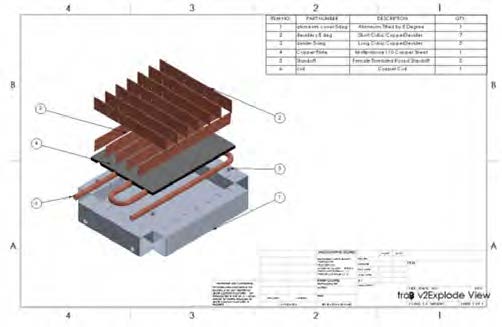
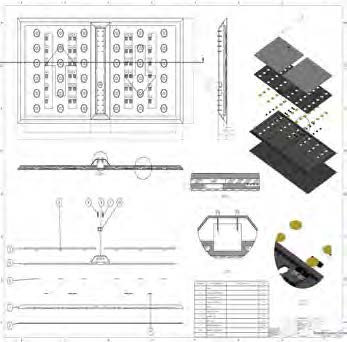
Our team was challenged with creating an ice maker to be used indoors and outdoors. We had to redesign the unit from previous semesters and completely change the initial prototype. We installed an insulated frame, restructured the HVAC system and designed the evaporator for the system.
We manufactured the evaporator on our HVAC ice maker. The figure above displays the mold and tray in an exploded view on the left side. The right side displays the tray and components installed and put together in its final form.
Manual operation due to lack of control system support.
FSAE Paddle Shifters
Team Members
Reece Ahler
Angel Arvelo
Jorge Celestino
Mikayla Lambert
Cedric Ukabiala
Internal Sponsors/Mentors
Mechanical Engineering Department
Dr. Hector Siller
Abstract
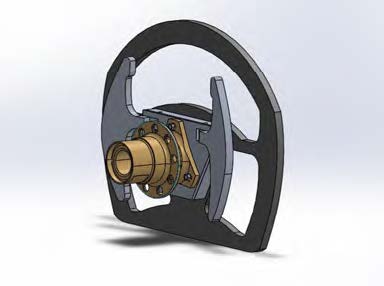
Mean Green Racing desires to increase their performance in every aspect. In the past, we have shown success in how quick our vehicle is against the competition. We aim to increase the bar of how quick our car can be. Paddle shifters are the next step to having a true racing car and to stand out against the other universities in our engineering knowledge. Paddle shifters will take the place for our hand shifter that is used by the driver. Think of a motorcycle manual shift system and that is what we use for our car. Instead of that, we will be using paddles that real performance cars use (Ex. Ferrari, McLaren, etc.) The driver will shift without having to take his left hand off of the wheel, allowing them to focus more on their driving rather than fumbling for a shift they may have already missed.
Solar Clamp
Team Name
Solar Clamp
Team Members
Emma Ndei
Major Hansen
Alexandra Spinnett
Michelle Vargas
Jose Vela
External Sponsor/Mentor
Solar Solutions
Internal Sponsors/Mentors
Richard Pierson
Dr. Saman Rashidyan
Abstract
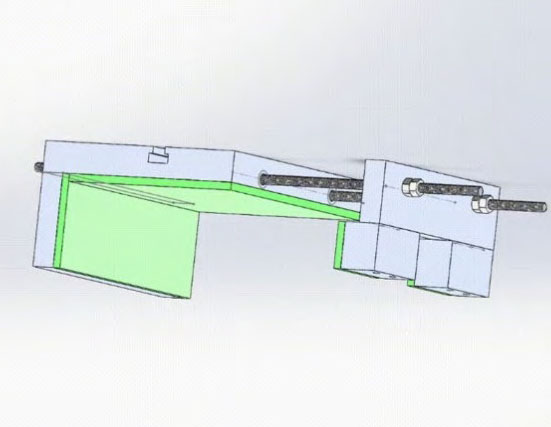
We as a team created a solar clamp for parapet walls in between houses in the Washington DC area. The walls are very old. Drilling into the walls to install solar panels was not reliable. By making an adjustable clamp that can fit on top of the parapet wall we hope that we can take stress off the wall and essentially allowing more customers in the Washington DC area to have an option to use solar energy.
FlexCure
Team Members
Jeremy Coates
Christina Vilchez
Adam Munshi
Ethan Courcier
External Sponsor/Mentor
Adaptive3D
Internal Sponsors/Mentors
Dr. Yijie “Steven” Jiang
Dr. Hassan Qandil
Abstract
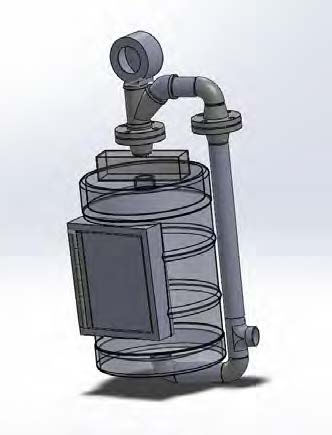
Traditionally, 3D printed parts are used as prototypes because of their unreliable mechanical properties. Adaptive3D, the leader in elastomeric solutions in the additive manufacturing industry, is looking to shift that paradigm. The company’s core technology is a proprietary chemistry that results in market leading elastomeric materials that enable additive manufacturing of flexible parts and products optimized for end use. We have been tasked to build a forced convection, thermal post-curing device for 3D printed lattice structures that applies even heating, reduces cure stresses, and decreases residual odors.
Unmanned Aerial System (UAS)

Team Members
Mishal Raza
Moses Maina
Kessiah Thompson
Nicolas Catano
Cristobal Morfin
External Sponsor/Mentor
DFW Boat Specialists
Internal Sponsors/Mentors
Dr. Mark Wasikowski
Mechanical Engineering Department
Abstract
The purpose of this project is to design an Unmanned Aerial System (UAS) which is to be utilized as the payload of a rocket competing in the NASA Student Launch Competition. This UAS is designed to be a self-deploying, autonomous, cylindrical quadcopter which is to fly without the use of a Global Positioning System (GPS). Once released, the drone will receive its initial coordinates from the rocket and proceed to follow the falling rocket body using computer vision. The drone's primary mission is to acquire final coordinates of the falling rocket body which is achieved using vector analysis. The final coordinates will be sent to ground control using radio transmission and marked on a pre-gridded image of the landing field. The drone body is fabricated using fiberglass which houses an electronics bay. Attached to the body are four carbon fiber tubes with aluminum motor mounts to hold the motor and propeller assemblies. The arms will pop out from grooves in the body and extend to 90 degrees once jettisoned.
Acknowledgments
We would like to extend utmost gratitude to UNT MEEN staff members who have offered valuable assistance and guidance to aid in project progress.
Piezoelectric Occupancy Controller
Team Name
Piezos
Team Members
Mathew Brauch
Eduardo Gutierrez
John Stavrianopoulos
Persis Lemma
Internal Sponsor/Mentor
Dr. Hassan Qandil
Abstract
This project uses an alternative source of energy to produce electric energy, resulting in clean energy, to meet the power demand of our product. The clean energy source is attained by using a piezoelectric transducer to convert mechanical energy to electrical energy. Piezoelectric transducers can convert mechanical energy from pressure forces and vibrations during activities such as walking and traveling into electrical energy. A device was designed by placing piezoelectric transducers under a floor mat to harvest the energy of a footstep while keeping count of the occupancy of a room. Two mats, one for entering a room and one for exiting a room, communicate to a controller to determine if a person is entering or leaving a room and visually represent maximum occupancy with led lights. The results show that a single piezoelectric transducer can generate 40 volts and 100 microamps when 87.5 lbs are applied. Therefore, this piezoelectric energy harvesting system proves its potential for low power applications while it might not meet the demand of high-power applications.
D.O.E Solar Decathlon

Team Name
The Eagles Nest
Team Members
Andrew Stewart
Tanner Gardner
Ozioma Ozigbo
Noah Ali
Froylan Paredes
Adelyn Johnson
Anne-Mari Ulrich
External Sponsors/Mentors
Sal Alhelo Energy EOS
Fares Sweidan Energy EOS
Ryan Jensen Gensler
Sanika Kul Department of Energy
Internal Sponsors/Mentors
Weihuan Zhao
Hassan Qandil
Bill Hensen
Abstract
The mission of Eagle’s Nest is to reimagine the built environment, keeping sustainability at our forefront and the design of an eagle’s nest as our touchstone. Eagle’s Nest is a response to the high carbon emissions from residential buildings and the crucial need for on-campus graduate students housing at UNT Discovery Park.
Our project goals include:
- Meet the crucial need for on-campus graduate student housing at UNT
- Tackle head-on the high carbon footprint of residential buildings by reducing emissions by 50%.
- Provide accommodation for UNT graduate students at 20% less than the market average. Immerse students in the cutting-edge renewable energy research at UNT.
- Create community among students that encourage innovation, social action, and excitement towards a more sustainable future.
- Facilitate relationships between university students and the Denton community through an open and green environment for community gatherings.
Consolar Aqua Pump - Solar Desalination Circulation System
Team Members
Austin Gross
David Chamberlain
Jonathan Drummond
Bashar Zuaiter
External Sponsor/Mentor
JD Elkurd (Solar Solutions)
Internal Sponsors/Mentors
Dr. Hassan Qandil
Dr. WeihuanZhao
Bridger Planz
Abstract
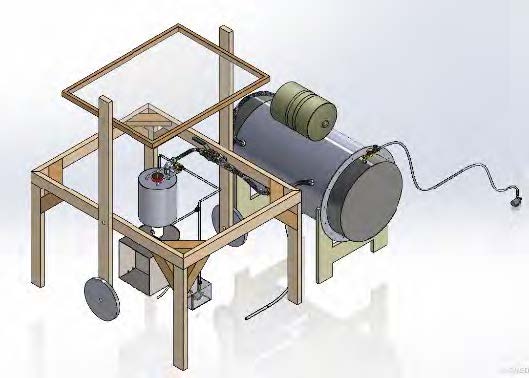
In today’s age the Earth faces a supply shortage of finite freshwater diminishing exponentially every year as consumer demands increase. Where the Consolar Aqua Pump comes in is it is an element of the Solar Desalination System comprised of a heat exchanger, evaporation chamber, and salt catch collector group projects. The Solar Desalination System is a portable ocean water desalination treatment system that serves to repurpose salt water into clean freshwater completely powered by solar energy. The responsibility of the Consolar Aqua Pump is to direct the flow of salt water and its boiled vapor through tubing and hoses from a source through an evaporation process separating salt and other contaminates providing freshwater. A control circuit, driven by a Raspberry Pi, powers on/off various pumps and actuator valves autonomously by interpreted data collected by flow and temperature sensors throughout the system. Since the system is independent of electricity utilizing solar panels to charge batteries, the project is intended to serve clean water to communities in regions lacking freshwater anywhere there is an abundance of seawater, sunlight and/or insufficient infrastructure globally. This system is easy to setup, operate, and does not require and external power source meaning a net zero energy cost to customers.
Acknowledgments
Special acknowledgement to Antonio Robledo Garcia and Keon Brown for their volunteer work and contribution in developing the solar tracking and designing the salt catch collect and its steam trap.