 University of North Texas

Biomedical Engineering
Medication Adherence System
Team Name
Chiron Applications
Team Members
Philip Homsombat
Arturo Hernandez
Luis Alcantar
Oscar Acosta
External Sponsor/Mentor
LockedBrands
Internal Sponsors/Mentors
Dr. Brian Meckes
Dr. Xiaodan Shi
Abstract
Medication nonadherence refers to not taking medications on schedule as prescribed. Nonadherence is the cause of 100,000 deaths with about $100 billion in preventable medical costs per year. The goal of the medication adherence system was to establish an AI-based algorithm to motivate a patient to adhere to their med regimen. This was accomplished using the recommender system algorithm which can filter various items a user may like using explicit and implicit feedback as well as training a neural network which is a series of algorithms to recognize patterns from a patient’s input data to classify them for different applications within the machine learning. Various positive reinforcement methods using motivational reminders and different rewards were implemented into the recommender system to adapt to the user and find their best preferences to keep them complying with their medications.
An app and graphical user interface were created to alert patients when it was time for them to take their medications and showcase the different motivations and rewards. The long-term objective of this AI system is to increase medication adherence within patients who take daily medications.
Acknowledgments
Special acknowledgment to our sponsor LockedBrands, Edward Gates, Alejandro Olvera, and Trevor Exley.
Development of a Passive Upper Body Orthosis to Facilitate Limb Movement and Trunk
Support
Team Name
2nd Player Systems
Team Members
Christine Beauchamp
Abigail Benefield
Caleb Bouchard
Sophia Zoch
External Sponsor/Mentor
Dr. Kristen Taylor, DO
Internal Sponsors/Mentors
Biomedical Engineering Department
Dr. Amir Jafari, Ph.D.
Abstract
There are a multitude of prevalent diseases and disorders, including but not limited to ischemic/hemorrhagic stroke, muscular dystrophy, and arthrogryposis, that present with neuromuscular deficiencies. Many patients diagnosed with these conditions may experience some degree of muscle weakness or difficulty in controlling extremity movements. Rehabilitation services and the medical devices that accompany them are often expensive and can cause treatment to be cost prohibitive for many individuals. 2nd Player Systems is developing a 3D printed lightweight passive upper extremity orthosis and vest to facilitate limb movement and provide trunk support for individuals living with these conditions.
The orthosis utilizes adjustable tensioners and elastics to provide a gravity-balancing, upward force on the arm; this will cause the subject’s movements to require less input force, allowing them to move through a greater range than before, while also decreasing fatigue. The neoprene and canvas vest contains 3D printed “bone-like” structures and straps to provide trunk support and maintain an erect posture. The overall goal of our proposed device is to assist movement and provide stability to individuals with muscular deficiencies, while remaining as affordable, accessible, and lightweight as possible.
Acknowledgments
2nd Player Systems would like to acknowledge the Computer Vision and Intelligent Systems (COViS) Lab for their collaboration and use of their human estimation and tracking system. We also would like to acknowledge Dr. Lee Smith and the Bioproducts Innovation Lab for the use of their universal tensile machines and Dr. Lin Li for his assistance in our signal processing. Finally, we would like to thank the subject and their family for their participation in this study.
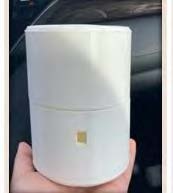
‘The Pill 2’
Team Name
L.E.D Zeppelin
Team Members
Elizabeth Adebayo
Grace Doucet
Iqra Tariq
Chiragh Lakhani
External Sponsor/Mentor
Locked Brands
Internal Sponsor/Mentor
Dr. Adam Yang
Abstract
In the 1990’s, the opioid epidemic began. Since then, misuse of opioids has been a problem. In 2019, over 10 million people in the United States misused opioids and over 70,000 people perished. The milligram count of opioids prescribed increases every year and shows no signs of slowing down. To fight this issue Locked Brands has acquired L.E.D Zeppelin to create a device to prevent the misuse of not only opioids, but all narcotics. Currently in the market, pill destroyers are available but must be used willingly and take over thirty minutes to be effective. However, this method does not prevent the misuse of narcotics.
The intended device, also known as ‘The Pill 2’, will act as a timed pill dispenser that only a pharmacists is able to enter. The user will only have access to their medication as prescribed by their physician. If the user attempts to break into ‘The Pill 2’, all medication held within will be rendered ineffective and intangible within ten seconds. The aim of ‘The Pill 2’ is to bridge the gap between Big Pharma companies and users in reducing opioid misuse.
Acknowledgments
We would like to acknowledge and deeply express our gratitude to Justin Monger and Locked Brands for his continuous support & guidance throughout this journey. We would also like to thank the Mechanical Engineering Department for assistance in various validation testing needed for this project.
SpiraClear Chest Tube
Team Name
MG Medical
Team Members
Jazmine Fuentes
Erica Gervacio
Alexis Cervantez
Brenda Sanchez
External Sponsor/Mentor
Dr. Albert Yurvati – UNT Health and Science Center
Internal Sponsor/Mentor
Dr. Yong Yang
Abstract
Thoracostomy procedures are commonly performed in the clinical setting to remove unwanted air or fluid from the pleural space of patients via chest tube drainage. Conventional chest tubes are not always sufficient in their clearance, due to residual blood not fully passing through and blood clot formation. To combat these issues and decrease patient complications, we have proposed a platinum cure silicone chest tube with the integration of an Archimedean spiral. The device’s incorporated spiral follows mathematical principles to ultimately increase drainage velocity throughout the chest tube, without direct medical intervention. Our goal is to improve drainage efficiency by increasing the fluid velocity by 150%, to reduce the likelihood of blood clot accumulation and other post-operative complications.
Acknowledgments
We would like to thank the UNT Mechanical Engineering Department and UNT Physics Department for providing us with their support and resources. We would also like to thank the UNT Health and Science Center for their resources and guidance throughout the project.
Chilling Gloves for CIPN Patients
Team Name
Mech-Tech
Team Members
Justin Howard
Kenneth AryeeAryee
Wael Al Al-MatariMatari
External Sponsors/Mentors
The Real Time Group
Cooper Wood, Project Manager
David Felio, CEO of Real-Time Group
Internal Sponsors/Mentors
Dr. Clement Chen
Edward Gates
Abstract
Mech-Tech aims to create a chilling glove device that will effectively cool the hands to prevent cancer patients from developing Chemo-Induced Peripheral Neuropathy (C.I.P.N). The device will be composed of an aluminum tank filled with chilled water that will stay chilled using a thermoelectric cooler (TEC). The chilled water will be pumped from the tank to the gloves through tubing that covers the surface area of the hands and back to the tank. To regulate the temperature of the hands a thermal sensor will be connected to a TEC control board and if the hands reach a range that is not safe for the patients the temperature sensor powers down the TEC control board. The external hand temperature needs to be cooled to about 4-5°C for our device to be effective for preventing C.I.P.N.
In this temperature range, cellular respiration is slowed, and the blood vessels constrict to help prevent chemotherapy drugs from passing into the extremities of the patient. The independent cooling system that is included within the water tank along with the recirculating fluid system makes the Mech-Tech chilling glove device unlike any other device for C.I.P.N treatment in the industry. Backed by extensive research, the current design of the Mech-Tech chilling glove device will be pivotal in preventing C.I.P.N from developing in chemotherapy patients by safely lowering the temperature of the hands.
Acknowledgments
Mech-Tech would love to thank our mentors for all the support they provided throughout
our project.
The team would also like to extended a special thank you to David Felio, Cooper Wood,
Trevor Exley, and Edward Gates.
SmartCast
Team Name
By Outcast Engineering
Team Members
Terrias Bailey
Jason Jun
Hamdi Ashour
Tatiana Mwaramba
External Sponsors/Mentors
Dr. Timothy Harris of UT Southwestern
UT Southwestern Medical Facility
Internal Sponsors/Mentors
Dr. Melanie Ecker
Edward Gates
Abstract
Bone Fractures are a common injury and require weight-bearing restrictions [WBR] during the fracture recovery process to assure the proper mending of the fracture. Patient compliance with WBR is known by physicians to be low which can inadvertently end in extremity amputation in the worst case. Scenarios like this could lead to malpractice lawsuits aimed at physicians who have done the best they can to inform patients about the importance of following WBR during the recovery process.
The SmartCast, which is sponsored by UT southwestern medical facility, is a medical device meant to aid in the fracture recovery process of lower extremity fractures such as leg fractures or metatarsal foot fractures. Patient non-compliance is being tackled with the creation of the SmartCast, which uses piezoelectric force sensors configured in a neoprene foot sleeve to estimate and analyze the weight-bearing compliance of patients. Traditional methods for measuring compliance involve the deformation of elastic like films which are placed in the cast/boot upon its initial use. The SmartCast is being built on a SparkFun 9DoF [Degree of Freedom] IMU Razor, which will allow for extremity elevation data as well as the weight-bearing data from the force of the foot. This data can be saved via local memory/microSD or be live broadcast via Bluetooth to a combined cell phone application to keep the patient or physician updated on the fracture recovery status.
Sleep Apnea Monitoring System
Team Name
zZ Tron
Team Members
Zainab AL Farig
Rincy Robin
Internal Sponsors/Mentors
Dr. Vijay Vaidyanathan
Edward Gates
Abstract
Almost 6 million adults between 30 and 70 years suffer from sleep apnea. Sleep apnea is a repeated episode without breathing for 10 seconds or more during sleep. Also, it is a severe underlying cause of many health issues like hypertension, cardiovascular diseases, stroke, and depression.
The current diagnosis for sleep apnea is overnight polysomnography, conducted in a sleep clinic under the supervision of a specialist. It is very labor-intensive and difficult for patients to get into sleep study, especially during the pandemic. Patients have waited up to 6 months or more to get an appointment for a sleep study, which was a challenge for the health providers.
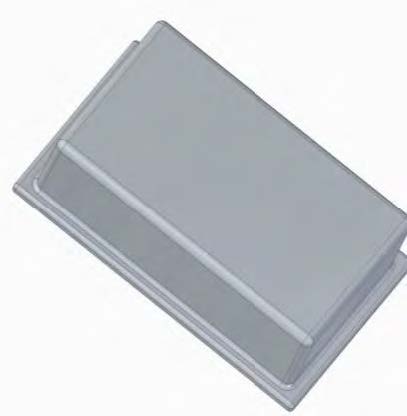
The main focus of this project is to bring sleep study into the patient's home; to have a better analysis of sleep apnea in a familiar environment. The design uses computational and electrical learning that uses features computed from ECG data obtained from overnight sleep studies.
Bioresorbable Wireless Pacemaker
Team Name
By Rete Automations
Team Members
Natanael Monroy
Samuel Price
Babin Basnet
Anup Shrestha
Internal Sponsors/Mentors
Biomedical Engineering Department
Mechanical Engineering Department
Dr. Xiaodan Shi
Abstract
Temporary cardiac pacemakers are internal devices that attach to the heart to regulate heartbeat pacing when out of rhythm for short-term use. Traditionally, temporary pacemakers connect to the apex of the heart by utilizing wires that travel through the skin to reach the heart. When the pacemaker is removed, it is pulled directly out of the body; the sutures ruptures and damages cardiac tissue.
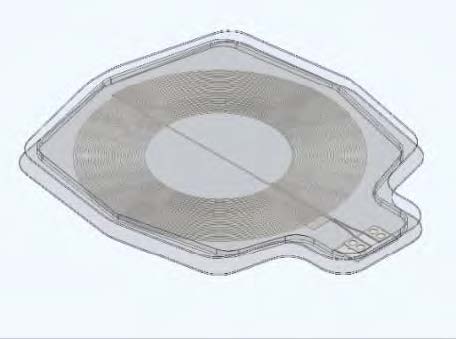
We present a leadless, battery-free, and implantable cardiac pacemaker for postoperative regulation of heart rate and rhythm that dissolves and clears by natural biological processes. The biodegradable pacemaker will store aspirin; its release is controlled to speed up the pacemaker's degradation. The goal of this project is to produce a pacemaker that minimizes the risk of cardiac complications.
Acknowledgments
Special acknowledgement to CAAAM Research for producing magnesium wires for the pacemaker’s coil through Electrical Discharge Machining.
Manipulation of Water Droplets
Team Name
Hydrokin-IX
Team Members
Destiny Brown
Nadine Huerta
Internal Sponsor/Mentor
Dr. Amir Jafari
Abstract
Acoustic levitation occurs when colliding sound waves produce a standing wave (ultrasonic radiation), in which an object can be trapped. This technology is proposed for use in reduction of toxicity of chemotherapy and other aggressive medications during drug delivery. We evaluate water droplet manipulation through the medium of air to understand the trapping forces necessary for spatial and temporal management. The Acoustic Levitator consists of six concentric rows of transducers and an Acoustic Knife(AK) with the primary movement vehicle of a robotic arm. Although the purpose of this paper is to highlight the use of ultrasound technology for drug delivery techniques, there is further research to accomplish before implementing in industry.
Gait and Stability Assistance Device
Team Name
SureStep
Team Members
Carlos Hernandez
Nicole Javor
Gloria Saenz
Nick Torres
External Sponsor/Mentor
Wes Pettinger
Abstract
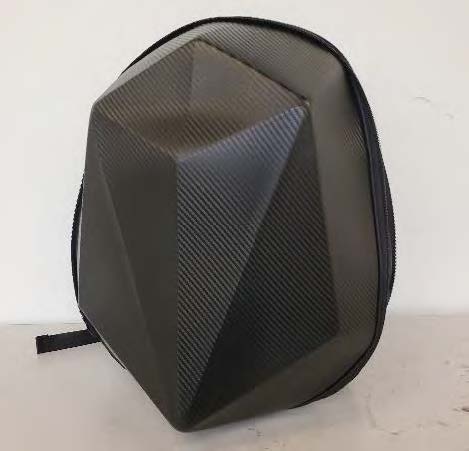
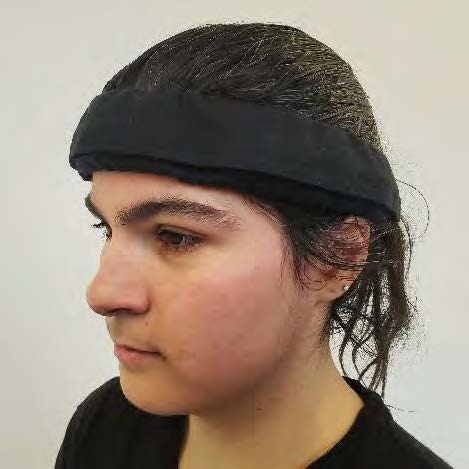
Thousands of people become victims of a fall each year. Our goal is to help stabilize and retrain those people to limit the chances of future falls. Our device will benefit the physical therapy industry, nursing homes, rehabilitation centers, as well as individuals who wish to remain as independent as possible. Our unique approach to this problem offers a hands-free, portable, lightweight solution that can be worn on the back as well as a headband that increases feedback during a loss of balance. This two-part system serves to provide stability to the user while retraining their brain to recognize and recover from a loss of balance.
Acknowledgments
We'd like to thank the Pettinger Foundation for sponsoring our project and Rick Pierson for his manufacturing assistance.
2-D Motion Marangoni Bot
Team Name
BioBots
Team Members
Tolu Thorpe
Anecyia Shields
Miguel Fraire
Internal Sponsor/Mentor
Dr. Amir Jafari
Abstract
Immedicable diseases such as cancer, heart, and lungs disease are the leading causes of disability and death in the United States. Current treatments include medications, chemotherapy, radiation therapy and surgery, however, with these methods, their reliability and effectiveness suffer. These treatments are not able to distinguish between infected cells and healthy cells.
The solution to this is the drug delivery bot, the Smuggler. The intention of the Smuggler is to provide a direct drug delivery to the targeted chronic illness site while remaining cost-effective for patients. In addition to this, the future of the Smuggler is expected to release the drug in the targeted area. The current bot is mainly focused on motion by using the Marangoni effect to traverse through a course. This extinguishes the need for a motor and allows the Smuggler to be used internally.
Osteoblast Production via Vibrational Stimulation
Team Name
by Wave Tech
Team Members
Daniel Boon
Kaden Watkins
Ruben Olivares
Tony Phan
Internal Sponsors/Mentors
Dr. Lee
Edward Gates, Lab Supervisor
Abstract
Osteoporosis is defined as a skeletal disorder that results in low bone mass. This affects millions of people worldwide. The primary population that is affected by this disorder is the elderly, especially elderly females. To combat this disorder, patients have been taking medication that increases the building rate of bones. This medication can be extremely expensive depending on what health insurance the patient has.
To counteract the disorder, as well as the expensive medication costs, the Osteo-Shaker can be beneficial to the patient. The Osteo-Shaker uses mechanical vibrations against the bones at a frequency range of 20 Hz to 100 Hz. This vibration caused by the device will simulate the bone into osteogenesis. Which is the process of Osteocytes and Osteoblasts coming in to remove and repair the bone. The Osteo-Shaker can not only assist the elderly to induce bone growth but is also easily maneuverable due to its portability making it easier to use. The Osteo-Shaker will be an exemplarily device that not only assist with bone growth but may reduce medication costs.
Nebulizing Endoscope
Team Name
By Nebula Industries
Team Members
Chris Boltz
Saayli Khambekar
Nancy Dankwah
Bryce Quonoey
External Sponsor/Mentor
John Houston and Cooper Wood - Dualams
Internal Sponsor/Mentor
Edward Gates
Abstract
Rhinolarygnoscopies are a subset of endoscopic procedures that allow for the internal visualization of the nasal cavity, pharynx, and larynx. These procedures, executed by ENT (ear, nose, and throat) physicians, are usually performed by the administration of anesthetic spray into the nasal cavity. However, due to the physician's inability to control droplet size and location, there is a “drip-down” effect that causes patients to experience an onslaught of nausea, gagging, and discomfort. Furthermore, because of this, the endoscopic procedure and discomfort is often prolonged, deterring patients from returning for their necessary follow-up appointments.
To tackle this issue, Nebula Industries has partnered up with Dualams to create a Nebulizing Endoscope, which combines the technologies of a commercial rhinolaryngoscope to that of a nebulizer. Using a piezoelectric mesh to convert liquid medicine to mist, this device will be able to both administer the medicine of choice while concurrently providing live video feed of the area of interest. Moreover, the device will allow for precise and miniscule (≤ 5 µm) application of local anesthetic, preventing the occurrence of adverse reactions and simultaneously decreasing procedure time. Lastly, this device is curated to be portable, hand-held, and lightweight, allowing for easy access in both clinical and emergency situations.
Acknowledgments
We thank Cooper Wood, John Houston, Katelyn Pipes, Edward Gates, and the Department of Biomedical Engineering for their support and guidance.