 University of North Texas

Electrical Engineering
Visual Audio Actuator
Team Members
Welch, John Lucas
Hinson, Clayton
Alejo, Ruben
Internal Sponsor/Mentor
Dr. Kamesh Namuduri
Abstract
Many devices currently exist that exhibit lights or light shows that correspond to an audio input. These displays typically consist of white LEDs synchronized with percussive impulses and/or RGB lights. However, the RGB hues do not correspond to frequency components of the input signal, and instead cycle through different colors at random. We propose an algorithm that captures the energy within each of the three audible frequency bands commonly referred to as bass, middle, and treble, and outputs a distinct combination of red, green, and blue intensities that reflect the constituent frequencies of an input signal, thus emitting a light that is as unique as the signal itself. We will analyze the drawbacks and benefits of accomplishing this through both analog and digital techniques.
High Efficiency 2GHz RF Power Amplifier
Team Members
Waldo Silva
Yu Jian See
Epifanio Castillo
External Sponsor/Mentor
Richard Wilson, Ph.D. (Qorvo)
Internal Sponsors/Mentors
Dr. IfanaMahbub
Dr. Hung Luyen
Dr. King Man Siu
Abstract
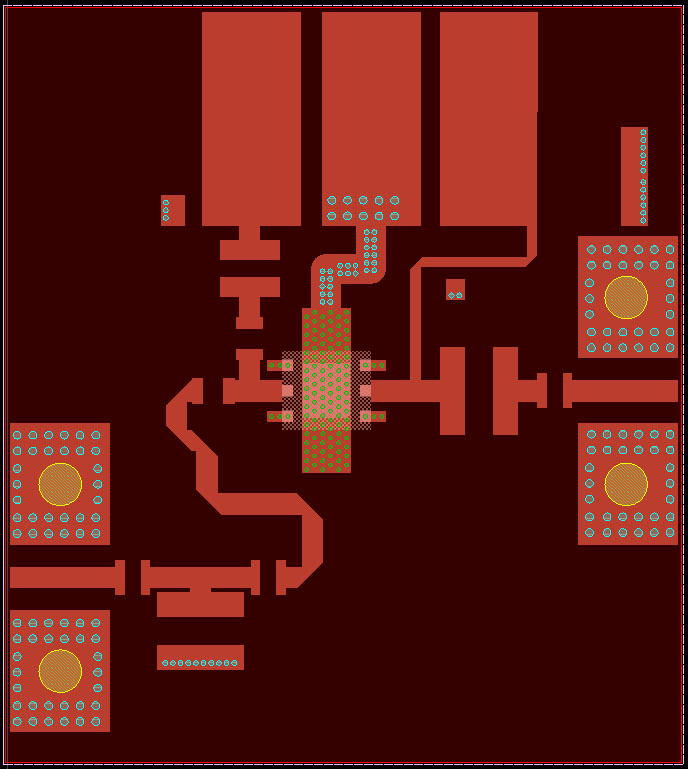
Wireless communication technologies are constantly evolving, demanding high-performance devices to support new operating bands and increasing data rates. Power consumption will continue to be of great concern for such applications. By achieving increased power-added efficiency (PAE) and overall performance of power amplifiers, devices can output equal amounts of radio frequency (RF) power while consuming less DC power and requiring smaller heatsinking. With many cellular bands around 2GHz (band 1 : 2110-217MHz, band 3 : 1805-1880MHz) the goal of this project is to implement an RF power amplifier achieving the highest PAE possible operating at 2GHz and 3dB gain compression, designed around a Qorvo 5-watt power transistor (QPD0005).
The power amplifier is designed using Advanced Design System (ADS). By analyzing the IV curves and load-pull data, the gate bias voltage for class AB operation and the load impedance for peak efficiency is acquired. Using these parameters, matching networks on both input and output are designed to match the target source and load impedances. From the schematic design, a layout is created and simulated. 2.5D Electromagnetic simulations are run to verify the layout prior to tape out. The design is fabricated on Rogers 4350B 20mil PCB material, and measured results are compared to simulated predictions.
Drive Signal Control for RF Amplifier
Team Members
Spartak Tukuli
Pallav Sah
Omar Madera
External Sponsors/Mentors
Design Engineering Director
Mathew Poulton
Internal Sponsors/Mentors
Dr. Mahbub Ifana
Dr. Hung Luyen
Abstract
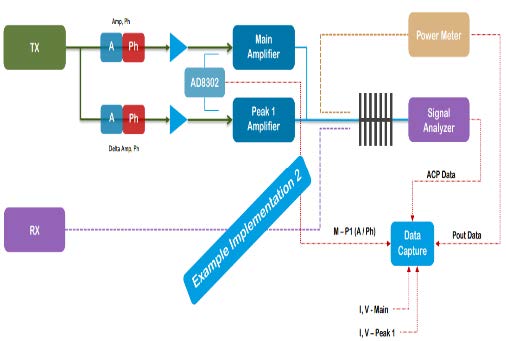
With an increased need for testing equipment and systems, we intend to create a test bench that is versatile and efficient for school projects and commercial applications. The design represents a Drive Signal Control for RF Amplifier which operates similarly to a Doherty amplifier. The device under test (DUT) will operate as a GUI to characterize the RF performance of the amplifier vs. amplitude and phase settings. The design restrictions are set at a frequency of 2.5 GHz and a maximum of 19 dBm. Considering the constraints, the device will be affordable and easy to assemble. The system can easily use different power amplifiers to evaluate when needed. We want our system to be able to perform DUT capability of the PEAK and MAIN power amplifiers and provide real time results. When applying the signal, the system will show and record the data retrieved. With the use of a spectrum analyzer, oscilloscope and a power meter, the results will upload on a LabVIEW software and customized to show the data on a plotted graphs.
Acknowledgments
This work is sponsored by QORVO Inc. and organized by Mathew Poulton, Dr. Ifana Mahbub and Dr. Hung Luyen. We thank them for guiding, supporting and offering the opportunity to succeed in this project.
Miniaturized RFID Tracking Systems for Wearable Sensors and IoTs
Team Members
Zachery Rumfield
Ali Rose De Los Santos
Ideal Ademaj
External Sponsors/Mentors
Cooper Wood
John Houston
Dualams Inc.
Internal Sponsor/Mentor
Dr. Ifana Mahbub
Abstract
The misplacement of small household items and wearable appliances is a common phenomenon, often resulting in dozens of minutes and possibly even hours of unsuccessful searching for small but necessary items such as glasses, hearing aids, epi-pens, and other pieces of equipment. This issue is particularly prevalent amongst the elderly population, and it is essential that methods for tracking easily losable but crucial items are developed. Although this problem has been studied extensively in the past few years, contemporary solutions are often expensive and yield a subpar read range of a few feet.
We propose a Radio Frequency Identification (RFID) system consisting of an active RFID tag of 1.5" in diameter and a handheld transponder to triangulate the location of small objects quickly. This handheld reader was equipped with a circularly polarized patch antenna that focuses the transmitted power possessing a magnitude of 4 Watts in a single direction, thus enabling the system to determine the direction of an active tag. Furthermore, an application was developed to configure wireless Ultra High Frequency (UHF) communication between the handheld transceiver gadget and the tag utilizing Gen2 RFID communication protocols per FCC standards and operating procedures. Therefore, we present a cost-effective active RFID tracking system capable of locating items within a 30 ft range for wearable sensors and IoT applications.
BC-ViT: Improving Underwater Object Recognition for Retrieval System
Team Members
Aidan Kurz
Ethan Adams
Internal Sponsors/Mentors
Dr. Colleen Bailey
Arthur C Depoian II
Hae Jin Kim
Abstract
As one of the classic fields of computer vision, object recognition is a topic that has expanded exponentially in terms of usability and accuracy in recent years. With the rapid progression of deep learning, as well as the introduction and advancement of techniques such as convolutional neural networks and vision transformers, object classification has been elevated to levels only theoretical until modern times. This project presents an improved method of object recognition using a combination of vision transformers and multilayer convolutional neural networks with specific application to underwater environments for classification and segmentation. In comparison to previous underwater object classification algorithms, the proposed network classifies objects with higher accuracy, shorter training iterations, and deployable parameters.
Wearable ECG Technology
Team Members
Christopher Cooper
Evan Davis
Oscar Gutierrez
Internal Sponsors/Mentors
Dr. Kamesh Namuduri
Deepa Kota
Abstract
The integration of health and personal electronics is a relationship that continues to evolve. Through the usage of technology, we are able to better detect conditions and symptoms that might lead to complications later on if left unchecked. Our goal for this project was to construct a device capable of monitoring a user’s ECG rhythm, and report back with any abnormalities. This device must also be something that is easily wearable, so as to not interfere with day-to-day activities.
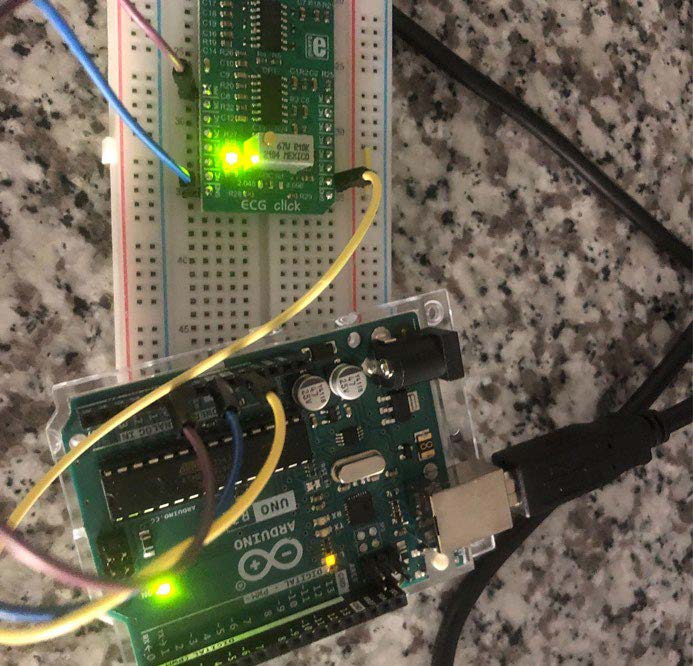
Our resulting work has two aspects: the physical device taking measurements and the code behind the analysis. The physical device is able to measure the ECG signals through the use of probes, and then send the data to a device that is able to save it. This is later sent to a system that is able to predict potential issues with heart rate and alert the user. This system was created using machine learning models that analyzed the samples using the VF Onset time from the SDDB database to better predict potential irregular heartbeats, and analyze the data from the probe for irregularities. For future progress, it would be beneficial to invest in portability, as well as a way to further separate harmful signals from false positives.
Beer Fermentation Process Data Logger
Team Members
Allan Buikema
Matthew Dawn
Internal Sponsor/Mentor
Dr. Miguel Acevedo
Abstract
Many beer home brewers and even large-scale industrial brewers are manually tracking, analyzing, and graphing data collected during the fermentation process of their product. Every day, brewers need to measure the temperature and specific gravity of their beer in the fermentation tank to determine their product’s completion status. This process can be time consuming and wasteful of the product being tested as the brewer must discard their test sample to avoid contaminating the entire batch. Brewers need a cost efficient solution to automate the process of tracking temperature and specific gravity during the fermentation stage of creating beer. This data needs to be collected, analyzed, graphed and stored autonomously in order to save time and to reduce wasted product. By addressing this problem, hobbyists to businesses in the beer industry could benefit from the ease of recording this vital information.
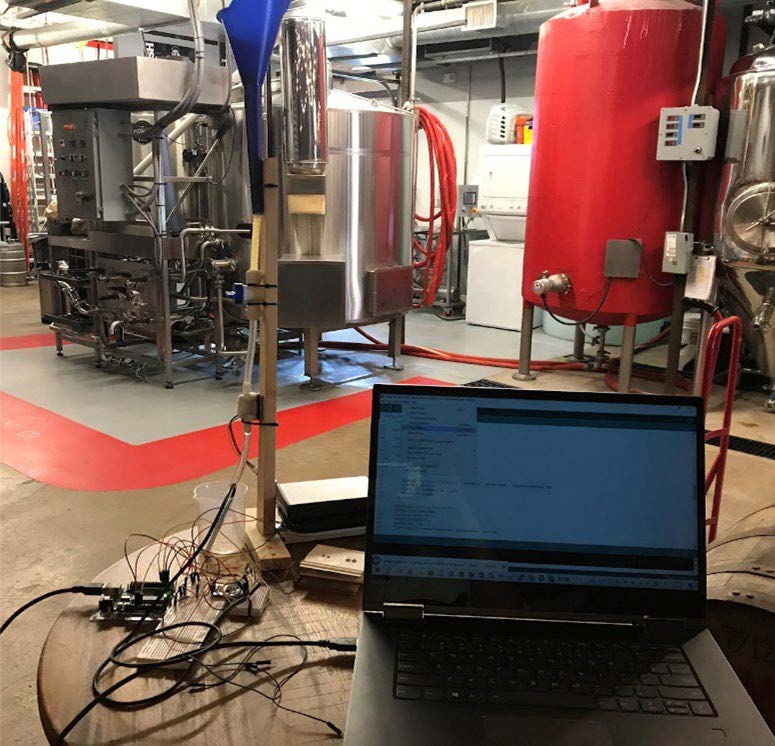
To realize this goal, we first created a method to autonomously calculate specific gravity. This proved to be a difficult task due to the precision required (±0.003) amidst the complex nature of the product that we were working with. As a result, multiple implementations were developed upon, which presented close results nearly within our tolerance. However, we were unable to refine the processes to fully reach the intended goal. Our final prototype that yielded the closest, most consistent results was designed with a load cell combined with a flowmeter and temperature probe. These sensors fed their data to a microcontroller which communicated with an SQL web server, where the data was stored automatically.
Acknoledgments
We would like to thank Denton County Brewing Company (DCBC) for presenting us this problem and allowing us to work on-site to sample their products for testing.
Smart Pool Water Maintenance System
Team Members
Matthew Britain
Alexander Hudgins
Ben Kiron
Aunita Slayter
Internal Sponsor/Mentor
Dr. Elias Kougianos
Abstract
The chemical balance of a swimming pool is maintained by measuring water properties such as pH levels and Oxygen Reduction Potential (ORP) and dispensing chemicals such as chlorine to shock the pool and remove any illness-causing microorganisms without harming the swimmers. Most automated systems that perform these functions are expensive and must be installed. For this project, we designed an Internet of Things (IoT) system as a cheaper, more compact consumer grade substitute using microcontrollers that measures water properties, notifies the user of the water conditions and estimated chlorine, and allows the user to automatically chlorinate their pool on a weekly schedule using a peristaltic pump. This system is designed to be positioned on top of a pool skimmer, controlled and configured through Wi-Fi, and is powered by a 12 V battery that is recharged by a solar panel.
Regenerative E-Bike
Team Members
Giang Ha Mai
Mahdin Meraz
Kamyar Nemati
Internal Sponsor/Mentor
Dr. Kamesh Namuduri
Abstract
For this project, our team designed an Ebike that will allow for many consumers to own at a low price and be able to commute to work or school reaching speeds up to 30 mph. An EBike that can achieve similar performance would reach around $3500 in total costs in today's market while our design is just a fraction of that cost. In today’s world the increased prices of the general electric bike and the increased sales in the third world countries means the need for the low-cost and cheaper version of the E-bike is needed. This brings the concept of Regenerative E-bike which uses low power consumption and is able to run longer distances.
The bike has 4 main parts: the battery, motor, controller and generator. Fully-charged battery can last up to a 45-mile ride before being recharged. The motor attached to the front wheel and controlled by the controller creates rotation of the wheel without cycling. The controller controls the on/off stages, the speed, rotations and battery level shown on a screen of the Ebike. The Generator is used to recharge the battery by storing the energy from rotations into the battery. Future improvement is that the bike can handle different weather patterns so more shielding from the elements, AWD so that there is less resistance when traveling through terrain, and a charging port so users can recharge their phones and devices.
Aid and Assist Aircraft
Team Members
Laith Al Ghalayeny
Corey Thompson
David Buchanan
Ivian Alexander
Internal Sponsor/Mentor
Dr. Kamesh Namuduri
Abstract
The advent of drone technology has yielded many new fields of study, as well as new applications within existing ones. Supply chains, wireless communications systems, military forces, and GPS systems have all benefited from their agility and ability to be outfitted with various devices. We propose an application of drones for first responders and emergency response systems in which both standard color and thermal imaging are used to identify victims within an area affected by disaster (earthquakes, tornados, floods, etc.), and to identify unsafe temperatures, respectively. Our aim is to decrease the time it takes to locate victims, as well as the risk taken by first responders. We started with the FLIR Lepton 3.5 thermal imaging camera, this will camera display the different arrays of heat with color; blue are the cool areas, red are the warm/hot areas, and yellow/orange are the hottest area. Then added the Arducam camera sensor to gain a better visual of the situation first responders will walk into. Our design uses the PX4 autopilot flight controller to mimic a desired flight pattern for scanning a specific or we can use the ground control station during flight to maneuver around the desired area. With the ground control station, we can set parameters, gather gps coordinates for real-time locations, and it also displays a video streamed map.