 University of North Texas

Computer Engineering
Algorithmic Stock Trading System
Team Name
Pythia
Team Members
Clement Cole
Chris Roche
Enrique Torres
Elijah Adedapo
Sponsor
Dr. Robin Pottathuparambil
Abstract
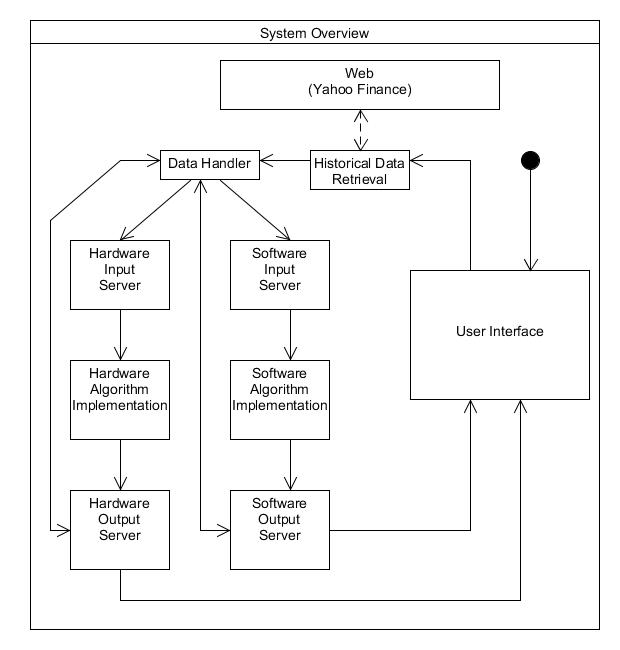
The Algorithmic Stock Trading System uses historical stock data to make predictions
for future stock
high and low trading values. Team Pythia developed and adapted a predictive algorithm
based on the
genetic model to run in both software and hardware.
The software implementation is programmed in C++ and runs in a Linux environment on
an x86
architecture CPU. The hardware implementation is in VHSIC Hardware Description Language
(VHDL)
and runs on a Xilinx Field Programmable Gate Array (FPGA).
The stock trader can use a graphic user interface (GUI) to select up to ten stocks
at a time to analyze. The
analysis and performance results are displayed for the user on the GUI. Both implementations
are
compared to identify performance gains from the hardware implementation of the predictive
algorithm.
The VHDL implementation takes advantage of the hardware level parallelism of the FPGA
which results
in lower latency than the software implementation. Therefore, stock traders can make
better informed
sales and purchases, faster. This project serves as a proof of concept that FPGAs
are a viable solution for
stock trading.
Intelligent Lighting Control System (ILCS)
Team Name
Spatium Lucis
Team Members
Zachary Simpson
Terry So
Jeremy Trammell
Chukwuebuka Nwankwo
Sponsor
Salazar George - NASA's Texas Grant Space Consortium
Abstract
The Intelligent Lighting Control System (ILCS) is a response to a project proposed
by NASA to address
lighting in space-faring vehicles. An intelligent lighting system is needed not only
for allowing sight in
the blackness of space, but to also in maintaining circadian rhythms. The ILCS will
be customizable to
the personal and working spaces of individual crew members and attempt to maintain
healthy circadian
rhythms by modeling light intensity and color values. In addition, the ILCS will be
capable of
compensating for any degradation in intensity or color values. Any degradation measured
from 8 feet
away will cause the system to compensate by increasing output or activating a secondary
source and will
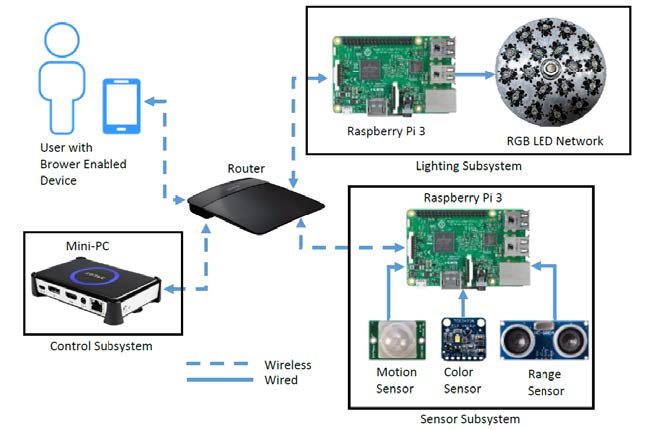
cause the system to emit auditory and visual warnings. The ILCS will consist of three
subsystems
connected wirelessly, to accomplish these tasks: The Control Subsystem, Sensor Subsystem,
and Lighting
Subsystem. The Control Subsystem will allow the user to view the status of the system
by using a
browser enabled device. The Sensor Subsystem checks the status of the lights and provide
feedback to the
Control Subsystem. The Lighting Subsystem interacts with an RGB LED network to provide
light to the
user based on the time of day.
Acknowledgements
We would like to thank our NASA adviser, George A. Salazar, for ensuring that we understood
the
problem, Dr. Tim Urban and Talia Jurgens of the TSGC for providing us with this great
opportunity, Dr.
Barrett Bryant and Sally Pettyjohn of the UNT CSE Department for ensuring that we
get the tools and
parts needed for the project, and our faculty adviser, Dr. Robin Pottathuparambil
of the UNT CSE
Department for his advice and making sure that the project meets its requirements.
The Remote Embedded Systems Lab (RESL)
Team Name
Remote System Online
Team Members
Johnathan Auringer
Fernando Mosquera
Peter Ogunrinde
Sponsors
Robin J Pottathuparambil
Abstract
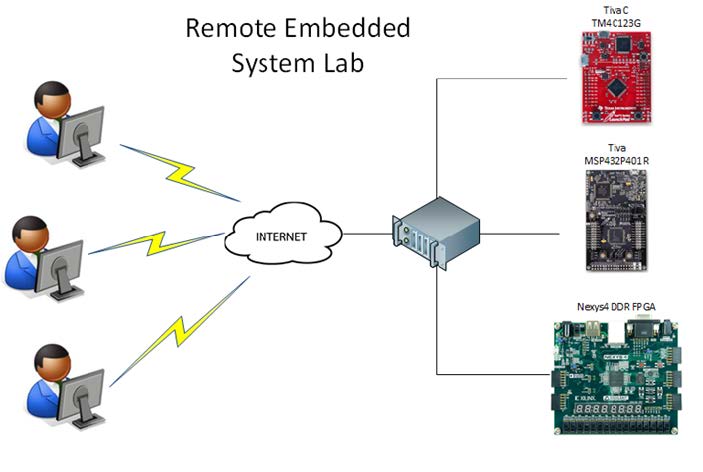
The Remote Embedded Systems Lab (RESL) is a development environment for embedded systems.
This
lab is remotely accessible through web browser, and allows users to upload compiled
code to an
embedded systems board, and to monitor the board s outputs by camera, microphone,
and serial port. The
lab includes hardware capable of interacting with the target board, to activate sensors
and buttons,
through the web interface. This includes relays, Peltier modules, and LEDs, to manipulate
buttons,
temperature sensors, and light sensors on the target boards. The Remote Embedded Systems
Lab also
features an extensive database, permitting the management of boards, users, permissions,
and statistics of
usage. This lab provides a web-based method of developing embedded systems, which
opens paths to
distance education as well as helping to reduce the required number of workstations
and boards in the
traditional Labs.
The Bat
Team Name
Hear Me Out
Team Members
Michael Canan
Corey Smith
Zac Jordan
Mayur Kotamraju
Sponsors
Robin Pottathuparambil
Abstract
The Bat is a wearable, indoor navigation assistant for the visually impaired. It is
designed to be discreet
when compared to other aids, such as a cane or service animal, which can give the
user more
independence. The user can use this device to freely roam around the interior of a
building or enable the
navigation system to be guided, with verbal instruction, to an exit.
Smart Steet Light 2
Team Name
Lux
Team Members
Konner Gonzalez
James Goines
Davonta Hubbard
Saud Alkhelaiwi
Sponsors
AcculightUSA
Dr. Robin Pottathuparambil
Abstract
AcculightUSA is a light manufacturer with a focus on sustainability and efficiency.
The company creates
custom built LED lighting solutions for industrial, commercial, and public use. They
have reached out
with UNT to implement a smart street light system that will provide greater functionality
and positively
impact the communities served by their products.
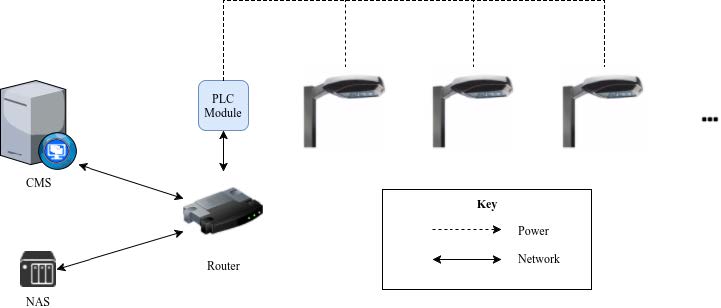
Team Enlightened (UNT, 2015-2016) implemented a prototype version of the design, which
features a
Central Management Server that communicates using powerline communication (PLC). Streetlight
features implemented include dimmable and light-sensitive LED control, temperature
sensor, camera,
motion sensor, and a sleek, user-friendly web interface, which controls LED lights
and the ability to
stream and record video from the camera.
AcculightUSA agreed to continue its partnership with the University of North Texas
and provide another
year for prototype design and testing. Team Lux will augment the design by adding
a speaker system, for
announcement capability; network attached storage device, for backing up video feed
from the onboard
camera for later review; solar panel and battery backup, for powering the LED; networked
lighting
detection, for automatically brightening the area when car or pedestrian traffic is
detected; and finally, a
Wi-Fi access point, for public internet use.
Detect Disease Contacts Initiative (DDCI)
Team Name
Disease Contact Detectives (DCD)
Team Members
Paul Garmer
Scott Visser
Jerad Stewart
Christopher Smith
Sponsor
Dr. Armin Mikler
Abstract
A project called Detect Disease Contacts Initiative (DDCI) has been created to assist
in research directed
by Dr. Armin Mikler from the University of North Texas. The team Disease Contact Detectives(DCD)
accepted a proposal to work on this project for Dr. Mikler. A research tool was requested
that would
allow for the measurement of the number of contacts that a person receives in an average
day. This
research data has many applications; but is primarily focused on the potentiality
of airborne disease
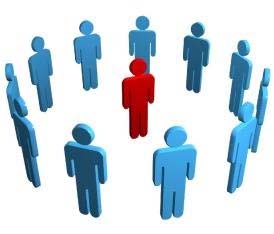
spread. The tool that was requested will focus detecting the presence of an individual
(or multiple people)
within 6 feet of a subject with the tool.
A volunteer will wear the DDCI tool for a period up to 12 hours collecting data of
the contacts that they
acquire during that period. Once the period has lapsed the data will is then collected
and processed by Dr.
Mikler and his research team. To facilitate this, function the tool or tools will
cover a 360 field of view
and sustain both power and data requirements for the 12-hour period. The tool has
a software component
that processes the data from the sensors and delivers that data to the research team
in a workable format.
The DDCI tool allows Dr. Mikler and his team to accurately measure person to person
contact over a
period of time. This data is instrumental in forming an algorithm of the ways certain
diseases spread in a
population.
MARS
Team Name
MARS
Team Members
Alex Bilozertchev
Eric Suedmeier
Michael Palmer
Didier Munkindji
Sponsor
Robin Pottathuparambil
Abstract
With SpaceX, NASA, ESA, and Roscosmos all proposing and developing technology to establish
a
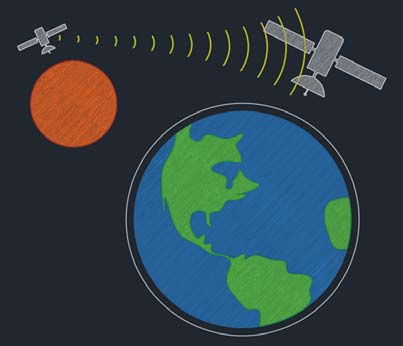
colony on Mars, there will inevitably be communication issues between Earth and the
red planet. The
colony would have all the essential data available to them on local storage, but needs
a way to access the
terrestrial internet, limited by vast distances and connectionless transmission protocols.
The main focus of this project is to create a priority-driven, connectionless file
distribution network
between the Mars colony and the global internet on Earth. This network would be able
to accept data and
website requests from the colonists on Mars, securely and efficiently download the
data from Earth, and
store it on the Martian servers. During the course of this project, the development
would include a
software communication system, an interface to request content from Earth, and compression/encryption
algorithms to ensure secure communication and achieve minimal data loss.
The simulation environment will be built to mimic the bandwidth and transmission window
limitations
Martian colonists will experience, and adjust to these constraints. As interplanetary
communication
technology improves and allows for more uptime, higher bandwidth, and lower latency,
the system s
simulation environment can be adjusted to best utilize these improvements.
Acknowledgements
We would like to thank the CSE Department at UNT for the continuous support and contribution
to our
engineering education. A special thank you to Dr. Robin Pottathuparambil for guidance
and direction
throughout the senior design sequence, as well as to Thomas Kanabay for providing
the necessary tools
and resources over the course of the project.
IRIS
Team Name
IRIS
Team Members
Jacen Kohler
Alex Fatum
Tyler Alvarez
Yale Empie
Sponsors
NASA Chatwin Lansdowne
Dr. Robin Pottathuparambil
Acknowledgements
Dr. Tim Urban - Texas Space Grant Consortium
Abstract
NASA currently statically assigns all the addresses that spacecraft use for networking
in space. Since
NASA is responsible for over a thousand spacecraft, this labor intensive, manual process
can lead to
errors and duplications. Dynamically assigning these addresses in unfeasible because
the vast distances of
space cause significant delays with the four war DHCP handshake. We have been tasked
with finding a
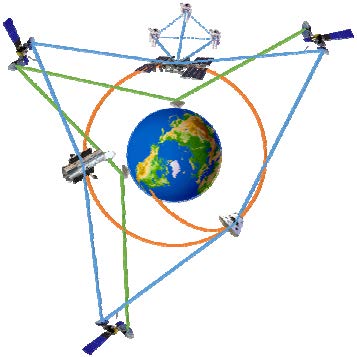
method to efficiently assign addresses in space dynamically. Currently, the relay
satellites are just
repeaters, so the DHCP server would have to be put on earth. We are proposing adding
computational
ability to future relay satellites, allowing us to move the DHCP server into space,
cutting the distance in
half. We are then proposing a pipelined DHCP protocol enabled by the ability to make
line of sight orbital
mechanic predictions. With these combined changes, we can cut the amount of time to
make a DHCP
handshake to twenty five percent.
You can read more on our GitHub project page: JacenRKohler.GitHub.io/IRIS/
Beacate
Team Name
Navigators
Team Members
Sadman S Ahmed
Amr Naser
Anthony Munoz
Sponsors
Dr. Robin Pottathuparambil
Abstract
Our project named Beacate is an indoor navigation and user interaction iOS application
using the
Bluetooth Low Energy Signal. We are looking forward to building an indoor navigation
system, that can
be used in a specific indoor environment but can be implemented on different locations
all around the
world. We will be using Beacons to get the signals and using that signal the application
will find the user
s location and help them to navigate and a lot more such as save parking spot, add
notes, add reminder,
etc.
We found that there is no practical application that is used to describe the user's
position within inside the
buildings and stores, and that the Satellite technology that is used on roadmaps is
not an alternative since
it lacks on the tight places accuracy, where it's unable to determine an accurate
position inside a specific
building due to many factors. So we are trying to find a solution by using Beacons
to locate the user
inside the building and help them navigate inside the building precisely.
Acknowledgements
Estimote Inc. , Professor Robin Pottathuparambil, Estimote Community and peer mentors,
Thomas (our
TA)