 University of North Texas

Materials Science and Engineering
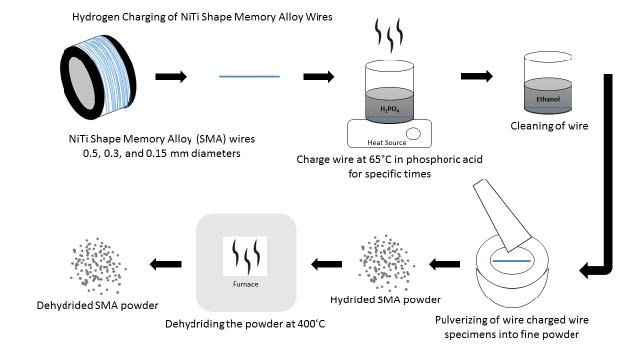
Methodology for Producing Shape Memory Alloy Powders
Team Members
Heather Dunn
Wendy Grogg
Arielle Clauser
Faculty Advisor
Marcus L. Young
Abstract
There is a current need for shape memory alloys (SMAs) powders for applications including as sensors in other alloy systems or as preforms for porous lightweight actuators. Powder morphology, i.e. shape, size, and size distribution determine the effectiveness of the application. A methodology will be designed and analyzed for producing NiTi-based SMA powders from wires of different diameter and the resulting powders characterized. Nitinol wire used was provided by Dynalloy Inc. The aim is to design a method for controlling powder shape, size, and size distributions.
Optimization of TiO2 Nano-Scaffolds for Enhanced Osseointegration of Bone Grafts and
Implants
Team Members
Sandra Ruiz
Mick Harris
Josh Barclay
Will Rubink
Faculty Advisor
Samir Aouadi
Abstract
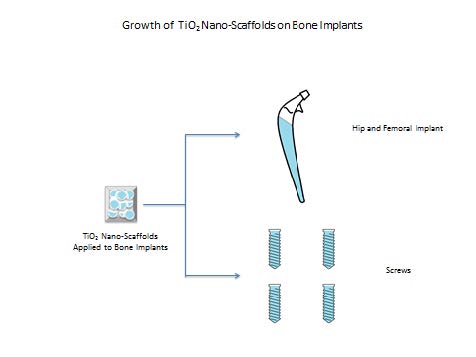
Currently employed in auto- and allograft implants, TiO2 already displays advantages of high strength, a long life cycle, and proven biocompatibility. This project will design a process to enhance TiO2 nano-scaffolding on the surface of titanium bone implants for enhanced cell growth, with the object of maximizing osseointegration - or the direct structural and functional connection between living bone and the surface of a load-bearing implant. Modern methods for surface treatment of titanium implants include sand-blasting, chemical-etching, electropolishing, and ceramic coatings to achieve/enhance the desired micro- and nanostructured features. However, “it is still poorly understood that either this enhancement was caused due to topographical reasons or fabrication-related changes in surface composition and wettability characteristics (Ramazanoglu & Oshi, 2011).” Incorporating both micro- and nanostructure through surface engineering, this project aims to produce a new, improved surface for the varying needs of the medical community.

Experimental Design of Corrosion Resistant Metallic Alloys
Team Members
Endurance Ogieriakhi
Alex Nguyen
Seth Garrison
Zach Herl
Faculty Advisor
Sundeep Mukherjee
Abstract
This project will design corrosion resistant multi-component metallic alloys by tuning of alloy chemistry and microstructure modification. Understanding corrosion mechanisms in materials is key to their long term integrity in structural and functional applications. The role of each element in the formation of passivation layer will be investigated. The degree of corrosion will be quantified in terms of the nature and density of corrosion pits by detailed microscopy. Combinatorial experiments will be utilized to identify the effect of micro-alloying on corrosion behavior. The standards and constraints will be identified with the goal of understanding passivation mechanisms and electrochemical reactions in different corrosive media.

Designing a Functionally-Graded Bone Fracture Fixation Plate Using Laser Additive
Manufacturing
Team Members
Adanma Akoma
Bria Miles
Quentin Babb
Anthony Samson
Faculty Advisors
Raj Banerjee and Tom Scharf
Abstract
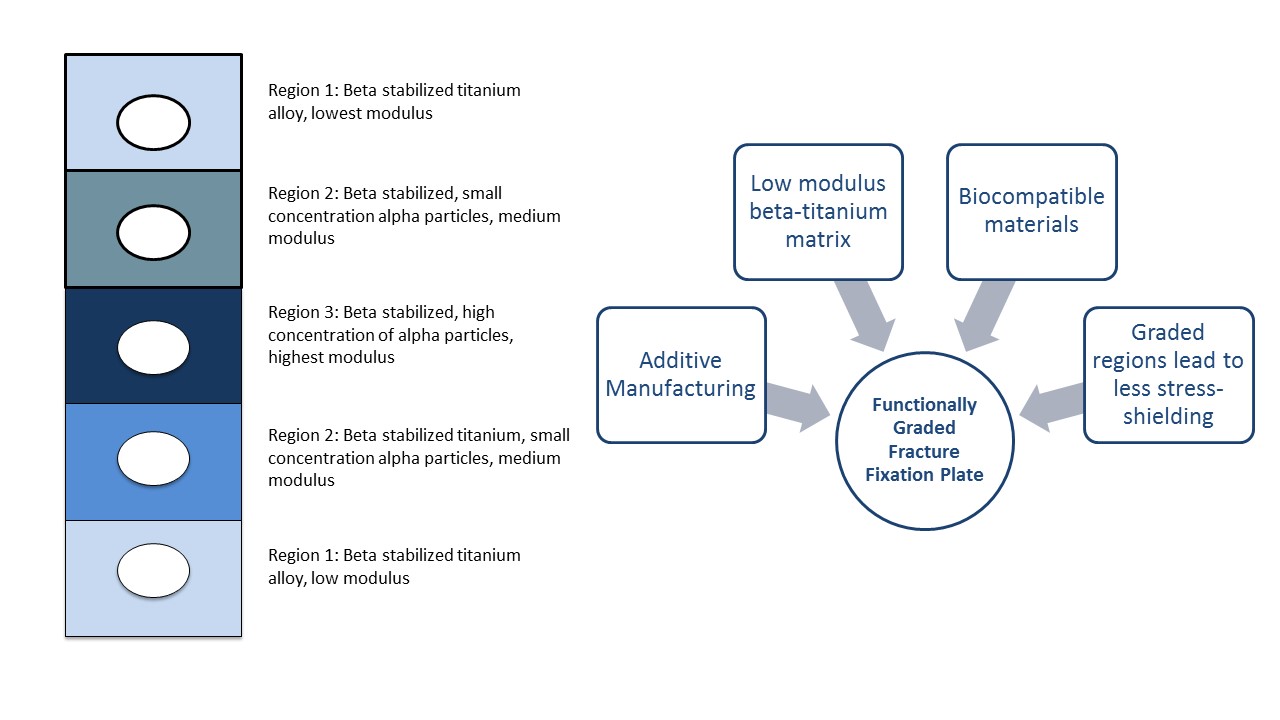
Additive manufacturing processes such as laser engineered net shaping (LENS), a near-net shape processing technology, has the potential for fabricating functionally graded biomedical implants. With regard to established biomaterials, such as titanium alloys, the use of LENS technology to process low modulus alloys, such as Ti-35Nb-7Zr-5Ta (wt%) from a blend of elemental powders, has been previously demonstrated. However, there remain issues related to LENS processing of homogeneous multi-component alloys from such elemental powders. Bone fixation plates used for holding together fractured bone fragments, typically require low elastic modulus (or stiffness) at the ends, comparable to the bone modulus, and higher elastic modulus at the center, close to the site of the fracture. This project will focus on two design problems related to laser additive manufacturing:
- Designing and optimizing monolithic homogeneous low modulus titanium alloys, processed from elemental powders, for biomedical applications.
- Designing a functionally and compositionally graded titanium-based metallic plate for potential bone fracture fixation.
Design a Test Reactor in Sour Gas Environments
Team Members
Scott Chambers
Nonso Chetuyah
Faculty Advisor
Rick Reidy
Abstract
Enhanced recovery of oil from pre-existing wells requires the use of high pressure carbon dioxide (CO2-EOR) to remove the remaining petroleum products. Moisture and hydrogen sulfide (H2S) within the recovery fluid (sour gas) can wreak havoc on metal pipes causing corrosion and possible failure. Standards for pipe steel has been developed by the American Petroleum Institute; however, no method has been developed to determine metal viability in sour gas conditions. Goal: Design a high pressure reactor capable of a range environmental conditions to determine viable alloys for sour gas extraction.
