 University of North Texas

Mechanical and Energy / Technology Engineering - Spring
3D Printed Aircraft
Team Members
Citlalic Celestino
Jessica Galindo Garcia
Ethan Grinstead
Taylor Neilson
Drake Nguyen
Internal Sponsors/Mentors
Mark Wasikowski
Hassan Qandil
Abstract
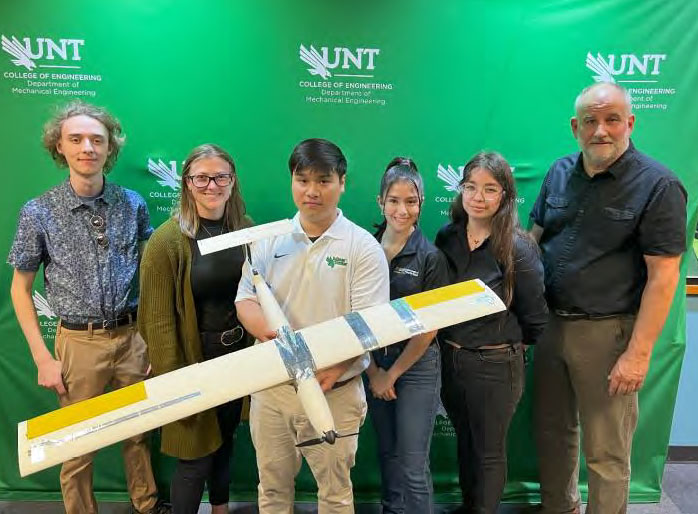
This project focuses on the design and development of a fixed-wing aircraft for the annual 3D printed aircraft competition hosted by the University of Texas at Arlington’s Mechanical and Aerospace Engineering Department. The challenge centers on leveraging the expansive design freedom enabled by 3D printing technologies while navigating fabrication and material constraints. The objective is to create an aircraft with fully 3D-printed lifting surfaces capable of long-duration flight within specific parameters. The project encompasses many disciplines spanning aerodynamics, materials, control systems, safety protocols, and sustainability measures. The proposed design integrates elements from biplanes and gliders to maximize lift and control, featuring a front-mounted propeller to increase lift. Through simulations, analysis, prototyping, and testing, the aim is to refine and optimize the aircraft’s flight performance for maximum flight duration using minimal thrust.
Animatronic Dragon
Team Members
Ivan Sanchez
Max Shinder
Reda Arrigan
Jonathan Stewart
External Sponsor/Mentor
James Brauer
Internal Sponsors/Mentors
Dr. Yunwei Xu
Dr. Mark Wasikowski
Donna Marquet
UNT Dance and Theater Department
Abstract
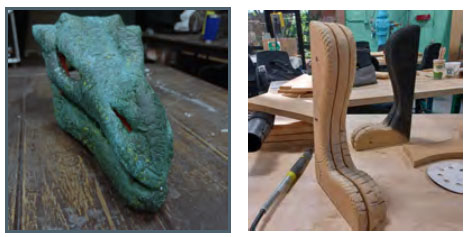
Our team was presented a challenging task of designing and manufacturing a custom animatronic dragon, what could be controlled by the user's VR controller. This kind of product hasn't been seen before in the consumer market, and our team aims to solve this issue.
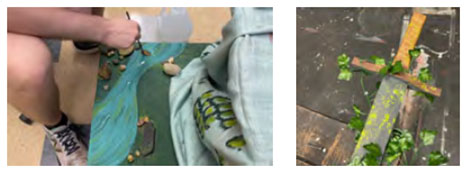
By combining a passion for arts and engineering, our team was able to control a system of servo motors with a Raspberry Pi. Our Raspberry Pi is sent the signals from our VR program, which then is passed to the servo motors responsible for movement. For our aesthetics, a large thanks goes to Donna Marquet and the UNT Dance and Theater Department. They gave us the proper advice, and supplies, to build the dragon. Throughout our project, team members engaged in the design process, problem-solving, and teamwork, gaining practical skills and lessons essential for growth.
Automated Spraying System for Smoking/Grilling
Team Name
Automated Spritzer
Team Members
Caleb Davis
Daniel Kim
Aubrey Mariki
Rogelio Martinez
Philemon Mesfun
External Sponsor/Mentor
Yalamanchili Americas, Inc.
Internal Sponsor/Mentor
Dr. Rattaya Yalamanchili
Abstract
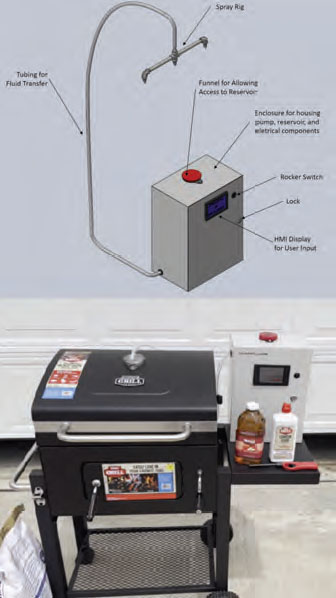
Smoking meats, such as brisket, is a time-intensive process requiring continuous monitoring and manual spritzing to prevent dryness and ensure optimal flavor. In response to this challenge, we developed an automated spritzing system to streamline the smoking process. Our system features a user-friendly Human-Machine Interface (HMI) that allows users to select their desired protein and automatically sets the external spray rig to administer a seasoned liquid, such as apple juice, at specified intervals. The design incorporates food-grade materials, including a stainless steel spray rig and nozzles, ensuring safety and quality. By eliminating the need for constant manual intervention, our innovation not only simplifies the smoking process but also enhances the overall flavor and moisture retention of smoked meats, resulting in a more consistent and enjoyable culinary experience.
Car Crane 2.0
Team Members
Justin Swan
Chris Goff
Rohith Paka
Thomas Miller
External Sponsor/Mentor
John Alexander, EnSPIRE
Internal Sponsor/Mentor
Hassan Qandil
Abstract
Care Crane 2.0 is an engineered solution to aid mobility scooter users in loading and unloading scooter to and from an SUV. The 2.0 team specifically reanalyzed the shortcomings from the 1.0 teams and delivered a more automated and robust solution. Team 2.0 used many elements learned from their respective curriculums including Circuit Analysis, Machine Elements, Material Science and Finite Element Analysis to add new components these include: Arduino, gear design, material selection and more.
Coot: Bi-Terrain Drone

Team Members
Tyler Dodd
Nolan Richards
Adul Shamshir
Antonio De Jesus Garcia
External Sponsor/Mentor
Ali Shazard
Internal Sponsor/Mentor
Dr. Mark Wasikowski
Abstract
The goal of this project is to develop an electronic drone system that is capable of aerial flight that competes with aerial drones in the market while also being able to dive into water at a depth of 30 ft. The issue in this task is that a single body drone design will not be capable of achieving the distances mentioned earlier. To tackle this challenge, the design that has been finalized consists of a 2-body design which splits the aerial and submersible as two separate drones. They will be developed using computer aided design software and 3d printing. This design will be brought to life using computer aided design software and 3D printing technology. The goal is to have a product that caters to underwater photography / videography enthusiasts, search and rescue missions, underwater research and more while having an affordable price point.
The Customizable Grill
Team Members
Team Leader - Alyssa Laughter
Secretary - Jillian Gillam
Solidworks Lead - Brandon Brown
Manufacturing Lead - Samuel Dieterle
Report Lead - James-David Eaton
External Sponsor/Mentor
MW Builders
Internal Sponsor/Mentor
Dr. Rattaya Yalamanchili
Abstract
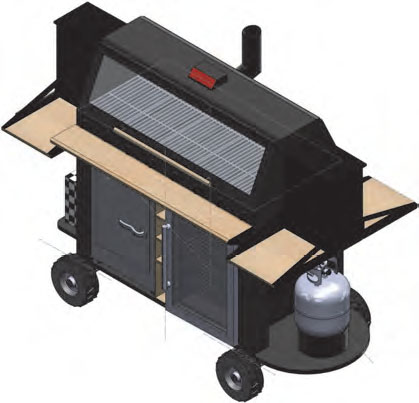
The market for commercial grills is booming more now than ever. Everything on the current market lacks versatility and individuality. The idea for this product, The Customizable Grill, came from the company MW Builders. They asked for a customizable grill that will be multi-functional for company events. This sparked the idea for the requested components to be detachable and mobile to ensure the most efficient outcome. The mandatory components given from by sponsor for this product include the following: smoking/grilling component, storage space, refrigeration component, warming component, and prepping space.The grill/smoker allows for instant heat and little effort. The cleanup is also quicker and less taxing for the users due to a removable ash tray located in the back of the grill. A refrigerator will allow for drinks and other food to be kept cold at events. A prepping area is needed in order to prepare the meal at hand. Storage will allow for access items to be kept out of the way and ready when needed. This product will be cosmetically representative of the company and all of its branding while focusing on multi-purpose functionality for all grilling needs. It will achieve all design constraints and expectations for a “customizable grill” used for company events and showcasing necessities. It will not be commercially available but will strive to be a representation of our skills as an engineering group.
FSAE - Dry Sump Oiling System
Team Members
Brandon Walters
Nick Terry
Stephanie Perez
Jesus Ramirez
External Sponsors/Mentors
KBR
American Machinery
Dailey Engineering
144 Racing
Internal Sponsors/Mentors
FSE MEEN Green Racing
Bobby Grimes
Abstract
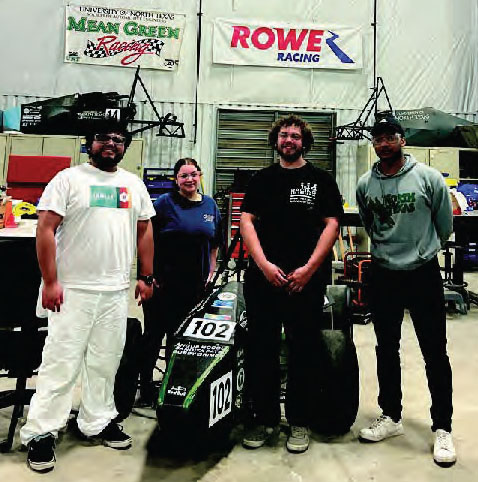
The purpose of this project is to redesign FSAE's oiling system by implementing a fully bolt on dry sump system, for the daytona 675 engine being ran as opposed to the stock wet sump system. Previously taking turns in the FSAE vehicle caused oil inside the pan to slosh into corners of the pan. This led to failures in the engine which led to the team wanting to redesign the oil system. Through our design we planned to resolve the oil starvation issue the car has been running in previous years with the implementation of the following target specifications:
- Under 15 lbs
- Abide by FSAE regulatione
- Work around existing vehecle design and composition
Acknowledgments
We would like to thank Dailey Engineering, American Machinery Group, and KBR for assisting us through the design process of the entire project.
FSAE EV Accumulator (Battery Pack)
Team Members
Milan Patel
Ramiro Ojeda Duran
Kishon Sephus
Viren Patel
Kishan Karsailya
Petteri Pirhonen
External Sponsors/Mentors
Lance Sandmann
PACCAR
Bender
American Machinery Group
Circuit Breaker Sales
Mouser Electronics
SolidWorks
Kevin Emr
Corey Reyna
E-Muscle Cars
Internal Sponsors/Mentors
Dr. Richard Zhang
Mean Green Racing Team
Rick Pierson
Abstract
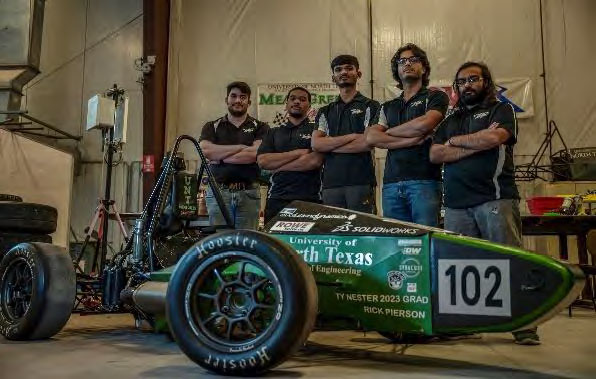
The Mean Green Racing Team is designing its first Electric Racecar for the 2025 Formula SAE competition. The vehicle needs to be powered by a student designed battery pack capable of powering the vehicle through the competition including a 22km Endurance event. Our Senior Design team was put in charge of designing the battery pack and ensuring that it operates safely.
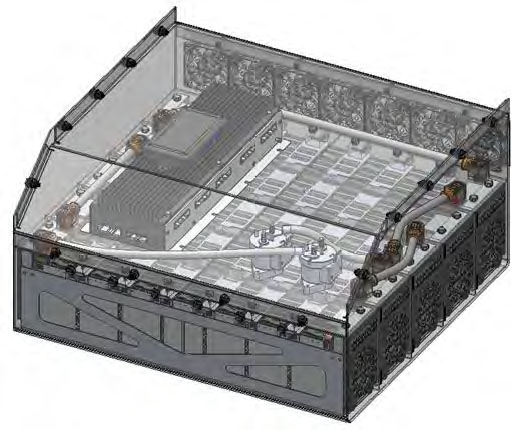
The battery pack was sized to be 7.6kWh using 700 Molicel P28A batteries with 2800 mAh split into 5 sections that will be connected in series. A custom MGR battery module was designed to hold 5 cells in parallel and modules will be connected in series. This leads to a 588V battery pack capable of outputting 150A. The battery voltages and temperatures will be monitored by an Orion BMS2 Battery Management System. A Safety System compromised of an Insulation Monitoring Device and Precharge/Discharge Circuits will ensure that the system operates safely. This will all be housed in an Aluminum Casing capable of withstanding 40G impact loads.
Careful consideration was taken when designing components to ensure ease of manufacturing and assembly which is crucial when working with high voltage systems. Outside of the batteries, BMS, IMD, and small electrical components, all parts were designed by our team and manufactured by us or our sponsors. The team did research to ensure overall safety of the system in both manufacturing and operation. Testing was conducted to detect issues and ensure that the product will work as intended. This all culminates into a safe and reliable battery pack to power the 2025 FSAE Vehicle.
Automated Hydroponic Garden
Team Members
Kell Scott
Chastity Hastings
David Batchelder
Wasi Moin
External Sponsor/Mentor
Wes Pettinger
Internal Sponsors/Mentors
Yunwei Xu
Miguel Acevedo
Abstract
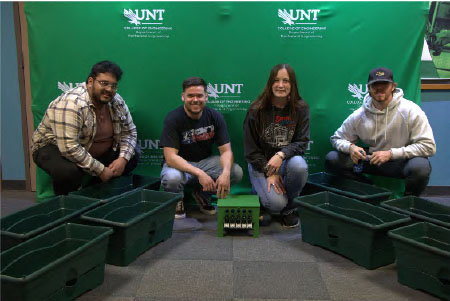
Our group set out to automate the process of watering gardening grow boxes by utilizing an inexpensive, reliable closed loop electrical system.
Traditionally, currently existing gardening grow boxes allow users to easily grow plants without watering for up to several days. This is accomplished by elevating the soil above a water reservoir and allowing the root system to grow through the elevated grate into the water reservoir. This allows the plant(s) to consume the water needed but the reservoir requires manual water replenishment.
Our engineered system automates the water replenishment of multiple gardening grow boxes currently offered on the market. It relies on a water level sensor probe designed for this application to activate/deactivate modular solenoid valves through an Arduino and power control module.
Integrated Manufacture of High-Performance Feedstock for Solid-State Additive Manufacturing
Team Members
Miguel Armendariz
Mauricio Higgs
Maxwell Scharnhorst
Jerry Ekeugbo
External Sponsor/Mentor
Dr. Rajiv Mishra - Optimus Alloys
Internal Sponsor/Mentor
Dr. Hector Siller Carrillo
Abstract
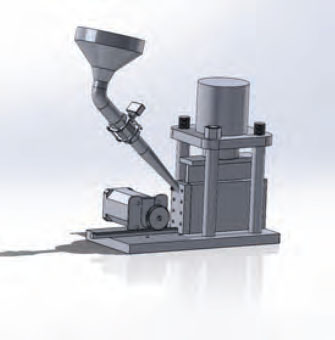
The operation of Optimus Alloy's friction stir processing machine currently requires external processing of rapidly solidified granules of Al-Ce alloy into feedstock rods suitable for use in the FSP machine. Bringing the production process of the feedstock rods in-line with the operation of the FSP machine saves time, reduces process steps, and streamlines part production. In order to integrate the production process, a novel pressing system was created, which produced cold-pressed non-homogeneous briquettes of material without the application of heat, preserving the desirable materials qualities of the RSP material. This process is intended to be integrated with the controls systems of the existing FSP machine to provide a fully integrated solution.
Mini Grain Huller
Team Members
Travis Peek
Michael Schlipp
Pablo Vivero
Cayla Vu
Internal Sponsors/Mentors
Dr. Rattaya Yalamanchili
Abstract
We recognize the growing demand for smaller-scale grain processing that caters to the needs of small-scale farms and individuals hoping to process whole grains at home. Large-scale machine processing dominates the grain processing market. It has followed the evolution of agricultural industrialization that the consumer market is becoming increasingly aware of. The team design concept is to create a compact countertop device that is intuitively operated for the primary purpose of husking rice. It is also a goal to design the grain huller intuitively enough for a user to hull other grains with minimal technical skills or knowledge. The penultimate goal is to empower customers to limit unknown variables in their food supply. Doing this will help enable the connection between consumers and whole foods.
Mobility Scooter
Team Members
Parker Dohm
Brandon Metzler
Raul Ramirez
Elan Rudyk
External Sponsor/Mentor
James Brauer
Internal Sponsors/Mentors
Richard Pierson
Xiaohua Li
Hassan Qandil
Abstract
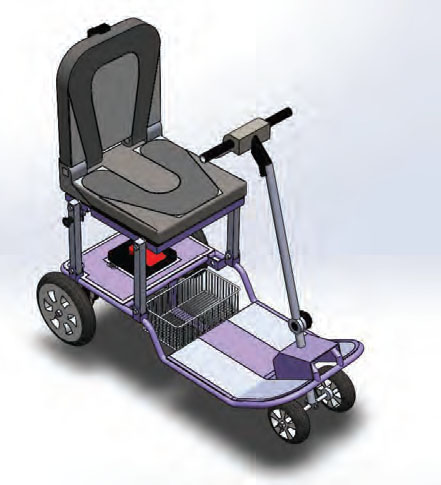
There are currently a wide variety of power-driven medical devices available today. One of the main obstacles with the current products is making a mobility device that can be lightweight and used anywhere. This product aims to address the growing need for a hassle-free lightweight mobility solution that can accompany an individual during air travel. The mobility scooter has a lightweight design and is collapsible, this design was made so individuals can have a high level of comfort and safety. Our team aspires to empower individuals with limited mobility to feel confident that they will be able to travel anywhere they desire, and with ease. This device can fold to fit into the trunk of a car, and can be taken aboard flights.
Ranch Automation
Team Members
Armando Arteaga
Emme Arnold
Konnor Stephenson
Dang Nhan
External Sponsor/Mentor
Helena Ranch LLC
Internal Sponsor/Mentor
Dr. Rattaya Yalamanchili
Abstract
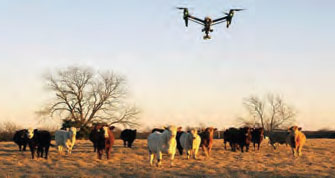
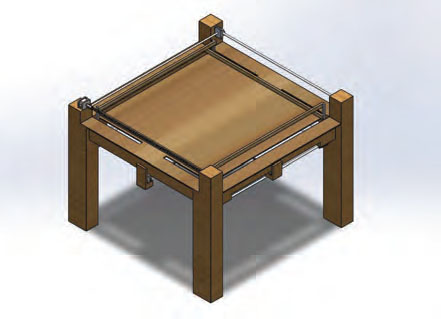
For our project we are constructing the initial assembly of an automated docking station that is compatible with most drones on the market. We want to build this for ranchers and farmers in order to reduce the amount of time and effort it takes to complete their daily tasks. The scope of our project includes building a 4'x5' docking station, that can position the drone in multiple locations, for specific operations. Due to time constraints, we will not be assembling the additional modules, which includes an automated battery swap function. Our purpose is to assemble the base of the docking station, so that additional features are easily added.
Shipping Container Support Leg
Team Members
Daniel Thompson
Mason Freeman
Reagan Guthrie
Dakota Bellavigna
Leo Lopez
External Sponsor/Mentor
Bellum Engineering
Internal Sponsors/Mentors
Saman Rashidyan
Orlando Bagcal
Abstract
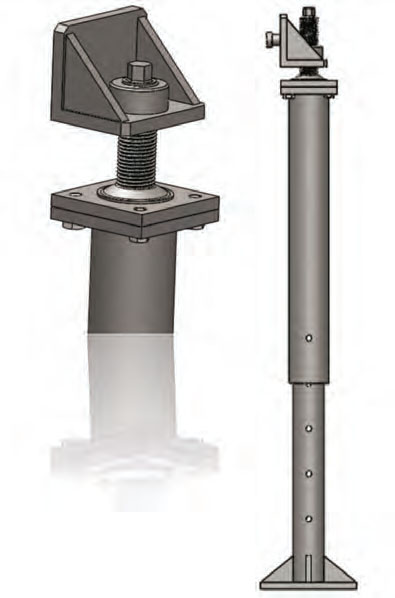
Our sponsor, Bellum Engineering, tasked us with creating a support leg for shipping container homes that would allow for the container to be raised by 6” to 3.5’. This leg would need to be able to be adjusted and releveled without removing it and with minimal maintenance. They wanted something that was easy to use, and anyone could operate. The installation and maintenance needed to be able to be done by someone with minimal to no training and with their everyday tools.
Solar Decathlon
Team Name
Eagle's Nest
Team Members
Dallas Haas
Farhan Omoush
Juman Al Khafaji
Issac Barnes
Mohammad Abu Hamdi
Angel Alba
Abdel Rahman Abu Al-Adas
Almudena Diaz
Hiba Altatar
Ria Gupta
Najwana Al Awamleh
Layana Sughair
Rama Sakarneh
External Sponsors/Mentors
Architect Rania Alzyoud
Engineer Omar Hamad
Architect Maysoon Al Khuraissat
Eagle Star
SOS Children's Village
Internal Sponsor/Mentor
Dr. Hassan Qandil
Abstract
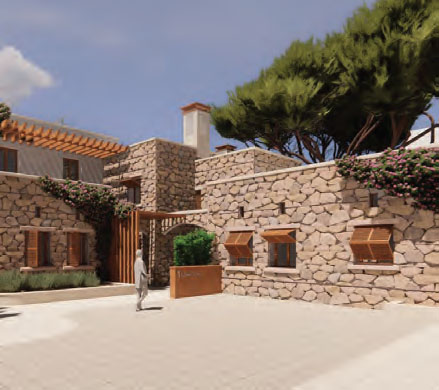
The SOS Children's Village in Aqaba, Jordan offers care to many children in need, however it has a variety of problems that effect the occupants such as poor thermal comfort, minimal insulation, inadequate natural lighting, ineffective wind towers, and poor PV systems. Taking in account the climate of the area Eagle's Nest aims to achieve net zero energy in the residential buildings which can be then used in other contexts in other villages. By addressing these issues the occupants of the village will be able to achieve comfort and by saving money on energy they can use that money to increase the quality of life for those in the village.
Solar Panel Cleaner
Team Members
Austin Kaaz
Bryson Britten
Cameron Baker
Tristan Newton
Yesica Sotelo
External Sponsor/Mentor
EagleStar Solar Technologies LLC
Internal Sponsor/Mentor
Dr. Hassan Qandil
Abstract
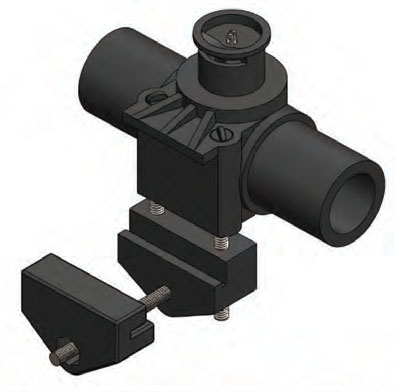
Our objective was to create an automated system capable of cleaning an array of solar panels for residential applications. Our resulting system was: Modular, Low Profile, Effective, Low Maintenance, and Retrofittable to any solar panel and configuration on the residential market.
Solar Fresnel Lens

Team Members
Michael Lance
Zachary Garcia
Joseph Parker
Christian Dieterich
External Sponsor/Mentor
Mitch Curran
Internal Sponsors/Mentors
Dr. Lee Smith
Dr. Tae-Youl Choi
Dr. Hassan Qandil
Abstract
Fresnel lenses are a popular method of solar power concentration due to their low volume and lightweight structure.
Our senior design project is aimed at producing and testing an optimized Fresnel lens for future use in a power generating optical array. We manufactured a custom lens with the help of Rick Pierson, designed using a genetic algorithm developed by Dr. Hassan Qandil, and compared the energy transmission with a purchased lens. Furthermore, we developed and tested a secondary optical element (SOE) to re-collimate the concentrated light.
Our experimental setup consists of a single-axis automated solar tracking system which holds the lenses. Power and thermal data is collected throughout the day to analyze the efficiency of the system's energy transfer. Beam width data is collected at set distances after the SOE to test for collimation.
Acknowledgments
We would like to thank Dr. Qandil, Dr. Choi, Dr. Smith, Mitch Curran, Rick Pierson, Samuel Dieterle, Max Shinder, and Dan Nguyen for invaluable assistance and advice on our project.
Project Quasar
Team Name
EagleWorks Design
UNT Robotics
Team Members
Armani Crayton
Anthony Robledo
Cecilia Rodriguez
Guadalupe Carrillo
Kylar Holcomb
Manex Macias
Matthew Cameron
External Sponsors/Mentors
Joseph Moore
Jack Sprague
Internal Sponsor/Mentor
Dr. Maurizio Manzo
Abstract
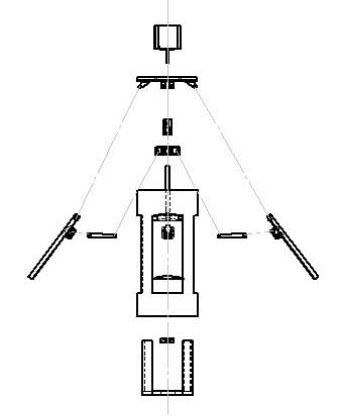
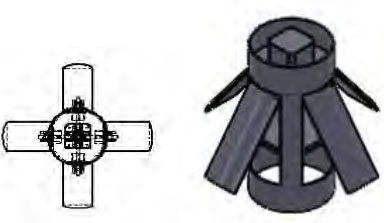
EagleWorks Design has been tasked with what we call "Project Quasar". Project Quasar is a team-designed quick stopping rocket using custom air brakes. The system will be set to deploy at a pre-determined altitude before launch and will complete all actions autonomously, including air brake deployment.
Once Project Quasar is launched and reaches its pre- set altitude, the electronics system will proceed to its recovery protocols and activate the recovery systems. Upon recovery, the rocket is set up again for another consecutive launch and recovery. We will achieve our objective by utilizing a sub-scale and full-scale model. The sub-scale will be crucial when comparing real flight data to our predicted performance data given from simulation. The final full-scale model will incorporate a fully functional airbrake system.
Acknowledgments
A special thanks to the University of North Texas for helping us grow as students and Engineers
The Wind Wall 2.0
Team Members
Nada Albadan
Connor Cozart
Anil Kushwaha
Oluwatoyese Oyedeji
Kesean Peters
External Sponsor/Mentor
EnSPIRE Fund
Internal Sponsor/Mentor
Dr. Hassan Qandil
Abstract
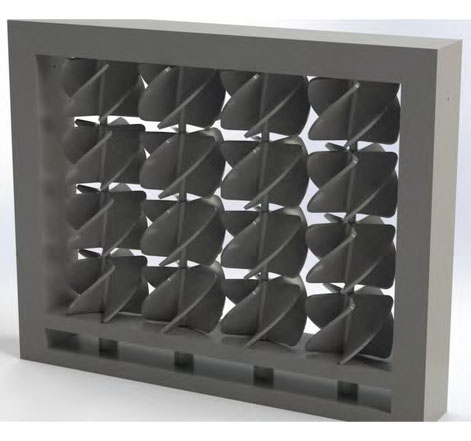
Wind Wall 2.0 represents a promising avenue for decentralized renewable energy generation at the residential level. Their operational principles, indicates designs, ands potential benefits make them compelling solutions in the broader context of sustainable living. However, addressing challenges such as regulatory hurdles, economic feasibility, and community acceptances will be the pivotal in realizing the full potential of home or residentials Wind Wall 2.0 as a viable and widespread renewable energy solutions for the homes or residentials. As technology advances and societal attitudes continue to shift towards sustainability, Wind Wall 2.0 may well become an integral component of the residential energy landscape. This comprehensive exploration devils into the operations and design considerations of Wind Wall 2.0, shedding light on their potential benefits and challenges. The efficiency of the Wind Wall 2.0 lies in their ability to capture wind from various directions. Innovative designs, such as omni directions turbines and variable pitch blades, enable these structures to adapt to changing wind patterns. Smart controls system further enhances performance by optimizing the alignment of panels and adjusting rotor speeds in response to prevailing wind conditions. Here, Wind Wall 2.0 typically consists of a series of vertical or inclined panels strategically arranged to channel wind into turbines or the generators. These panels or structures are constructed from materials optimized for durability, efficiency, and aesthetics integrations with residential architectures. The turbines often nestled in the structure are responsible for converting kinetic energy into electrical power. Designing effective Wind Wall 2.0 involves a delicate balance between functionalities, aesthetics, environmental impacts. The integration of these structures into the residential landscape requires careful consideration of several key factors.
Lunar Surface Conveyance System
Team Names
Worms 1
Worms 2
Team Members
Worms 1:
William Washburn
Manex Macias
Lorenzo Dowler
Efren Garza
Delmar Reyes
Worms 2
Brody O'neal
Eduardo Alvarado Velazquez
Morgan Myers
Javier Solis
Evan Griffiths
Internal Sponsors/Mentors
Mentor: Dr. Hector Siller Carrillo
Sponsor: Dr. Rajiv Mishra
Abstract
For NASA's 2024 Big Idea Challenge our combined University of North Texas senior design team was tasked to develop and demonstrate the novel use of low size, weight, and power inflatable technologies, structures, and systems for application in lunar operations.
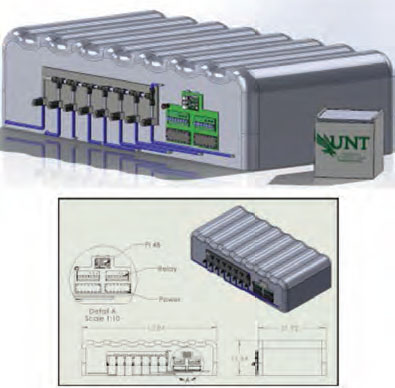
Our team answered this question with our proposed "Wave Operated Robotic Movement System" or W.O.R.M.S., purposed with transporting material across the Lunar Surface using inflatable systems, soft robotics, and principles of waveform displacement.
On the Lunar Surface, access to permanent infrastructure will be limited and and expensive, due to the logistics involved in bringing resources to the moon and establishing sustainable infrastructure for NASA's Artemis missions.
Our W.O.R.M.S. conveyance system set out to function as a lightweight, adjustable, and pneumatics powered alternative to more common methods of material transportation such as vehicles or standard conveyors.
Utilizing a waveform patterned inflation and deflation function, our team has worked to develop an inflatable conveyor system capable of moving material along its length to its destination over multiple air powered operation cycles.