 University of North Texas

Construction Engineering Technology - Spring
Medical City 2nd Floor Rehab Renovation


Team Name
DFRJ2 LLP
Team Members
David Bakuru
Richard Saldana
Jeremy Francis
Jacob Walterscheid
Frederick Okpaise
External Sponsors/Mentors
Lindsay Lauderdale, P.E. - Brasfield & Gorrie
Jason Denny - Brasfield & Gorrie
Internal Sponsors/Mentors
Dr. Aloysius A. Attah, P.E.
Dr. Orlando Bagcal, P.E.
Abstract
This project aims to enhance the healthcare facilities at 3535 S IH-35E, Denton, TX. The renovation will focus on the second floor, catering specifically to rehabilitation services. The project involves a multidisciplinary approach, addressing architectural, structural, and healthcare design aspects. Part of the design work will include how to remove construction debris while the hospital is still functioning, as well as how to rework the plumbing and electrical from the second floor above operating rooms with minimal interruptions and keeping the area as clean as possible.
The scope will consist of three components with the first being a full renovation of nearly 19,000 sf on the second floor which was previously the Labor and Delivery wing of the hospital. It will be turned into an 18-bed rehabilitation unit with a new MEPF system, pneumatic tube delivery system at two nurse stations, layout, and finishes. The second component involves cosmetic renovations of roughly 3,000 sf of the hospital in the waiting room, central nurse stations, and back-of-house elevator lobbies. The third component involves upgrading the existing fans, chilled water coils, and VFDs (variable frequency drives) to the two existing air handlers on the 6th floor that provide conditioned air to floors 2 through 5 of the hospital.
Our commitment to this project aligns with the overarching goal of enhancing healthcare facilities, ensuring a conducive environment for both patients and medical staff. The quality management, site logistics, budget, schedule, sustainability, value engineering/analysis, risk assessment, business plan, and safety planning sections will be covered in our report.
UTA Life Science Building Renovation
Team Name
JIMMC Construction
Team Members
Maria F. Padilla
Miriam Espinosa
Jaylen Mallard
Imanol Hernandez
Carlos Portillo
External Sponsors/Mentors
Hensel Phelps
Quinn Shoop
Internal Sponsors/Mentors
Dr. Zhenhua Huang
Dr. Aloysius Attah
Abstract
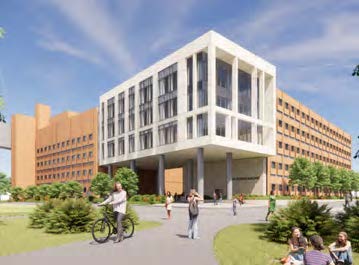
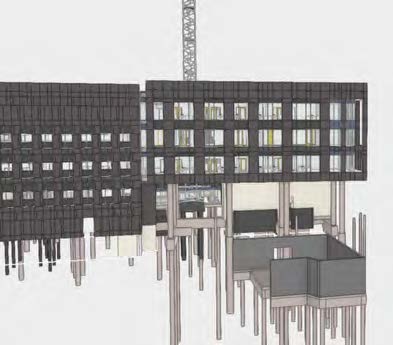
Our Senior Design project is the renovation of the University of Texas at Arlington’s (UTA) of the Life Science Building, supported by a budget of $140 million and covers an area of 210,612 SF, will be carried out by General Contractor Hensel Phelps and ZGF Architects, with the owner being UTA. The project operates under a Guaranteed Maximum Price (GMP) Contract, and will use a Design-Assist approach. The project is scheduled to begin on December 18th, 2023, with an anticipated completion date of June 25th, 2027. The main focus for our project, which is the South East side, involves the renovation from the 3rd, 4th, 5th, and rooftop of that side of the building. There will be minor aesthetic improvements across the building to match the rest of the building’s renovation. The actual renovation will cover 142,000 SF and the addition will cover 87,800 SF. The renovation project consists of the expansion of the building to add new “shell” spaces (meaning empty rooms that can be transformed to fit an intended purpose) for classroom and laboratory usage in the southeast side, north, and east sides of the existing building. This will allow for more room dedicated to research, student organization event spaces, and a more modern take to implement an open floor plan enhancing the inner appearance of the decades-old existing building.
Value Engineering techniques will be implemented to optimize financials and mitigate risks associated with the project. The overseeing of every aspect of this project will be UTA's Project Development Group, and effective communication among the owner, contractor, and architect is facilitated by a representative. A highlight of the renovation incorporates Swiss Pearl Fiber Cement for the building's façade, designed by ZGF Architects. The design approval process involves input from professors, department heads, and the Board of Directors, with the project management group representative playing a crucial role. The ProjectSight software is the primary construction management software, and the project adheres to an Owner Furnished Insurance Plan due to stringent safety requirements. Strict safety compliance is enforced, with stern disciplinary measures in place. Our Senior Design Project aims to shadow Hensel Phelps' practices, methodologies, and approaches, utilizing top technology and authentic Value Engineering to successfully complete the grand renovation.
Mayhill Road and Bridge Phase II
Team Name
NBSDC, LLC
Team Members
Nadia Lopez
Daniella Mankoni
Bryan Rodriguez
Samantha Salazar
Christian Santana
External Sponsor/Mentor
Humberto Lopez, McCarthy Building Companies
Internal Sponsors/Mentors
Aloysius (AL) Attah, Ph.D., P.E
Saman Rashidyan, Ph.D., P.E
Abstract
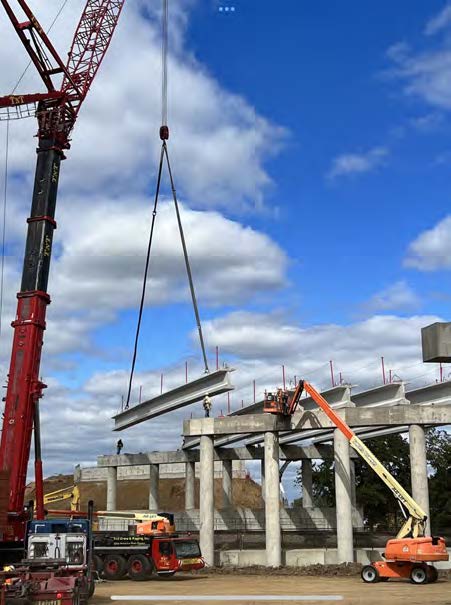
Mayhill Road & Bridge Phase II is a Heavy Civil Project built for the City of Denton. The scope of the project consists of 135,00 CY of earthwork embankment, 21,000 SY of CRCP, 6,000 SF of MSE retaining walls and 36,000 SF of bridge work. The main component of this project is the bridge and is composed of a four-lane divided road bridge with pedestrian sidewalks crossing over the existing DCTA light rail. The City of Denton intends to alleviate traffic congestion at this location, enhancing transportation efficiency and convenience.
Our project team has created a comprehensive report that outlines crucial components of bridge and road construction at a high trafficked location. The report has been structured into sections covering safety, logistics, jobsite layout, market analysis, risk assessments, quality management, sustainability, value engineering, budget and estimating and scheduling. Each section covers corresponding principal areas that need to be considered when conducting a project of this scope and magnitude. Furthermore, the report includes a thorough overview of the building process, our methodology, strategic approach and plans for successful execution.
Celina Ownsby I - Alternative Water Heating Solutions
Team Members
Jimmy Cruz
Mauricio Nunez
Levi Thompson
John Ferguson
External Sponsors/Mentors
Tx-Morrow Construction, Breck Landry
Internal Sponsors/Mentors
Aloysius (Al) Attah, Ph.D., P.E.
Cheng Yu Ph.D., P.E.
Abstract
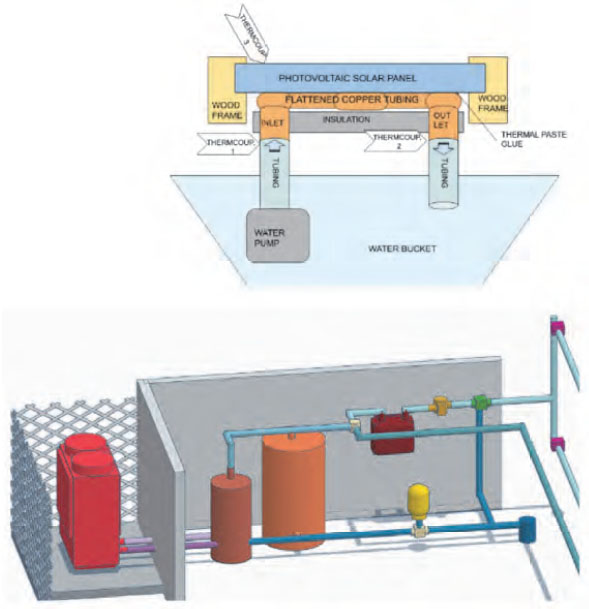
Our construction project is the Celina Ownsby 1, a four story apartment complex in Celina, TX, with 365 units, an amenity center, and a central pool. We have researched and developed a proposal for an alternative water heating system. We researched new water heating systems that can be implemented on a multifamily level. We focused on heat pump technology, their engineering and inner workings, and sized a heat pump water heater appropriately for this development. Our sizing process is explained in detail. We then compared this proposal to the existing water heating system and preformed a financial analysis. Operating costs, ROI, efficiency, and the constructability of our proposed system is evaluated.
Last, we discussed the experiment we performed. We tested a photo-voltaic plus thermal solar panel assembly, which was used to pre-heat water for usage in a water heating system.
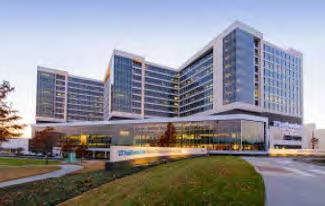
UTSW Peter O’Donnell Jr. - Phase 2, Biomed Research Bldg Shell Build Out
Team Name
Fly High Construction
Team Members
Blake Post
Benardo Lopez
Mutara Tunga
David Balogun
External Sponsor/Mentor
Justin Miller - Batson-Cook Construction
Internal Sponsors/Mentors
Mechanical Engineering Department
Aloysius Attah, Ph.D., P.E.
Salar Shirkhanloo, Ph. D., E.I.T.
Abstract
Location: Dallas, Texas at UT Southwestern
Start date: 12/1/23
Estimated Completion: 5/15/25
Value: $53,421,106
72,000 gross square feet across four floors. Finish-out of the shell space will allow for expansion of conference rooms on 3rd floor, wet labs on 4th & 5th floors, immunology and BSL-3 facility on 6th floor and office space to support state-of-the-art neuroscience and brain disease research. Upgrade to existing chiller and associated infrastructure at North TEP Facility. Additionally, the ventilation for the Bio-safety Level 3 (BSL 3) facility will pass through floors 7, 8, and 9. The project sequence is set to proceed in the order of floor 6, followed by floors 4, 5, and 3.
Our team created a project report that aligns with the current status and information from the project. The sections covered include: Logistics and Layout, Budget, Schedule, Sustainability, Value Analysis, Risk Assessment, Safety Plan, Business Plan, and Computer Modeling programs such as BIM.