 University of North Texas

Materials Science and Engineering
Design of Coatings for Aluminum and Titanium Combustion Engine Chambers
Team Members
Jose Trevino
Ziyu Pei
Jose Aguirre
Internal Sponsor/Mentor
Dr. Samir Aouadi
Abstract
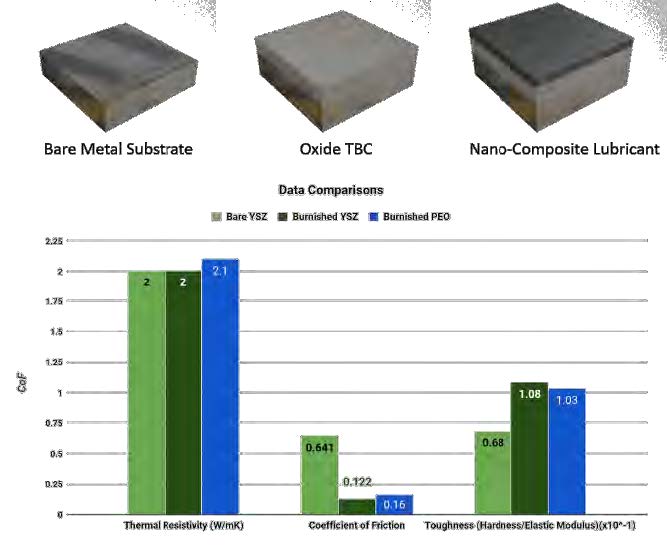
Currently used in aluminum engine blocks to protect the aluminum from high temperatures and wear in the combustion chamber is cast iron cylinder liners. These liners are very heavy relative to the rest of the engine and cannot work optimally with some fuel types. Thus, a need for a lightweight and fuel-type flexible solution exists. In response to this need, two thermally protective oxide coatings (plasma sprayed yttria-stabilized zirconia and plasma electrolyzed aluminum oxide) with a lubricating coating comprised of boron nitride, antimony oxide, and molybdenum disulfide burnished atop of the oxide were created to solve this need. This idea for a composite coating provides for the two fundamental needs for a combustion chamber liner. Thermal protection and wear resistance via lubrication and a hard oxide. This solution is not only lightweight but offers more variability in fuel use to provide more use worldwide resulting in more robust engines and less fuel consumption. This idea for a composite coating can replace cast iron and offers a unique solution via the lubricating coating by changing its performance in response to its environment thus providing flexibility in its application.
Acknowledgments
Dr. Diana Berman, Asghar Shirani
High Sensitivity Gas Sensing Ceramic Based on NanoporousZinc Oxide
Team Members
Daniel Pleshek
Roman Madoerin
Drake Hughes
External Sponsors/Mentors
Elena Shevchenko
-Argonne National Lab
-Nanoscience and Technology Department
Internal Sponsor/Mentor
Dr. Diana Berman
Abstract
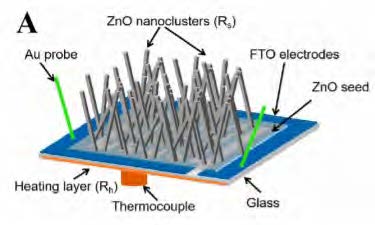
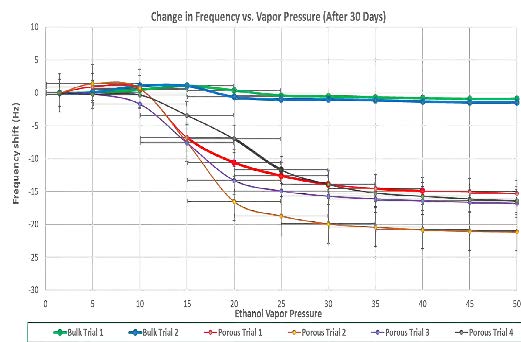
For our project, we designed nanoporouszinc oxide coatings to detect ethanol vapors. Zinc oxide is used as a standard material for sensing applications that can detect gases even in in trace amounts, so it can accurately measure the presence of ethanol and other gases down to a very small scale. This project is focusing on the sensitivity of gas detection, as opposed to selectivity. Available materials design approaches fail to provide reproducibility of the porosity for standardization of the sensor sensitivity. Because of this, current ZnO-based sensors require individual calibration. In this project, we will use the sequential infiltration synthesis technique to synthesize highly porous zinc oxide. The method uses replicated polymer templates to achieve porosity consistency. Devices based on ZnOwill aid the detection of natural or flammable gases and impact design of health monitoring sensors and systems, contributing to societal and global safety.
Acknowledgments
Asghar Shirani, Jihyung Lee - UNT Faculty
Design of Inert Experimental Environment for Tribological Evaluation of UAS Fuel Injection
System Materials
Team Members
Kelly Jacques
Tasha Joy
Andre Montagnoli
External Sponsor/Mentor
Stephen Berkebile
Internal Sponsor/Mentor
Dr. Diana Berman
Abstract
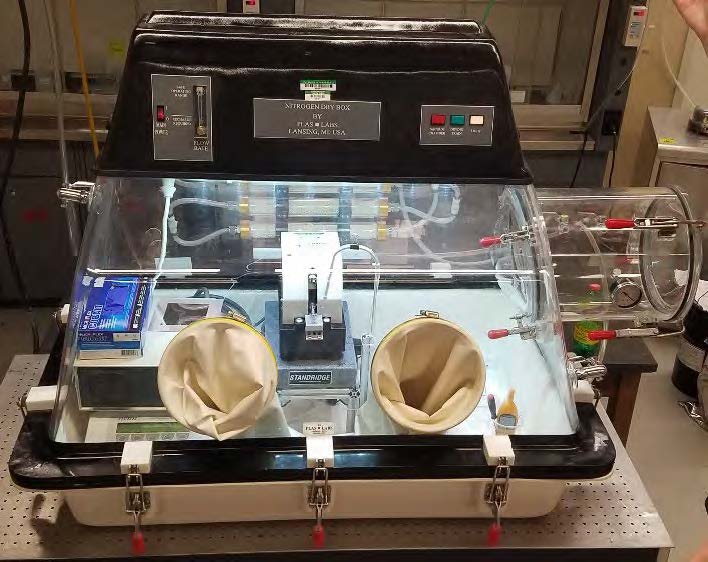
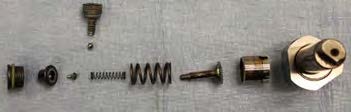
In order to expand fuel operation capability of Unmanned Aerial System (UAS) fuel systems, fuel pump materials must resist scuffing and wear in low viscosity hydrocarbons and alcohols under conditions of dynamic fluid pressure and flow. In this design, an inert experimental chamber was constructed to house a high-frequency reciprocating tribometer with a vibration dampening stand and fuel replenishment system. The inert experimental chamber was constructed to mimic the low-oxygen environment within UAS fuel pump systems. The ASTM D6079 standard for the high-frequency reciprocating rig was used as a basis for experimental parameters, of which the substrate material, substrate surface roughness, environment, and lubrication were altered. Experiments were performed outside and inside the inert experimental chamber to determine variation in oxygen content within the wear tracks on AISI 52100 steel substrates between the two environmental conditions. The AISI 52100 steel substrates were lubricated with ethanol, a low-viscosity fuel. Scanning electron microscopy, energy dispersive spectroscopy, profilometry, and optical microscopy were used to characterize the extent of wear and oxidation of the AISI 52100 steel during experiments. The inert experimental chamber provided a 40% decrease in the average oxygen content of AISI 52100 steel wear tracks.
Acknowledgments
Thomas Scharf, Tyler Torgerson, Asghar Shirani
Designing a Method for Determining Thickness and Uniformity of Ag-plating on Cu-based
alloys for Energy Applications
Team Members
Emily Villarreal
Nehal Al-Jabri
Internal Sponsor/Mentor
Dr. Marcus L. Young
Abstract
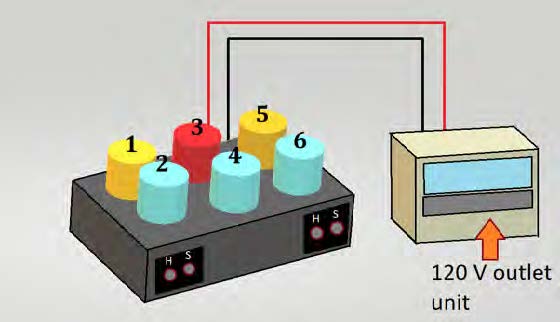
In electronic contact applications of Cu-based alloys, Ag-plating resolves issues of conductivity enhancement, corrosion protection, and oxidation runaway. However, uneven Ag-plating on Cu-based alloy contacts leads to melted and damaged parts due to overheating and eventually premature failure of the circuit breaker system itself. Designing a novel Ag-plating process for Cu-based alloys which evaluates the necessary conditions for optimized thickness and uniformity provides an essential index for controlling resistivity and creating a cost-effective processing method to be utilized in commercial industry.
Acknowledgments
This work was performed in part at the University of North Texas's Materials Research Facility (MRF), Advanced Photon Source, a U.S. Department of Energy (DOE) Office of Science User Facility operated for the DOE Office of Science by Argonne National Laboratory under Contract No. DE-AC02-06CH11357. Thank you to Faith Gantzfor assistance with SEM/EDS, SR-XRD analysis, and electroplating. Additional thanks to Jose Trevino for electroplating assistance and Kyle Rose for electroplating process troubleshooting.
Design of Lightweight Aluminum Structures for High Impact Applications
Team Members
Brandon Templin
Sophia Popowski
Maadh Al Uwaisi
Internal Sponsors/Mentors
Materials Science and Engineering Department
Dr. Sundeep Mukherjee
Abstract
Metal foams are popular candidates for resisting impact in high impact scenarios. Our goal was to change the mechanical properties of pure bulk aluminum to have this increased impact resistance as an aluminum foam. Changing the mechanical properties of bulk aluminum required a change in the structure of the material. This was achieved using TiH2 as a foaming agent to introduce pores into the aluminum. To maintain the porous structure, the viscosity of the aluminum was increased using pure calcium.
In terms of the actual processing of the aluminum foam, 1.5wt% pure calcium and 97wt% pure aluminum were melted and mixed together. This insured the melt was viscous enough to maintain pores. Once thoroughly mixed, 1.5wt% TiH2 was stirred into the melt. The heat from the melt breaks down the TiH2 into Ti and H2 gas. The H2 gas bubbles and the viscosity holds the bubbles within the liquid, thus creating the foam structure and changing the mechanical properties.
Acknowledgments
Dr. Sundeep Mukherjee, Chaitanya Mahajan, Mayur Pole, Kunjal Patel, Nandita Godki
Design of a Process to Bond Boron Carbide-Diamond Composites
Team Members
Majid Al Saadi
Christian Garcia
Jonathan Rodriguez
Internal Sponsor/Mentor
Dr. Thomas W. Scharf
Abstract
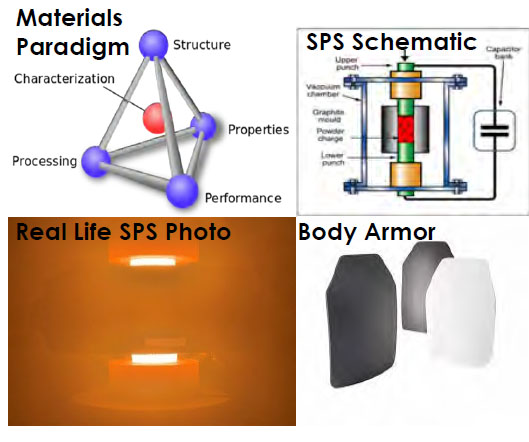
Status quo ceramic armor mitigates local impact by distributing the projectiles force over a large area. Previous work in this field has improved on this idea by placing the surface in compression via joining ceramic materials with different thermal expansion coefficients using a thin refractory metallic interface, which promotes bond adhesion, improves density, and minimizes microcracking. New experimental results indicate that diamond limits the projectile depth of penetration, and thus if added to currently used pure boron carbide (B4C) could mitigate the amount of cracking in B4C. Consequently, this project focuses on designing and optimizing a solid state diffusion process to bond B4C-Diamond composites via spark plasma sintering (SPS) while using titanium as an interfacial bonding material. It was found that the densification of B4C-Diamond composites can be improved by coating diamond particles with titanium utilizing the SPS machine through a novel method known as spark plasma coating and then fully sintered with B4C. From this, a densification improvement of 3.8% was noted and a 84% theoretical density achieved.
Acknowledgments
The project sponsor and team would like to thank Dr. Richard F. Reidy for providing his input based on the Thermo-Calc software, as well as Dr. Nigel Shepherd for teaching the capstone course and providing tremendous feedback throughout the year on our work. We would also like to thank the University of North Texas's Materials Research Facility: A shared research facility for multi-dimensional fabrication and characterization. Our deepest gratitude to the faculty and staff of the Department of Materials Science and Engineering for providing us with the tools and knowledge we needed to succeed not only on this project, but also on future projects as scientists and engineers. Lastly, thank you to PhD candidate Hunter Lide who's guidance and work in this field provided us with a clear vision and mission for this project.
Burner Rig to Test Molten Particle Impact on Ceramic Coatings
Team Members
Addison Bussell
Bailey Ashmore
Aidan O’Donnell
External Sponsors/Mentors
CCDC ARL
Dr. Michael Walock
Dr. Anindya Ghoshal
Internal Sponsors/Mentors
Dr. Rick Reidy
Dr. Nigel Shepherd
Abstract
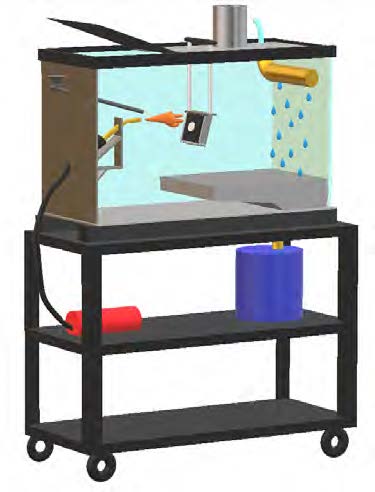
It has been found, aircraft operating in particle-laden environments accumulate damage within the gas turbine engines. These sand and dust particles are ingested into the engine, where they become molten, forming calcia-magnesia-alumina-silicate (CMAS) mixtures. This CMAS adheres to the protective thermal barrier coatings (TBC) causing extensive thermochemical and thermomechanical damage that can lead to engine failure. Large efforts by the United States Army Research Labs as well as within industry are being made to develop a TBC to withstand the physical and chemical damage of these CMAS attacks. To aid this development, our group proposed the design and construction of a small, enclosed, high temperature burner rig to safely perform molten particle impact and adhesion tests in an academic setting. This rig will allow for preliminary testing that will more closely simulate the operating engine environment.
Using preliminary construction and temperature testing as well as physics and fluid dynamic calculations, we were able to mathematically model the effectiveness of our proposed apparatus.
Designing a TBC to Mitigate CMAS Attack
Team Members
Euan Cairns
Myra Vu
Internal Sponsors/Mentors
Dr. Samir Aouadi
Abstract
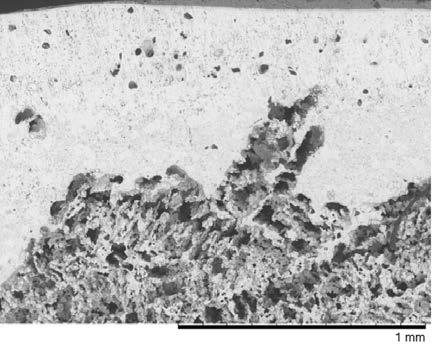
Gas-turbine engines used for commercial and military aircraft propulsion are subject to consistently increasing operating temperatures. Temperature is the most crucial limiting factor to enhance gas turbine efficiency. To accommodate higher inlet temperatures, thermal barrier coatings (TBCs) are used to shield metallic components. During operation, TBCs are subject to a build up of sand and dust particles. At high temperatures these particles melt and penetrate the surface of the TBCs, causing spallation events at the bondcoatinterface.
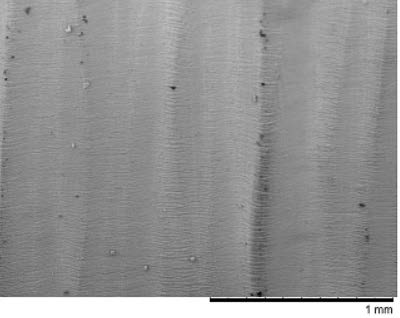
In this project, a TBC was designed to prevent calcium–magnesium–aluminum–silicon oxide (CMAS) attack. Established compositions and processing methods were usedto reduce CMAS penetration compared to standard TBCs.
More specifically, a Gd2O3-YSZ ceramic composite was fabricated to provide better CMAS resistance. The surface was laser processed to create an impermeable overlayer.
Acknowledgments
We would like to thank Said Bakkar for his help with the project, specifically with the freeze casting process, and for providing samples.
Design of TG-RGA to Measure Composition Change and Mass Change of CMAS
Team Members
Alexander Berendt
Spencer Gellerup
Tucker Moore
Internal Sponsors/Mentors
Dr. Rick Reidy
Dr. Nigel Shepherd
Dr. Guido Verbeck
Abstract
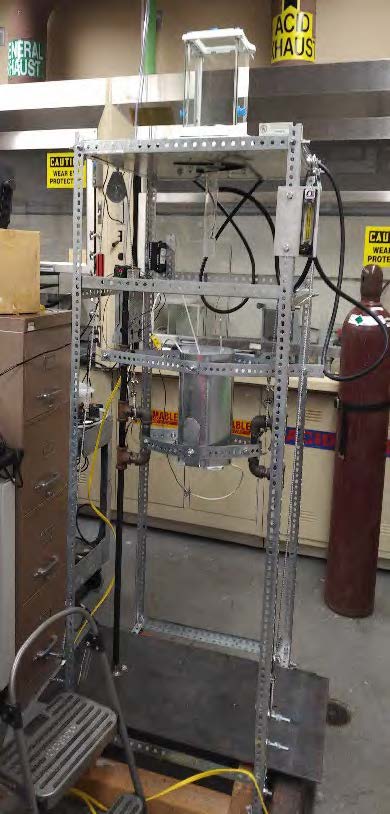
Yttria-stabilized zirconia (YSZ) is used as a thermal barrier coating (TBC) in high temperature gas turbine engines and is susceptible to corrosion by desert sand, known as CMAS attack. This corrosion leads to spallation and delamination of the TBC, causing downtime and failure of engines. This project aims to develop an apparatus capable of characterizing the composition and mass change in CMAS at elevated temperatures by connecting a residual gas analyzer (RGA) to a thermogravimetric analyzer (TGA) capable of reaching temperatures that can melt CMAS. To verify the design of this device, dubbed the TG-RGA, the composition of CMAS will be measured as a baseline for future experiments. While the intended application of this device is to study CMAS, the device is versatile and could be useful for studying any systems involving off-gassing at high temperatures.
Acknowledgments
We would like to acknowledge Camila Anguiano Virgen for her help with the RGA from Dr. Guido Verbeckin the UNT Department of Chemistry.
Design of Shape Memory Alloys for Actuation Devices in Unmanned Aerial Systems
Team Members
Choong Y Lee
Daniel White
Jacob Burley
Said Al Hajri
External Sponsors/Mentors
Army Research Laboratory
Fort Wayne Metals
ATI Metals
Internal Sponsors/Mentors
Dr. Marcus L. Young
Dr. Diana Berman
Abstract
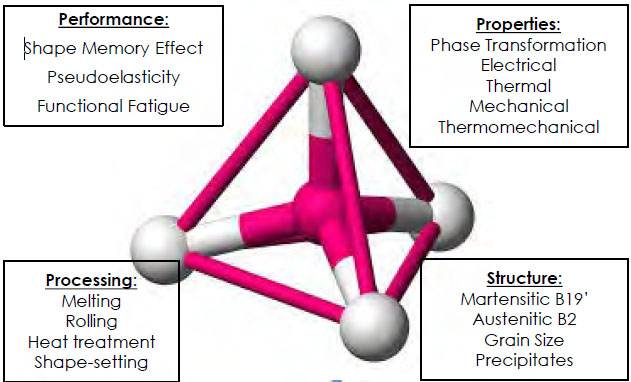
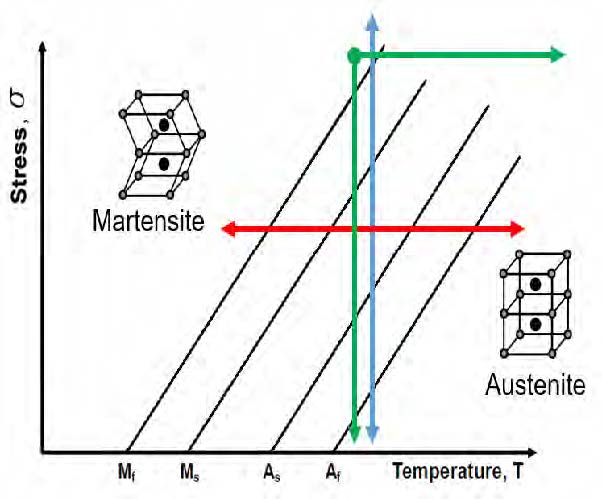
Our team designed two ternary shape memory alloys (SMAs) for use in two different solid-state actuation devices as part of an unmanned aerial system for the U.S. Army Research Laboratory. A NiTiAg SMA was designed for use in a tilt variable rotor actuator, and a NiTiHf SMA was designed for a dual range antenna actuator. These unique engineering designs arise from two unique properties of SMAs; the shape memory effect and pseudoelasticity. The advantage of using SMAs as actuators is that the design can result in overall system weight reductions and improved efficiency by simplifying complicated mechanical actuator systems. Furthermore, ternary NiTi-based SMAs allow for more flexible control of material properties such as the transformation temperatures, mechanical properties, and electrical properties.
Acknowledgments
The team members would like to thank Dr. Robert Wheeler, Dr. Nathan Ley, Faith Gantz, Michael Wall, and Avery Young for help and guidance throughout the project.