 University of North Texas

Biomedical Engineering
Measuring Fretting Pressure for Guitar Players

Team Members
Hayley Cooper
Kyle Webre
Chance Goodman
Edwin Sepulveda
Internal Sponsors/Mentors
Biomedical Engineering Department
Vijay Vaidyanathan
Venkat Keshav Chivukula
Xiaodan Shi
Abstract
Many guitarists experience pain in their fretting hand from exerting too much pressure while playing. To combat this problem, guitarists need to know how much pressure they are exerting and change their technique. Our device means to measure, display, and save this pressure data so that the guitarist can know the pressure that they are exerting, helping them avoid future injury.
Acknowledgments
A special thank you to Nabeel Zuhdi from the College of Music at University of North Texas for providing guidance with key parts of the project.
The Itch Zapper
Team Members
Oluwasuolabomi Idowu
Kiana Poole
Sasha Falaja
Raul Martinez
External Sponsors/Mentors
Alejandro Olvera - Computer Science & Engineering Department
Mr. Alvin Fuhrman - Nortex Communications
Ascension Biomedical Inc.
Internal Sponsors/Mentors
Dr. Vijay Vaidyanathan
Irsalan Cockrell
Daniel Racaño
Abstract
The Itch Zapper is a new device that will change the medical industry by offering a more cost-effective solution to soothing itchiness. Chronic diseases like psoriasis, phantom limb syndrome, and undiagnosable itches afflict the everyday lives of patients. Even acute causes of itchiness like reactions from fauna and flora or possible chemical spills could be treated with the Itch Zapper.
When compared to the top competitor itch relief creams; it is expected to save the patient 58 – 69 percent in cost. Our device is also expected to provide relief for longer periods of time rather than the known 4 – 6 hours.
Our skin acts like a resistor, using that idea we can "complete" the circuit thus building a functioning device. Impedance of the human skin varies depending on the patient along with environmental conditions, essentially our device will be composed of an ergonomic housing as well as an easy to use control panel.
The aim of the Itch Zapper is to achieve a cost-effective way to provide extended relief from itchiness that patients can use for years to come.
Acknowledgments
We would like to thank the UNT Electrical Engineering Department for guidance and the UNT Biomedical Engineering Department for guidance and resources.
BP-Hercules
Team Name
Bio-Prime
Team Members
Trevor Exley
Mario Cruz Lugo
Hunter Johnson
Angello Huerta Gomez
External Sponsors/Mentors
Dr. Mitty Plummer
Dwight Putnam
Internal Sponsor/Mentor
Dr. Venkat Keshav Chivukula
Abstract
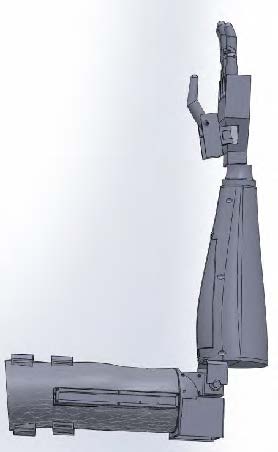
Current trans-humeral prosthetics are surrounded by a large cost barrier. The design is for a low-cost device that can be integrated into the patient’s life and allow for functionality resembling a human arm. The device will be actuated at three points: the elbow, the wrist, and each finger. The thumb is passive and able to be rolled along a track to two different positions allowing for different grips. The controller for the device will use inertial measurement units to map positions of the foot to perform different grasps of the hand and rotate the wrist. A linear transducer attached to a harness will control all the elbow movement of the device. The patient will work closely with the project team to learn the device so that the device can be implemented into their life with ease. The final prototype will be given to the patient, but the design will be available to be improved upon and used for further improvements and research.
Acknowledgments
Bio-Prime gives a special thanks to UNT Alumni Taylor Roof at UT Southwestern for her aid in completing the socket liner for the prosthetic. Thank you to Dave Manivanh at UT Arlington Research Institute for the 3D resin prints of the digit components.
Microfluidic, Sweat Wicking Prosthetic Liner
Team Name
BKB Solutions
Team Members
Blase Martin
Kathryn Davidson
Tristan Dustin
Bianca Cordero
Internal Sponsors/Mentors
Edward Gates
Dr. Vijay Vaidyanathan
Abstract
Perspiration control is essential to an amputee’s health, hygiene and comfort. Traditional prosthetic liners act as insulators, trapping heat and sweat from the residual limb, which can cause discomfort and injury to the amputee’s vestigial limb. Newer prosthetic liners attempt to solve this issue by perforating the liner material so that moisture can move away from the skin. However, the moisture then sits between the liner and prosthesis, which can negatively affect the fit interaction between liner and prosthesis. BKB Solutions prosthetic liner uses microfluidic channels and strategically placed wicking fabric to move sweat away from the limb and then out of the prosthesis so that it can evaporate into the open air. This new design will allow amputees to stay active for longer periods while minimizing the inconveniences and health risks of current prosthetic liners.
Cellinity
Team Name
Cellinity
Team Members
Michelle Del Valle
Nick Johnson
Brittany Mooney
Sydney Wilkins
External Sponsor/Mentor
Emerson
Internal Sponsors/Mentors
Dr. Vijay Vaidyanathan
Department of Biomedical Engineering
Abstract
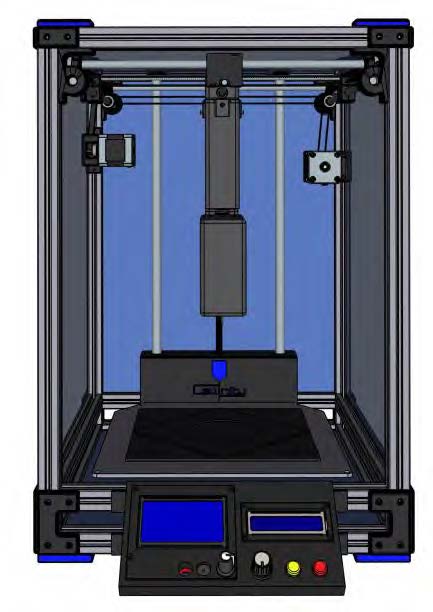
The emerging field of bioprinting holds great potential for revolutionizing regenerative medicine. However, current bioprinting technology demands higher resolution and faster printing speed. Additionally, low-cost bioprinters are necessary in order to increase accessibility for end users. Cellinity focuses on overcoming the challenges in meeting these demands by developing a low-cost bioprinter with a novel extruder to increase cell vitality. Our proprietary mechanism in the extruder design increases the biomaterial's mechanical properties to give cells a greater chance for survival.
MiniNeb360°: Miniaturized Nebulizing Endoscope Distal Tip
Team Name
CORA innovations
Team Members
Camrie Johnson
Omar Obaid
Ruth White
Allison Anguiano
External Sponsor/Mentor
John Houston of Dualams Inc.
Internal Sponsor/Mentor
Dr. Venkat Keshav Chivukula
Abstract
Endoscopes today use a drip method in order to administer lidocaine, however this can cause problems for the patient such as coughing and asphyxiation. This can create anxiety and discomfort for the patient. The goal of this project is to design a device that will adequately cover the area of interest with lidocaine without causing any adverse reactions. Our approach to this problem is to design a disposable distal tip that will continuously nebulize lidocaine into the surrounding area. The area of interest is the laryngotracheal region of the body. The lidocaine will be turned into a vapor by using four piezoelectric discs, with three on the sides of the tip and one on the distal end of the tip. The tip also contains a fiber optic cable which will aid in directing the tip to its destination. The designed tip is 47 mm in length and 15 mm in diameter. Future work should be dedicated to shrinking the piezo discs to ⅓ the size in order to reduce the size of the tip.
Fluticle
Team Name
The Core Four
Team Members
Liliana Mendoza
Chelsey Alvarado
Mary Nguyen
Brigido Montemayor
External Sponsor/Mentor
Dr. Kris Chesky - College of Music
Internal Sponsor/Mentor
Dr. Vijay Vaidyanathan
Abstract
Flute players may experience pain in areas most common on the shoulders, back, and wrist due to overuse and muscle fatigue. Because professional flutists practice for long periods of time, it can be very damaging to their physical health.
Fluticle is an app that analyzes muscle activity and how it increases over time by taking average values in increments of five minutes through electromyography devices. EMG-capturing devices like Myowares measure muscle activity and are compatible with MATLAB and Arduino, which are programs used for Fluticle. Additionally, Fluticle includes a special feature, an accelerometer that will be placed on a flute bo-pep (a finger rest). The accelerometer monitors changes in flute position as that can cause increased muscle fatigue due to incorrect placement. Through the App Designer feature in MATLAB, the application is intuitive and easy to use for non-programmers.
Acknowledgments
Special thanks to Dr. Patterson who helped conceptualize the project.
Also, special thanks to Ranen Habib and Ricardo Vela for providing guidance on the
electrical component.
Expandable Cannula
Team Name
Epi-One Medical Instruments
Team Members
Lauren Adegoke
Antonio Rico
George Sarkodie
Cooper Wood
External Sponsors/Mentors
John Houston
Dr. Milan Amin
Dr. Gregory Dion
Dr. Cara Fisher
Internal Sponsors/Mentors
Dr. Melanie Ecker
Dr. Venkat Keshav Chivukula
Abstract
Epi-One was presented a problem by the project sponsor John Houston - this problem stated that in-office surgical solutions for most laryngeal procedures are lacking, requiring operative intervention. Surgical intervention requires general anesthesia, a separate hospital visit, and the need for a driver to and from the hospital with at least one missed day of work. Epi-One’s goal is to develop an innovative system to perform these laryngeal surgeries in the office providing a variety of benefits to include lower procedure cost, faster procedure time, decreased patient downtime, and increased patient satisfaction.
Epi-One developed a unique system designed to be deployed above and below the thyrohyoid cartilage to allow the use of phonomicrosurgical instruments access above and below the false vocal cords in the larynx to perform surgery. Upon testing on cadaver models provided by the UNT Health Science Center, Epi-One concluded the success of the design and concept of the system. Future work includes testing with leading physicians/surgeons and more advanced models being produced.
Acknowledgments
We would like to thank the donors of the Center for Anatomical Sciences' Willed Body Program at the University of North Texas Health Science Center at Fort Worth. Their selfless gifts empower learning for countless students and make projects, such as this one, possible.
Using Spiral Microfluidics for Beta Cell Separation / HR2
Team Members
Benjamin Richards
Pedro Ruiz
Kyle Hawk
Internal Sponsors/Mentors
Dr. Vijay Vaidyanathan
Dr. Venkat Keshav Chivukula
Edward Gates
Abstract
According to the American Diabetes Association(ADA) 1.25 million Americans are currently diagnosed with Type I diabetes. Which is an auto-immune disease that destroys beta cells in the body. Beta cells produce insulin and help regulate blood sugar levels. This causes patients with Type I diabetes to inject insulin directly into their bodies to regulate blood sugar levels. Injectable insulin is painful to use and expensive for the patient. According to the ADA, $237 billion dollars were spent on direct medical costs from diagnosed diabetes in 2017. What this project is designed to do is create a cheap device that would allow researchers or individuals to efficiently separate beta cells from pancreatic samples. This is achieved by using spiral microfluidics and Dean flow to sort cells based on their diameters. The pancreas mainly consists of Alpha and Beta cells, Alpha cells are typically 200 um while Beta cells are 15um. This device will effectively isolate Beta cells at an affordable cost to help lead toward possibly new and more effective treatments for Type I diabetes.
DanioMD
Team Name
MNS Innovations
Team Members
Mikaela Haynes
Skylar Williams
Niharika Kuthuru
Mohammed Alkaabi
Internal Sponsors/Mentors
Biomedical Engineering Department
Dr. Benjamin Dubansky
Dr. Venkat Keshav Chivukula
Dr. Xiaodan Shi
Abstract
Killifish are an alternative to lab mics which can be used as a test objects. One of the importance of the test is to measure the fish ECG for young and an adult Killifish. The department of Biology is having a difficulty in measuring the ECG in a short time. DanioMD speeds up the process of measuring the signal. Also, it provides an easier and faster drug delivery to the fish with an advanced well. The well also supplies the fish with freshwater to keep the environment surrounding it full of Oxygen. It's clear shape allows the light to go through and provide a clear image. The electrode holder has a unique design which can hold two replaceable electrodes.
D-Ped
Team Name
MusiTech
Team Members
Chelsea Salinas
Moses Adedeji
Daniel Ayodele
Salvador Gonzalez
Internal Sponsors/Mentors
Biomedical Engineering Department
Dr. Vijay Vaidyanathan
Abstract
The sustain pedal is a crucial part to express a piece during piano performance. There is a population of people who play the piano who do not have the ability to sustain the pedal due to limited movement in their lower limbs from various causes (spina bifida, multiple sclerosis, traumatic events, etc…). At MusiTech we aim to alleviate this problem for this population by creating a sustain pedal depressor known as the “D-Ped” that allows them to sustain the pedal during piano performances. The sustain pedal will be depressed whenever the performer moves his leg away from a button that is attached to a velcro strap on the wheelchair. The D-Ped will successfully allow this specific population of people the chance to play the piano to their full potential.
Acknowledgments
We would love to thank Dr. Chesky and the Texas Center of Performing Arts Health for their input. Lastly, we would like to thank the UNT Department of Biomedical Engineering, specifically Dr. Vijay Vaidyanathan for his support throughout the years.
Open Mind
Team Name
Synaptech
Team Members
Giorgio Di Salvo
Bhavya Vaish
Maham Saleem
Madison Hardage
External Sponsor/Mentor
Rex Moses - ATR Solutions
Internal Sponsors/Mentors
Dr. Venkat Keshav Chivukula
Dr. Lin Li
Abstract
Locked-in Syndrome(LIS) is a condition that causes severe paralysis of nearly all voluntary muscles except for vertical eye movement, blinking and in some cases jaw muscles. For this reason, patients affected by this disease are conscious, but trapped in their own bodies, unable to move or communicate. Currently, a few options exist to help them communicate again. These solutions mainly focus on utilizing either EMG, EOG, EEG signals or computer vision algorithms or a combination of them. Many of these approaches are particularly limited when dealing with the most extreme cases of LIS patients, which can be completely paralyzed. For this reason, our sponsor was interested in determining the feasibility of using functional near infrared spectroscopy (fNIRS) to gather these more critical patients. fNIRS is a non-invasive technology that uses near-infrared light to measure changes in cerebral oxygenation and deoxygenation. Currently available fNIRS devices are expensive and mainly equipped to be used in the research lab environments. For this reason, the scope of our design was to create a small, cost-effective and portable multi channel fNIRS sensor that could be used to determine its feasibility as a brain computer interface. Our device consists of a comfortable head sensor which can capture the raw signal, a hardware system that processes the signal received, and a GUI with digital filters capable of displaying the data received.
Tespa Optics and Sensors
Team Members
George Kotzabassis
Eyad Dewaidi
Aishat Muibi
External Sponsors/Mentors
Dr. April Becker - Department of Behavioral Analysis
Mr. Art Dupointe - Department of Electrical Engineering Capstone Teaching Assistant
& UNT Eta Kappa Nu President
Internal Sponsor/Mentor
Dr. Keshav Chivukula Venkat
Abstract
A cylinder test is the primary experimental method to record and document the behavior of rats. However, this method is labor-intensive, and requires user input to validate and note positive test results. Our Flex Vision GUI applies the event-driven, function-based programming of C# with the object-oriented programming of Python with an intermediate system scripting function, to collect, comment, and present experimental key metrics. The application of both languages allows us to apply a user interface that reduces the labor of each experiment to a few keystrokes, while efficiently applying computer vision packages to find and draw markers of positive results onto video frames while documenting and charting raw results into reliable, legible metrics in Excel.