 University of North Texas

Computer Engineering
Augmented Reality Interface System (ARIS)
Team Members
David Woodward
Juan Ruiz
Timothy Stern
Nick Bratsch
External Sponsors/Mentors
NASA SUITS
Jay Estes, NASA, Chief Engineer
Internal Sponsors/Mentors
Dr. Robin Pottathuparambil
Alejandro Olvera
Computer Science and Engineering Department
Abstract
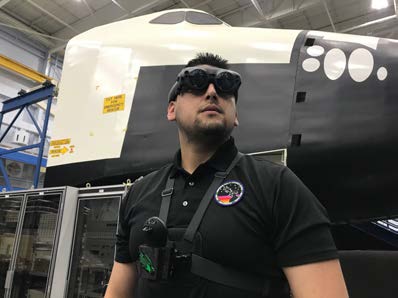
ARIS was created to address the increasing need for technologies that assist astronauts with the elevated demands of lunar surface exploration and extreme terrestrial access. The system combines a Head Mounted Display (HMD) in Augmented Reality with an External Hardware System (EHS). These two systems working together provide an easy-to-use, unobstructive tool enabling astronauts to take on a more autonomous workflow. The HMD consists of multiple panels with additional tabs displaying mission objectives, audio logs, real time telemetry data, and navigation tools. Additionally, the EHS includes an external glove and chest system that will provide inertial measurement, force sensors attached to the fingers, and live camera feeds. Both systems put together create our expansive and dynamic augmented reality device that will assist astronauts meet increased demands in a wide variety of environments and challenges.
Acknowledgments
Thank you to all of our mentors, the Engineering Dean's office, Dr. D'Souza, and everyone who has taken interest in the project over the last 2 years.
Power Termination, Diversion, and Notification Using "COSMIC" Digital Eagles
Team Name
Cosmic breaker
Team Members
Luis Garcia
Tyler Hebert
Michael Helwick
Robert Moore
External Sponsor/Mentor
Dan Combe - COEVAC LLC
Internal Sponsors/Mentors
Robin Pottathuparambil
Alejandro Olvera
Abstract
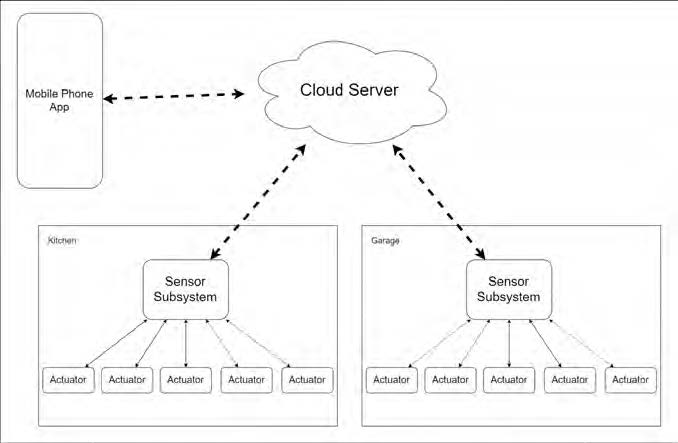
Currently, the established types of gas monitoring in most homes is insufficient. Most only test for one type of gas, and at levels that are already dangerous. Even when such monitoring equipment is present, the only action it can take in an emergency is a simple alarm. Our solution is a unique system that can monitor several kinds of harmful gases and take actions to save lives in the event of an emergency. These actions include alerting the user through their mobile phone once a gas level has reached its threshold set by the user, activating venting equipment, and deactivating appliances that may be releasing harmful gases.
Vehicle Interchangeable Electronic Controller (VIEC) Network System
Team Members
Christopher Labra
Edgar Sanchez
Christopher Parten
External Sponsors/Mentors
George A. Salazar, P.E.
Tim Urban, PhD
Talia Jurgens
Internal Sponsor/Mentor
Robin Pottathuparambil, PhD
Abstract
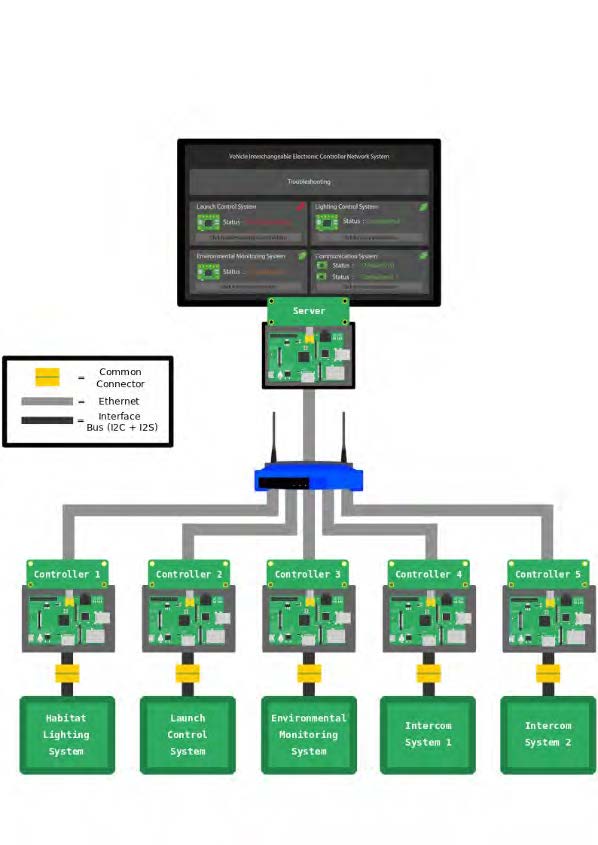
On board each space craft there are an abundance of controllers that control various systems within them, but no matter how much planning goes into each space mission errors can occur, such as one of these controllers malfunctioning and needing to be replaced. Sending another craft to service the broken one is too time consuming, and sending additional types of each controllers increases the cargo weight, which also increases fuel consumption and ultimately increases the cost of the mission. The Vehicle Interchangeable Electronic Controller (VIEC) Networks System aims to ease these problems by creating a system of Interchangeable Controllers (ICs) that can be interchanged at any time with any of the other controllers already on board. The server that manages this system will keep track of which controllers are plugged in, and which controllers need reprogramming to run its new and updated systems. A universal connector will be used to interface with the many ICs with corresponding input and output devices. The simulated systems will be a Habitat Lighting System, Environment Monitoring System, Reaction Control System, and a Voice Over Internet Protocol Communication System.
Acknowledgments
Special thanks to Alejandro Olvera from UNT’s Computer Engineering Department and UNT Alumni Alexander Villalobos Quintanilla.
Private Cloud With Wireless Internet of Things (IoT)
Team Name
Olympus
Team Members
Jess Stacy
Daniel Dorsey
Clayton Clouser
Daniel Potichko
External Sponsors/Mentors
Chatwin Lansdowne - NASA Engineer
Timothy J Urban - Texas NASA Design Challenge
Internal Sponsor/Mentor
Robin Pottathuparambil, PhD
Abstract
Our client has had problems with previous systems where space communication architecture is generally characterized by anemic on-board processing platforms, and a bottleneck and latency in the backhaul to Earth. To tackle this problem our team examined a open source IoT private packages and implemented two different applications on it. We created and tested these applications on the package to seek to leverage standards-based Commercial Off the Shelf (COTS) hardware and software products in a closed environment.
Automated Plant Monitoring System
Team Name
Agrosensor
Team Members
Casey Heath
Patrick Land
Ramiro Ortiz
Nicholas Stencel
Internal Sponsors/Mentors
Dr. Pradhumna Shrestha
Alejandro Olvera
Abstract
Our project, Agrosensor, is an automated plant monitoring system that deals with agriculture systems. It seeks to ease the difficulties for farmers as they maintain the conditions a plant grows in. In order to mitigate the chance of crop failure, the agricultural sector favors automation tools for minimal labor and cost efficiency.
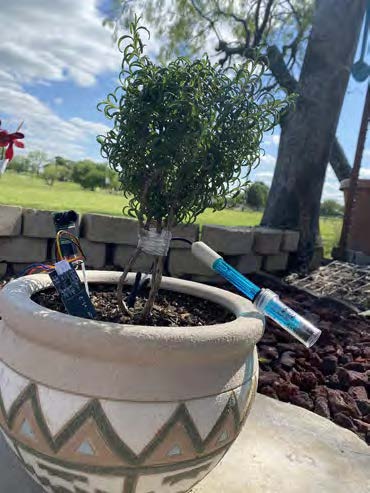
The system we have designed will monitor soil moisture, temperature, pH levels, and plant appearance and can alert the user should there be any issues Users will be able to customize which plants are available for monitoring and may update values to tailor which threshold(s) are necessary for plant longevity.
This technology is not only applicable on a large commercial environment; it can be used at home as well, to monitor household plants and make sure they don’t die prematurely, and live full healthy life cycles.
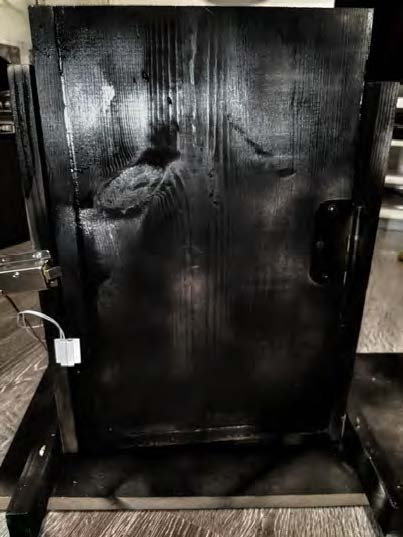
Intelligent Door Lock
Team Name
Black Theory
Team Members
Fadi El-Nemri
Angelica Reyes
Matthew Boyer
Internal Sponsor/Mentor
Dr. Pradhumna Shrestha
Abstract
This door utility addon takes on the challenge of home security while also adding a level of convenience and streamlining of the front door entry process. A common issue in today’s age is packages being stolen, with this intelligent lock you can grant access to a delivery person and have them place the package inside your home without having to be there during pickup. Additionally, this solution is unique in that it uses RGB-D information to help with spoof-proofing, something no other product does.
The robust and advanced hardware used in for this system allows for expandability of features, including the integration of a touch screen for easier access to profiles and much more.
Smart Home Assisted Living


Team Name
Nibbles
Team Members
Michael Poole
Jose Pena
Joseph Vo
Internal Sponsors/Mentors
Computer Science and Engineering Department
Pradhumna Shrestha
Abstract
Our Smart Home Assisted Living project aims to solve the issue of balance between the autonomy of a patient and ensuring that the proper care is given with an appropriate amount of health and safety monitoring. Smart technology provides us with a great amount of potential within this area as mose healthcare systems meant for an in-home structure fail to make use of wearable technologies and smart devices to make patient care more accessible. It helps caretakers with increased amounts of data of their patient’s behavior and health outside of any in-home visits. This data can be used to make changes to evaluations and decisions regarding these patients. This will be done with the incorporation of a mobile application to provide health status updates to patients and their healthcare providers, vital monitoring through the use of a wearable fitness watch, a wearable distress button, and a smart hub that is also served as a programmable pill box.
Acknowledgments
We would like to thank our mentor, Pradhumna Shrestha, and Alejandro Olvera for continuously providing input and assistance on how to further develop our project for the past year.