 University of North Texas

Materials Science and Engineering
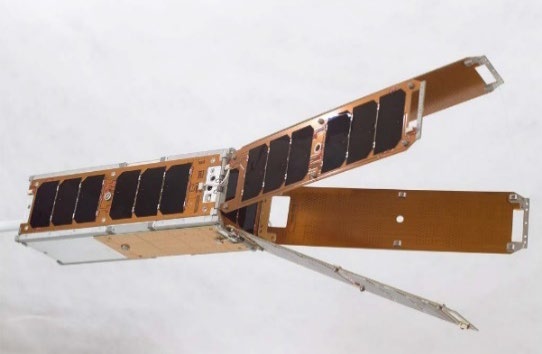
Design of Cu-based High Temperature Shape Memory Alloys for Development and Orientation
Systems in a 3U Cubesat
Team Members
Faith Gantz
Skye Segovia
Mora Issa
Xiaowei Wang
External Sponsors/Mentors
Dr. OthmaneBenafan
Consortium for the Advancement of Shape Memory Alloy Research & Technology (CASMART)
National Aeronautical & Space Administration (NASA)
Internal Sponsors/Mentors
Dr. Marcus L. Young
Dr. Robert W. Wheeler
Nathan A. Ley
Abstract
In this study, a set of Cu-based HTSMAs are tested to optimize the properties required to function in a 3U CubeSat. By using SMAs for this application, the overall cost of the CubeSat can be reduced. Instead of having many components to perform the actuation task, this system will use one component to perform the actuation task when exposed to solar radiation. Vacuum arc melting is used to create the alloys. A hot-and/or cold-rolling/drawing process is used to convert the alloys to wire. Samples which show potential for meeting the project requirements are further heat treated to produce the bamboo structure, improving the overall quality of the SMA. Characterization of the samples is performed at various steps of the project and involves differential scanning calorimetry (DSC), scanning electron microscopy (SEM) equipped with energy dispersive spectroscopy (EDS), Vickers hardness, X-ray Diffraction (XRD), and thermo-mechanical testing.
Acknowledgments
University of North Texas Materials Research Facility (MRF)
Advanced Photon Source, a U.S. Department of Energy (DOE) Office of Science User Facility
operated for the DOE Office of Science by Argonne National Laboratory
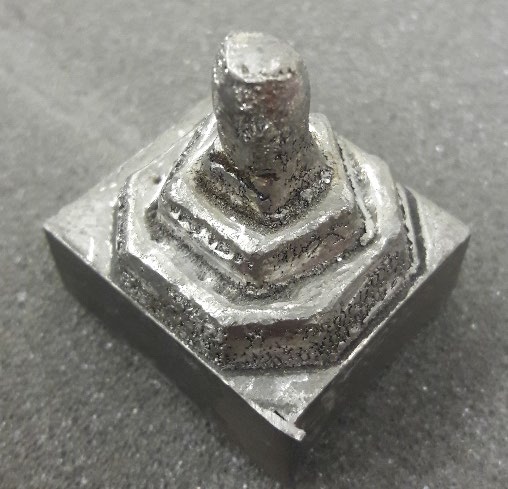
Design Process for LENS Manufacturing of Hiperco Soft Magnets
Team Members
Ashley Carter
Jiawei Miao
Juan Umana
External Sponsor/Mentor
Lex Seneff, Senior Motor Design Engineer, Moog Inc.
Internal Sponsor/Mentor
Dr. Raj Banerjee
Abstract
Hiperco, an alloy of Fe and Co, is a commonly used soft magnetic material in electronic devices. With the ever-decreasing size of these devices, the magnetic components also need to decrease in size. Laser Engineered Net Shaping (LENS) is an additive manufacturing process that lets us create small and complex geometries that may not be achieved through conventional manufacturing. The downside to LENS is the thermal gradient associated with the building of the component. This can cause the loss of desired properties, in this case a soft magnet. The objective of this project is to optimize the design process for LENS manufactured Hiperco to keep the material as a soft magnet. This is done through altering the deposition parameters and through post-deposition heat treatments.
Acknowledgments
David Flannery
Mohan Sai Kiran Kumar Yadav Nartu
Srinivas Aditya Mantri
Hitesh Adhikari
Ionic Liquid Non-Hydrolytic Sol-Gel Process For Near Zero Thermal Expansion Ceramic
Powder Synthesis
Team Members
Kyle Rose
Mutaz Fallatah
Austin Everett
External Sponsor/Mentor
Dr. Victoria Blair, Army Research Laboratory
Internal Sponsor/Mentor
Dr. Rick Reidy
Abstract
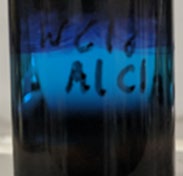
Ionic Liquids commonly used in electrodeposition of metals are adopted into the Non-Hydrolytic Sol-Gel Route for the purposes of synthesizing near zero thermal expansion ceramic powders. The purpose of this design is to utilize a known method of ionizing metal chlorides in the known synthesis route for near zero thermal expansion ceramics. The use of 1-Ethyl-3-Methylimidazolium Chloride to create a Lewis basic Ionic Liquid with AlCl3 and WCl6 has shown the ability to synthesize Al2W3O12 when mixed with Benzyl-alcohol in a dry inert atmosphere. This reaction creates a sol-gel that is considered a “raw” Sample. After calcination at 1100⁰C for 3 hours the sample shows phase uniformity under XRD and EDS mapping with correct stoichiometry. Particle size of the sample is ~4um. The calcined powder was then pressed and sintered. Dilatometry was then performed on the sample to show the thermal expansion. The development in new synthesis routes can be used to create thermal shock resistant transparent materials for application in the aerospace industry.
Acknowledgments
Jessie Smith - Assistance in SEM imaging and mapping
Solid State Diffusion Bonding Optimization Using SPS and PVD

Team Members
Trevor DeNicholas
Rebecca Fox
Tingyu Huang
External Sponsor/Mentor
Army Research Lab
Internal Sponsors/Mentors
Dr. Tom Scharf
Dr. Nigel Shepherd
Hunter Lide
Abstract
Diffusion bonding was used to adhere low-density, ceramic SiC and B4C samples. This process was optimized by use of an interfacial material. Due to the mismatch of the coefficient of thermal expansion between the two materials, surface cracking is a significant problem faced when using laminate methods to bond these samples. Trends in literature show that the presence of microcracking after bonding low-density ceramics can be reduced by decreasing the thickness of the interfacial material. This method was applied to the bonding of dissimilar ceramics and has shown a significant reduction in defects and surface cracking.