 University of North Texas

Electrical Engineering
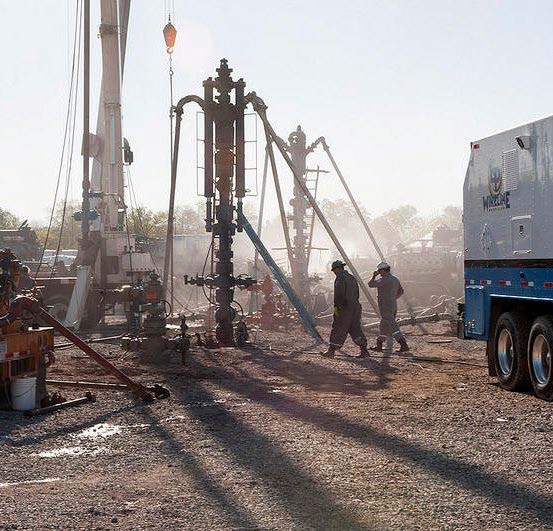
Machine Learning Application to Hydraulic Fracturing
Team Members
Giovanni Tamez
Danytza Castillo
Aaron Colmenero
Jorge Ayala
Internal Sponsor/Mentor
Colleen P. Bailey, PhD
Abstract
Hydraulic fracturing has greatly impacted the oil and gas industry and is a large component of future oil production. Proper operation is dependent on supervisors monitoring data for signs of dangerous pressure spikes. Human error becomes a large factor in processing such a large amount of data in real time. The system proposed in our senior design project is able to read and interpret the data from a well in order to make accurate predictions on when potential pressure spikes will occur within the well, saving time and money on projects that are pushed to the limit.
Acoustic Resonance Spectroscopy
Team Name
ARS@UNT
Team Members
Art Depoian
Caleb Jackson
Daniel Usher
External Sponsor/Mentor
Dr. Oscar Garcia PE - Founding Dean, UNT College of Engineering
Internal Sponsor/Mentor
Dr. Tao Yang
Abstract
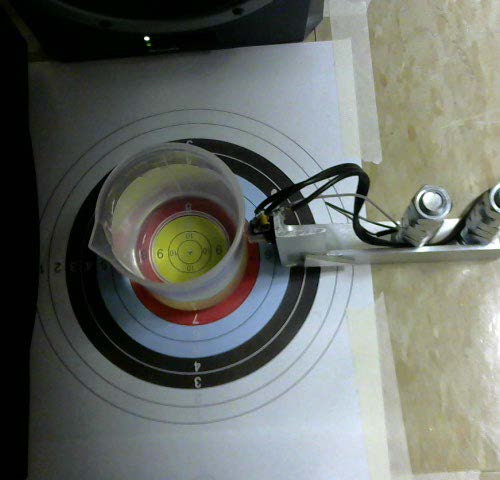
This project establishes a novel and low cost approach to analyze the contents of a given vessel in a non-invasive manner. The use of commonly available devices to carry out the procedure, along with open source software for processing, created a novel approach to the question at hand. Drawing upon known research in the acoustic spectrum at ultra-sonic levels, it was proposed that similar techniques might be possible in the audible spectrum. The device works by flooding the vessel with acoustic pressure waves at a given frequency, thereby creating resonance, which is sensed through a phonograph cartridge in contact with the exterior of the vessel. The resulting analog wave is sampled by the sound card on a common computer. Once in the digital domain, the signal is passed through signal processing algorithms that find the FFT(Fast Fourier Transform) and the most significant peaks of the FFT, which are then logged and stored for further processing. Depending on the need, the control algorithm might call for additional testing to create greater resolution. At the conclusion of testing, the developed device makes a final decision as to the current state of the vessel. The device has been built to train and learn eventually expand the possible solution set through a machine learning control algorithm.
Acknowlegments
Thank you, Prof. Colleen Bailey PhD
Smart Trash and Waste System
Team Name
Rosie
Team Members
Jenna Chesley
Brandon Costello
Taylor Hyde
Brian Kaplan
Brian Morgan
External Sponsor/Mentor
Nectar Agriculture
Internal Sponsor/Mentor
Dr. Xinrong Li
Abstract
After studying the recent California legislation which enforces regulation on business waste management procedures, our project team, sponsored by Nectar Agriculture, developed a prototype system for a smart IoT trash can product called Rosie. The system detects when a trash bag needs to be changed in heavy-traffic areas by monitoring the weight and volume of the bag contents. When any bag needs to be changed, the product will notify the administrator via a push notification using the MQTT messaging protocol. Our IoT device will allow companies to generate reports on their waste producing patterns to ensure compliance with the government regularization and also to implement schedule optimization of their custodial staff. Other features of this prototype include a motorized, motion-activated lid and a visual display. It also monitors odor emissions for future product development. This product is ideal for airports, casinos, event centers and large corporation cafeterias and it will make it easier for companies to demonstrate compliance to the new government regulation on the business waste management procedures.
Machine Learning Expansion on Smart Microgrid and Energy Management
Team Members
Cameron Falgoust
Lauren Guidry
Farjana Sumaiya
Erin Mears
Internal Sponsor/Mentor
Dr. Tao Yang
Abstract
The current smart microgrid is a very centralized network, with a master controller operating for the slave nodes to shed any loads if needed. However, a centralized network can be risky. In the event that the main controller is compromised, then the grid safety nets are eradicated. Our solution was to decentralize the network by implementing a machine learning algorithm to grant autonomy to the slave nodes. This allows the slave nodes to continue the previously established load shedding function, that sheds the lowest priority load for a limited power supply. This process maintains an important safety measure to the smart microgrid, keeping the highest priority loads in power for longer. This extra precaution could be imperative for hospital microgrids, for example, in the event of a power outage, keeping the ICUs up longer than the waiting area. Machine learning is still a relatively new process, but especially so in the realm of smart grids. Our work provides a unique approach to grid security, predicting how the grid will operate under a finite amount of power.
Acknowledgments
We would like to acknowledge Kelvin Darden for his help, and for his thesis we are using a basis.
Smart Parking System
Team Members
Enrique Reynoso
Rafael Mora
Nahra Mejia
Arturo Sifuentes
Internal Sponsor/Mentor
Dr. Parthasarathy Guturu
Abstract
We are developing a high-end website that enables users to find parking in a matter of seconds. The website will be called SPS which stands for Smart Parking System and will be available for any student connected to the UNT’s network. This is needed because finding a parking spot in time for class is a major problem for students who are unable to get to campus early or work. The parking lot will have sensors placed on the top and middle to guarantee accurate readings. The state of these sensors are transmitted to the Arduino UNO microcontroller. From there, the data is transmitted to a Raspberry Pi where the information is then stored in a MySQL database which our website will read from. The website will use the stored information to display the availability of the parking lot using a friendly Graphic User Interface (GUI). In conclusion, the SPS will allow users to visually locate the available spaces via LED indicators and a website which will provide the exact locations of those spaces.
Acknowledgments
I will like to take the opportunity to thank my parents for all the love and support.
Solar Powered Tiny Home on Wheels
Team Members
Julie Fox
Alvin Abraham
Internal Sponsor/Mentor
Dr. Miguel Acevedo
Abstract
The growth in solar power technology in recent years has made it more affordable and approachable for use in the modern household. This growth, coupled with the desire to live a more mindful, adventurous lifestyle and understanding the need to for sustainable power solutions inspired this project. Our solar powered tiny home on wheels is a small-scale, off grid system that has full capability of powering our home both on and off the road. It uses solar energy provided by a 600W solar array to maintain a 200Ah capacity battery bank and can provide 2000W of continuous AC power. The system also incorporates an Arduino based power monitor to track our consumption. Once testing of the system’s operability through all seasons is complete, our design can give other tiny home owners, RV owners, or smaller home owners the option to power their homes with solar power using a similar design and approach. Our overall goal is to shed light on alternative living options and living a more sustainable lifestyle through renewable power solutions.
Acknowledgments
Special thanks to Dr. Miguel Acevedo for helping guide us through the process of bringing this project to life.
Gecorocode
Team Members
Andrew Napieraj
Ayodele Ojo
Robert Welch
Internal Sponsor/Mentor
Dr. Xinrong Li
Abstract
We are building a Gesture Controlled Rover with Collision Detection, or what we call Gecorocode. Gecorocode has three major components: detecting gestures from the user, using these instructions to move the rover, and reading the rover’s surroundings to determine and prevent future collisions. In order to successfully incorporate these components, we will utilize the communicative abilities of the ESP32 microprocessor, which can handle either Bluetooth or Wi-Fi communications.
Gecorocode has many different possible uses. For our project, we are focused on it’s gesture control component in order to design a user friendly, gesture controlled rover in a market where most similar products are somewhat non-user friendly. This is due to their difficult to control nature, where instructing the product to move in specific directions becomes a challenge to comfortably control. We’ve designed a method to help with this issue. Essentially, we created a parabola, where the y-axis represents intensity of acceleration and the x-axis represents the hand position. This allows a smoother acceleration from a stop and a smoother deceleration from “full throttle.” On top of this, we utilize an optimized programming strategy in order to decrease processing time and increase product responsiveness.