 University of North Texas


-
2026 – Present, Chair, User Executive Committee, Center for Nanoscale Materials (CNM), US Department of Energy (DOE), Argonne National Laboratory, Lemont, IL; https://cnm.anl.gov/pages/user-executive-committee
-
2025 – 2026, Vice-Chair, User Executive Committee, Center for Nanoscale Materials (CNM), US DOE, Argonne National Laboratory, Lemont, IL.
-
2023 – Present Center Director and Principal Investigator (PI), US DOE, National Nuclear Security Administration (NNSA), Consortium on Sensing, Energy-efficient Electronics and Photonics with 2D Materials and Integrated Technologies (SEEP-IT). 72 research trainees [45 undergrads, 23 grads, and 4 postdocs] have been provided hands-on research training opportunities within SEEP-IT Consortium, in addition to ~ 33 national labs internships on-site at Sandia and Argonne, with ~ 32 journal papers, > 60 conference articles/presentations appearing to date.
-
2024 – 2026, Workshop Chair and PI, “SEEP-IT National Workshop on 2D Semiconducting Layered Materials Towards Quantum, Photonics, and Microelectronics to Fuel Innovations and Workforce Development,” held at Argonne National Laboratory, Advanced Photon Source (APS), Lemont, IL, Dec. 10-11, 2024; Workshop Final Report with Recommendations disseminated in 2026 and available under the “Workshop Reports” tab at: https://engineering.unt.edu/mse/research/labs/nmdl/publications.html
-
2024 – 2025, User Executive Committee Member, Center for Nanoscale Materials (CNM), US DOE, Argonne National Laboratory, Lemont, IL.
-
2023 – Present, External Advisory Board Member, Rice University, Houston, TX; Department of Materials Science and Nanoengineering (MSNE).
-
2016 – Present, External Advisory Board Member, Penn State University’s Two-dimensional (2D) Crystal Consortium (2DCC) – Materials Innovation Platform (MIP), funded at ~ $38 Million since its inception in 2016. https://www.mri.psu.edu/core-research-facilities/2d-crystal-consortium/about/meet-team/external-advisory-committee
-
2020 – 2021, External Visiting Committee Member, Rice University, 5-year Academic Program Review, Spring, 2021.
-
2015 – 2016, Chair and PI on NSF Workshop Proposal, “US EU Workshop on 2D Layered Materials and Devices,” Arlington, VA, April 2015, that involved the European Commission EU Graphene Flagship Program (funded at ~ $1 Billion Euros over 10 years) and leading US researchers working on 2D layered materials and devices. Publicly disseminated Workshop Final Report available under the “Workshop Reports” tab at: https://engineering.unt.edu/mse/research/labs/nmdl/publications.html. A direct outcome of this workshop was the issuance of a Dear Colleague Letter (DCL) by the NSF in 2016 (https://www.nsf.gov/pubs/2016/nsf16102/nsf16102.jsp?org=ENG) to promote cross-Atlantic collaborations in this area of research. Also, served as US Co-Chair for the “EU-US Workshop on 2D Materials, Heterostructures and Devices,” held at the National Graphene Institute, University of Manchester, Manchester, United Kingdom, Oct. 2016.
-
2012 – 2014, Created and led, the 2-Dimensional Atomic-layer Research and Engineering (2-DARE) Program under the NSF’s Emerging Frontiers in Research and Innovation (EFRI) initiative (NSF 13-583) which resulted in new funding at the level of ~ $55 Million cumutalively, in partnership with the US Department of Defense to support research on 2D layered materials and devices nationally.
-
2015 – 2016, Fellow, ELATE Class of 2016; Executive Leadership in Academic Technology and Engineering (ELATE) Program is a national, year-long leadership development program for female faculty in Engineering, Science and Technology, administered by Drexel University.
-
2017 – 2022, Director, PACCAR Technology Institute, which fostered interdisciplinary research and educational opportunities in Nanoscience and Microsystems Technology at UNT, synergistic to the North-Texas Navy STEM Coalition (https://ntnsc.unt.edu/index.html).
-
2014 – 2017, Associate Dean for Research and Graduate Studies, College of Engineering, University of Texas, El Paso (UTEP).
-
2011 – 2014, Program Director, Electrical, Communications and Cyber Systems (ECCS) Division, Engineering Directorate, National Science Foundation (NSF), Arlington, VA.
-
Editorial Board Member: Nature Scientific Reports, Solar (MDPI), Applied Sciences (Materials Section).
-
Associate Editor of the IEEE Sensors Journal (Previously).
Prof. Anupama B. Kaul
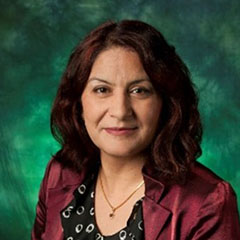
PACCAR Professor of Engineering
SPIE Fellow
ELATE Fellow
Founder & Director, Nanoscale Materials and Devices Laboratory (NMDL)
Director & PI, DOE/NNSA/MSIPP SEEP-IT Consortium
Founding Member & PI, North Texas Navy STEM Coalition (NT-NSC)
Department of Materials Science and Engineering
Department of Electrical Engineering (joint)
https://orcid.org/0000-0003-4052-8064
https://scholar.google.com/citations?user=o8kNgw0AAAAJ&hl=en
Get access to some of our articles
Summary: Dr. Anupama B. Kaul is the PACCAR Professor of Engineering at UNT where her research examines the intriguing properties of nanoscale materials, including emerging semiconductors, for sensors, optoelectronics, quantum devices, solar cells, flexible electronics and bio-sensing applications. Her funding of nearly $12M as Principal Investigator (PI) has been secured through sponsorship from agencies such as the DOE, ONR, AFOSR, NRO, ARO, NSF and other funding sources from the US. Currently, she serves as PI/Director of the DOE/NNSA SEEP-IT Consortium involving more than 40 personnel nationwide. From 2017 – 2022, Dr. Kaul served as Director of the PACCAR Technology Institute at UNT, which synergezied with her leadership of the North Texas Navy STEM Coalition (NT-NSC) funded by the Office of Naval Research. Prior to joining UNT in 2017, Dr. Kaul was Associate Dean for Research and Graduate Studies in the College of Engineering and held the AT&T Distinguished Professorship in the ECE Department at the University of Texas, El Paso (UTEP). She has been listed as a highly cited researcher since 2022 (annual category) based on the Stanford/Elsevier designation and has received the UNT Teacher Scholar Award, the UNT College of Engineering Teaching Award, the UNT President's Research Recognition Award and the NSF Director's Award for Program Management Excellence. At UTEP, Dr. Kaul earned four recognition awards from the Vice President for Research Office for her research, and numerous awards for her research while she was affiliated with JPL-NASA-Caltech over the course of 12 years. In 2012, Dr. Kaul was selected to be a participant in the US National Academy of Engineering (NAE) Frontiers of Engineering (FOE) Symposium, and in 2014 she was invited to participate in the bi-lateral Indo-US FOE. Dr. Kaul is Fellow of SPIE and Fellow of the Class of 2016 ELATE’s Executive Leadership Development Program. She earned her Doctoral and Masters degrees from the University of California, Berkeley, while her undergraduate degrees were from Oregon State University.
Within Academia as a Tenured, Full-time Faculty (2014-present)
-
9/2017 – Present, University of North Texas (UNT), Denton, TX: PACCAR Professor of Engineering; Dept. of Materials Science & Engineering; Dept. of Electrical Engineering (joint); Founder & Director, Nanoscale Materials and Devices Laboratory (NMDL); Director, DOE-NNSA-MSIPP SEEP-IT Consortium, since 3/2023; Director, PACCAR Technology Institute, College of Engineering (until 12/2022)
-
9/2017 – 8/2018, UTEP, TX: Adjunct Professor, Dept. of Electrical and Computer Engineering
-
9/2014 – 8/2017, University of Texas at El Paso (UTEP), TX: Associate Dean for Research & Graduate Studies, College of Engineering; AT&T Distinguished Professor, Dept. of Electrical and Computer Engineering; Founder & Director, Nanomaterials and Devices Laboratory (NDL)
Within Government, National Laboratory, and Industry (previously)
-
2011-2014, National Science Foundation (NSF), Arlington, VA: Program Director (via the Intergovernmental Personnel Act (IPA) mobility program, JPL-Caltech); Electronics, Photonics, and Magnetic Devices (EPMD) Program, Electrical Communications and Cyber Systems Division, Engineering Directorate
-
2002-2014, Jet Propuslion Laboratory (JPL), National Aeronautics and Space Administration (NASA), California Institute of Technology (Caltech), Pasadena, CA: Positions held included Senior Member of Technical Staff; Task Manager; NASA Program Office Management; Member of Technical Staff
-
2000-2002, Motorola Labs, Corporate Headquarters, Schaumburg, IL: Senior Research Engineer
-
1993-1995, Hewlett-Packard (HP) R&D Division, Corvallis, OR: R&D Engineer
Graduate Education, UC Berkeley (UCB)
Department of Materials Science and Engineering; minors in Electrical Engineering and Physics. Ph.D. Dissertation Advisors and Master’s Thesis Advisors, UC Berkeley (UCB):
- Ph.D. Major Advisor: Prof. Theodore Van Duzer, ECE, National Academy of Engineering (NAE) Member
- Ph.D. Co-Advisor: Prof. Timothy D. Sands, MSE, currently serving as President, Virginia Tech
- Ph.D. Committee Member: includes Prof. John Clarke, Physics, 2025 Nobel Laureate (Physics)
- Master’s Thesis Advisor: Prof. Theodore Van Duzer (ECE), NAE Member
Undergraduate Education, Oregon State University (OSU)
Physics and Engineering, BS (with Honors); Physics, BS (with Honors), Minor Math; Magna Cum Laude; Honors Thesis Advisor: Prof. Janet Tate, Department of Physics, OSU.
Recent Leadership Highlights, Service & Advisory Boards (Selected)
Awards and Recognition (Selected)
-
Royal Society of Chemistry (RSC) recognizes Anupama Kaul’s research in International Women’s Day 2026 Collection within the Materials Portfolio launched in March 2026. The themed collection showcases outstanding research led by women scientists in materials science and engineering globally through the themed collection, coinciding with the International Women’s Day, March 4th, 2026. https://blogs.rsc.org/jm/2026/03/04/celebrating-international-womens-day-2026-women-in-materials-science/
-
UNT Teacher Scholar Award, April 2026; One awardee selected across the university who has demonstrated outstanding research productivity while also maintaining an extraordinary record as a teacher. https://vpaa.unt.edu/fs/recognition/sfe-winners-2026.html.
-
UNT President’s Research Recognition Award, to recognize research advancement, discovery, and innovation under the Research Expenditure Incentive Program, Jan. 2026.
-
UNT College of Engineering Faculty Teaching Award, April 2025; One awardee selected within the College of Engineering during 2024-2025.
-
Listed as a highly cited researcher in 2024 (top 2%) via Stanford/Elsevier designation, Jan. 7, 2025. https://research.unt.edu/news/unt_faculty_among_2024_list_of_worlds_most_cited_researchers.html
-
DOE/NNSA/MSIPP Certificate of Appreciation Recognition, 2024 Annual Technical Meeting, April 9, 2024.
-
UNT Service Recognition Award, March 2023.
-
Listed as a highly cited researcher in 2023 (top 2%) via Stanford/Elsevier designation. https://research.unt.edu/news/unt-experts-ranked-among-worlds-most-cited-2023.html, Jan. 9, 2024.
-
Outstanding Mentor Award, Frisco Independent School District, ISM Mentor Program, May 2022.
-
Kaul listed as a highly cited researcher in 2021 via Stanford/Elsevier designation: https://research.unt.edu/news/unt-faculty-named-among-worlds-most-cited-researchers.html, Nov. 4, 2022.
-
Elevated to SPIE Fellow, Jan. 2022.
-
Sigma Xi Membership, Aug. 2022.
-
UTEP Research Recognition Award from the Vice President for Research Office, 3 Awards in 2015, 1 Award in 2016.
-
National Science Foundation, Director’s Award for Program Management Excellence, 2013; Citation: “For leadership & collaborative excellence in developing the topic on 2D atomic-layered materials & devices beyond graphene as a stand-alone EFRI topic.” Only 2 awardees selected for Program Management Excellence from the entire Engineering Directorate at NSF in 2013.
-
NASA Service Award, 2012.
-
NASA Team Accomplishment Award, 2007.
-
NASA Patent Award, 2008, 2009, 2010 (3 Awards), 2011, 2012, 2013.
-
Class 1 NASA Tech. Brief Award, 12 awards, 2004 – 2014.
-
US National Academy of Engineering (NAE) 2012 Frontiers of Engineering (FOE) Symposium, Warren, MI.
-
US National Academy of Engineering (NAE) 2014 bi-lateral Indo-US FOE Symposium, Mysore, India.
-
Fellow of the Class of 2016 ELATE Program (Executive Leadership in Academic Technologies and Engineering) coordinated by Drexel University.
-
More than 107 invited, keynote and plenary talks at major international conferences and meetings sponsored by professional societies (e.g., IEEE, SPIE, MRS, TMS, and NSTI, amongst others).
-
4 Invention Awards at Motorola Labs, 2001 – 2002.
US Patents (Issued)
- A. B. Kaul "Methods for gas sensing with single-walled carbon nanotubes," US Patent 8,529,124 B2, California Institute of Technology, granted Sep. 2013.
- H. M. Manohara, and A. B. Kaul, "Carbon nanotube vacuum gauges with wide-dynamic range and processes thereof," US Patent 8,387,465 B2, California Institute of Technology, granted Mar. 2013.
- A. B. Kaul, L. W. Epp, and L. Bagge, "Applications and methods of operating a three-dimensional nano-electro-mechanical resonator and related devices," US Patent 8,435,798 B2, California Institute of Technology, granted May 2013.
- A. B. Kaul and J. B. Coles, "Thermally-resilient, broadband optical absorber from UV-to-IR derived from carbon nanostructures and method of making the same," US Patent 8,947,800 B2, California Institute of Technology, granted Feb. 2015.
- A. B. Kaul, E. W. Wong, R. Baron, and L. Epp, "Carbon nanotube switches for memory, RF communication and sensing applications and methods of making the same," US Patent 7,446,044, California Institute of Technology, granted Nov. 2008.
- T. Van Duzer, X. Meng, N. Newman, L. Yu and A. B. Kaul, "Internally shunted Josephson junction device," US Patent 6,734,454 B2, University of California-Berkeley, granted May 2004.
Teaching
Dr. Kaul has contributed to curriculum enhancement by leading efforts that have resulted in new courses at UNT sponsored by the US Navy. The pedagogies are centered around experiential learning and enhancing interdisciplinary perspectives amongst the students. The first course entitled Micro-electro-mechanical-systems (MEMS): Materials, Devices and Applications, she developed through sponsorship from the ONR STEM grant ($750 K, PI-Kaul), was fostered under the North Texas Navy STEM Coalition (NT-NSC). This new course encompasses theory sections and integrates these with hands-on lab modules utilizing semiconductor manufacturing processes, where students construct devices in the UNT cleanroom facility. This is the first course at UNT utilizing the UNT cleanroom for instructional purposes. After a pilot-period of 3 years, this course is now a permanent offering in the UNT EE and MTSE course curricula, cross-listed as: EENG 4450.012, EENG 5450.012, MTSE 5650.032, MTSE 4120.032 for undergraduates (seniors/juniors) and graduate students. The second experiential learning course developed under the NT-NSC Program and the ONR STEM award, is entitled Microwave Engineering (EENG 4410/5410) which was developed in collaboration with Co-PI Ifana Mahbub (now at UT Dallas). Curriculum enhancement has also taken place under the DOE/NNSA SEEP-IT Consortium (where Dr. Kaul serves as PI), at partner sites, within the Electrical Engineering and Materials Science and Engineering Departments at the University of Texas Arlington, and the University of Arkansas, Pine Bluff.
At UNT, Dr. Kaul also teaches MTSE 3000, Fundamentals of Materials Science and Engineering, and MTSE 5100, Fundamental Concepts of Materials Science (cross listed for graduate students).