- 08/09/2023 12:00:00 AMWith NASA grant, UNT engineers and chemists exploring new protective coatings for lunar exploration techCollege of Engineering
 College of EngineeringMechanical EngineeringResearch Newsarticle
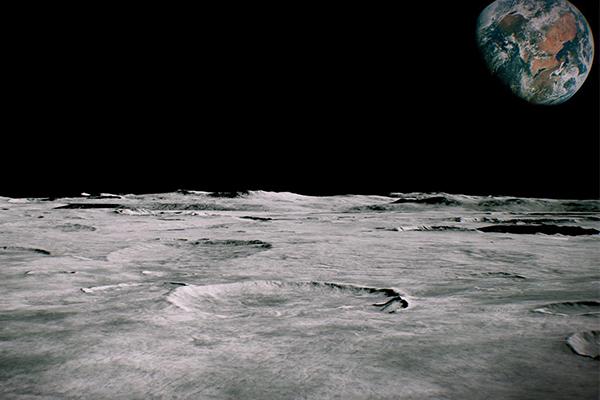
As NASA looks to explore new regions of the moon full of drastic temperature shifts and dusty terrain, it needs heat transfer coatings for its autonomous space vehicles that are lighter, more energy efficient and can better withstand the fluctuating environments.
A group of UNT engineers and chemists received Minority University Research and Education Project (MUREP) Curriculum Award, which was established this year to help Minority-Serving Institutions like UNT strengthen their academic offerings in STEM. The award is nearly $900,000 in total for the next three years. It will fund research for developing advanced heat transfer coatings made up of nano/microscale materials that could be used in future Artemis exploration missions.
Richard Zhang, Assistant Professor in Mechanical Engineering Department is the principal investigator of the project. He will work together with Jeff Kelber, Regents Professor in the UNT Department of Chemistry, John Beatty, UNT chemistry alumnus and assistant professor of chemistry at Texas Woman’s University, Sydney Taylor, aerospace engineer at NASA’s Johnson Space Center and Matt Wittal, automation and robotics systems engineer at NASA’s Kennedy Space Center.
Through the project, UNT professors and their external collaborators also will focus on encouraging future STEM professionals to pursue careers in space exploration via student involvement in the research, new course development, educational workshops, scholarships and internships at NASA facilities.
Read more about the project on UNT Research and Innovation.
.hero.news.short .hero-container { height: 0; }
#main img[style*="float:"], #main .image-wrapper { width: 100%; max-width: none; margin:1.5rem 0; }
.video-container {
position: relative;
padding-bottom: 56.25%;
padding-top: 0;
height: 0;
overflow: hidden;
}
.hero.news.short .hero-content {overflow: auto;}
.video-container iframe {
position: absolute;
top: 0;
left: 0;
width: 100%;
height: 100%;
}
@media only screen and (min-width: 800px) {
#main img[style*="float: right"], #main .image-wrapper[style*="float: right"] { max-width: 40%; margin-left: 1.5rem; }
#main img[style*="float: left"], #main .image-wrapper[style*="float: left"] { max-width: 40%; margin-right: 1.5rem; }
}
@media only screen and (min-width: 1200px) {
.hero.news.short { height: 20vh; }
#main img[style*="float: right"], #main .image-wrapper[style*="float: right"] { max-width: 33.3%; }
#main img[style*="float: left"], #main .image-wrapper[style*="float: left"] { max-width: 33.3%; }
}
College of EngineeringMechanical EngineeringResearch Newsarticle
As NASA looks to explore new regions of the moon full of drastic temperature shifts and dusty terrain, it needs heat transfer coatings for its autonomous space vehicles that are lighter, more energy efficient and can better withstand the fluctuating environments.
A group of UNT engineers and chemists received Minority University Research and Education Project (MUREP) Curriculum Award, which was established this year to help Minority-Serving Institutions like UNT strengthen their academic offerings in STEM. The award is nearly $900,000 in total for the next three years. It will fund research for developing advanced heat transfer coatings made up of nano/microscale materials that could be used in future Artemis exploration missions.
Richard Zhang, Assistant Professor in Mechanical Engineering Department is the principal investigator of the project. He will work together with Jeff Kelber, Regents Professor in the UNT Department of Chemistry, John Beatty, UNT chemistry alumnus and assistant professor of chemistry at Texas Woman’s University, Sydney Taylor, aerospace engineer at NASA’s Johnson Space Center and Matt Wittal, automation and robotics systems engineer at NASA’s Kennedy Space Center.
Through the project, UNT professors and their external collaborators also will focus on encouraging future STEM professionals to pursue careers in space exploration via student involvement in the research, new course development, educational workshops, scholarships and internships at NASA facilities.
Read more about the project on UNT Research and Innovation.
.hero.news.short .hero-container { height: 0; }
#main img[style*="float:"], #main .image-wrapper { width: 100%; max-width: none; margin:1.5rem 0; }
.video-container {
position: relative;
padding-bottom: 56.25%;
padding-top: 0;
height: 0;
overflow: hidden;
}
.hero.news.short .hero-content {overflow: auto;}
.video-container iframe {
position: absolute;
top: 0;
left: 0;
width: 100%;
height: 100%;
}
@media only screen and (min-width: 800px) {
#main img[style*="float: right"], #main .image-wrapper[style*="float: right"] { max-width: 40%; margin-left: 1.5rem; }
#main img[style*="float: left"], #main .image-wrapper[style*="float: left"] { max-width: 40%; margin-right: 1.5rem; }
}
@media only screen and (min-width: 1200px) {
.hero.news.short { height: 20vh; }
#main img[style*="float: right"], #main .image-wrapper[style*="float: right"] { max-width: 33.3%; }
#main img[style*="float: left"], #main .image-wrapper[style*="float: left"] { max-width: 33.3%; }
}